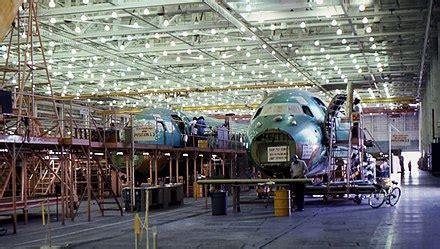
The story of Long Beach is not merely a tale of concrete hangars and aluminum fuselages; it is a chronicle of industrial ambition, wartime urgency, corporate evolution, and the rise and retreat of American commercial aviation manufacturing. For much of the twentieth century, this California coastal city was synonymous with aircraft production, its skyline and workforce shaped by the relentless rhythm of assembly lines. Behind secure gates along Lakewood Boulevard, Douglas Aircraft—and later McDonnell Douglas—ran one of the most consequential aviation factories in history, producing thousands of aircraft that defined military logistics and commercial air travel.
Understanding how many aircraft were produced in Long Beach is deceptively complex. Definitions matter: does one count prototypes, license-built airframes, military derivatives, or partially assembled structures? Corporate mergers blur attribution, and wartime mass production dwarfs peacetime output in ways that distort historical comparisons. Yet when the dust settles, the Long Beach plant emerges as a colossus of aerospace manufacturing, with more than 15,000 aircraft built across its operational life—a staggering figure that places it among the most productive aviation facilities ever constructed.
This article dissects that output era by era, tracing the factory’s evolution from wartime industrial powerhouse to jetliner factory and finally to its twilight years producing niche commercial jets and military transports. Along the way, the numbers reveal more than production totals; they reveal how industrial priorities shift with geopolitics, technology, and market economics.
The Birth of a Wartime Mega-Factory in Long Beach
In the late 1930s, Douglas Aircraft faced a logistical reality: its earlier facilities in Santa Monica and El Segundo were reaching their limits just as global tensions foreshadowed massive military procurement. Long Beach offered a rare combination of expansive land, rail connectivity, and proximity to an existing airfield—then known as Daugherty Field, later Long Beach Airport. Construction began in late 1940, and by May 1941 the first major buildings stood ready. Full operations commenced in November 1941, mere weeks before Pearl Harbor transformed industrial production into a national emergency.
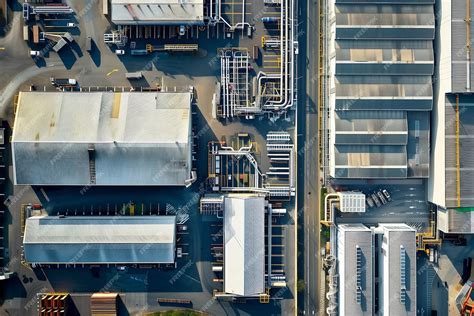
The Long Beach plant was designed for mass industrial output, with sprawling windowless structures optimized for climate control, assembly flow, and security. Wartime production ran around the clock in shifts that blurred day and night. Workers streamed through gates while camouflage schemes painted rooftops to mimic suburban neighborhoods, an extraordinary deception intended to confuse potential aerial reconnaissance. The factory was not just a workplace; it was a strategic asset embedded in the American war machine.
During World War II, Long Beach produced aircraft at an astonishing pace. Across five major models, including the legendary C-47 Skytrain and license-built B-17 Flying Fortress, the plant produced roughly 9,440 aircraft during the war alone. This figure is staggering when compared to modern commercial production rates, illustrating how wartime mobilization can compress decades of industrial output into a few years.
By the early 1950s, Long Beach had already etched its name into aerospace history, not as a boutique engineering shop, but as a true aircraft factory city.
Transitioning from War to Cold War Airlift
Unlike many wartime factories that shuttered after 1945, Long Beach pivoted with remarkable agility. As military demand collapsed and surplus aircraft flooded the market, Douglas Aircraft rationalized its facilities. Santa Monica focused on commercial airliners, El Segundo supported naval aviation, and Long Beach became the hub for U.S. Air Force transport programs.
The postwar period saw the production of the C-74 Globemaster, a large strategic transport that foreshadowed the Cold War’s emphasis on airlift capability. This was followed by the C-124 Globemaster II, an even larger aircraft designed to carry heavy cargo across intercontinental distances. These transports were not glamorous passenger jets, but they were foundational to the Air Force’s global logistics doctrine.
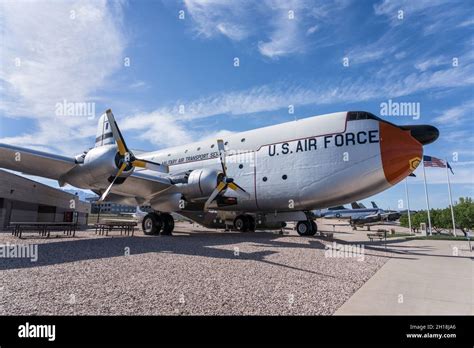
Long Beach’s role in producing these aircraft reinforced the plant’s identity as a heavy-lift manufacturing center, a theme that would recur decades later with the C-17 Globemaster III.
The Jet Age Arrives: DC-8 and DC-9 Production
The 1960s marked a profound transformation. Commercial jet travel exploded, and Douglas entered the jetliner race with the DC-8, a long-range narrowbody jet designed to compete with the Boeing 707. Long Beach became a centerpiece of this effort, with assembly lines retooled for passenger aircraft production at scale.
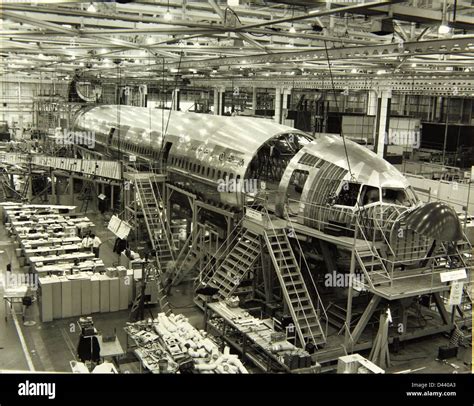
Soon after, the DC-9 program arrived, representing a shift toward shorter-haul, high-frequency routes. The DC-9’s success turned Long Beach into a high-volume narrowbody factory, producing aircraft that would populate airline fleets around the world. The factory’s engineering teams refined production techniques, supply chains matured, and Long Beach’s workforce grew into a highly specialized industrial community.
By the end of the decade, the plant was no longer just a military supplier; it was a pillar of global commercial aviation manufacturing.
Widebody Ambitions and the DC-10 Era
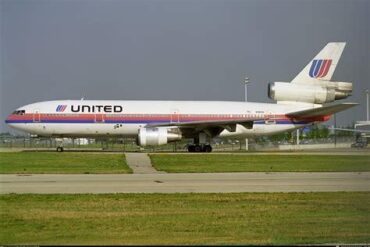
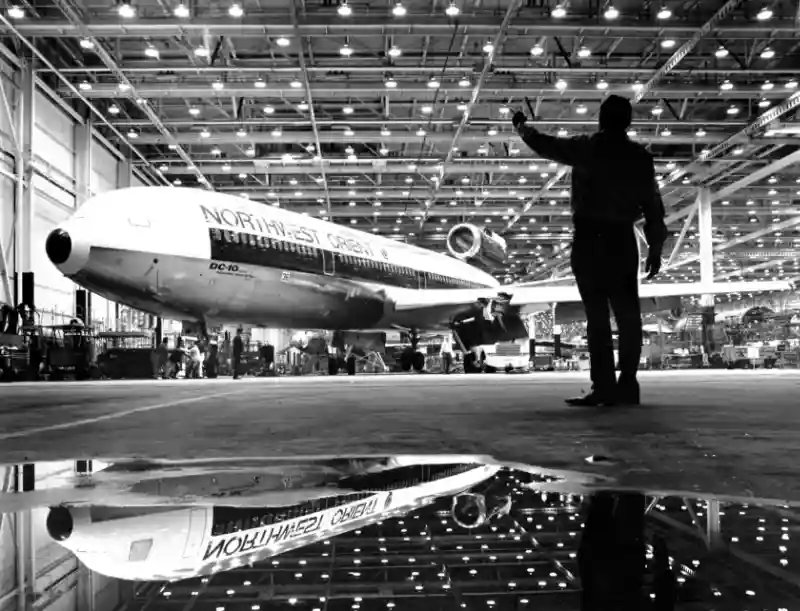
The 1970s expanded Long Beach’s identity from narrowbody workhorse to widebody innovator. McDonnell Douglas, formed through the merger of McDonnell Aircraft and Douglas Aircraft in 1967, launched the DC-10, a trijet widebody designed for long-haul international routes. Long Beach handled large portions of DC-10 production, transforming its facilities into heavy widebody assembly lines.
This period was marked by industrial ambition. The DC-10 required advanced tooling, large-scale structural assembly, and complex systems integration. Long Beach became a widebody manufacturing powerhouse, even as DC-8 production tapered off and DC-9 output continued as a reliable revenue stream.
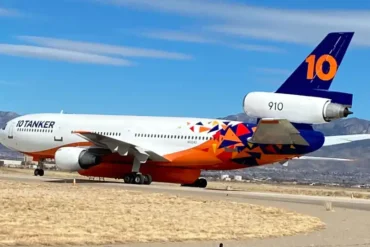
The DC-10 program also influenced military aviation, spawning the KC-10 Extender, a tanker variant that returned defense production to the plant’s portfolio. Long Beach was once again balancing commercial and military output, a dual identity that would persist for decades.
The MD-80 Boom and Narrowbody Dominance
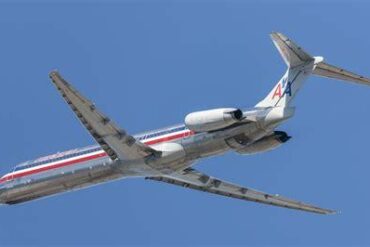
The 1980s were defined by the MD-80 family, an advanced derivative of the DC-9 featuring improved engines, avionics, and efficiency. Airlines embraced the MD-80 for its reliability and economics, and Long Beach responded with high-volume production.
This era represented the factory at peak maturity: optimized workflows, stable demand, and a skilled workforce refined by decades of aerospace manufacturing. At the same time, Long Beach continued DC-10 derivative work and military tanker production, leveraging shared tooling and engineering knowledge across programs.
The MD-80 became one of the most prolific aircraft families produced at the plant, and its output alone contributed thousands of airframes to the global fleet. Long Beach, in effect, was printing narrowbody jets at industrial scale.
The Final Commercial Era: MD-11, MD-90, and Boeing 717
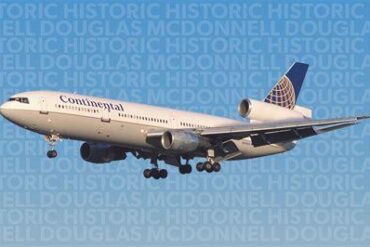
The 1990s introduced both technological ambition and market headwinds. McDonnell Douglas launched the MD-11, a stretched and modernized DC-10 derivative with advanced avionics and improved performance. While technologically impressive, the MD-11 struggled against newer twin-engine widebodies like the Boeing 777 and Airbus A330.
Alongside the MD-11, the MD-90 sought to modernize the narrowbody lineup, but it arrived as airlines began consolidating around the Boeing 737 and Airbus A320 families. Market dynamics were shifting toward platform families and economies of scale, reducing demand for niche aircraft types.
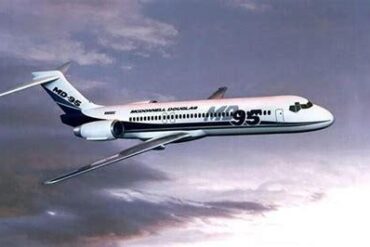
After Boeing acquired McDonnell Douglas in 1997, Long Beach continued producing the Boeing 717, essentially an evolved MD-95. The 717 found a loyal but limited customer base among carriers seeking high-frequency regional jets, but it was ultimately a niche product in a consolidating market.
In 2006, the last Boeing 717 rolled out of Long Beach, symbolically ending commercial aircraft production in California at the site. It was the end of an era that had lasted more than six decades.
Military Production and the C-17 Globemaster III
Even as commercial production declined, Long Beach remained vital to military aviation. The C-17 Globemaster III, a modern strategic airlifter, became the plant’s final major program. The C-17 represented the culmination of decades of heavy-lift expertise dating back to the C-74 and C-124.
C-17 production extended the factory’s life into the 21st century, sustaining jobs and industrial capabilities even as commercial lines shut down. When the final C-17 was delivered, it marked the closing chapter of one of America’s longest-running aircraft manufacturing facilities.
So How Many Aircraft Did McDonnell Douglas Build in Long Beach?
Aggregating production across wartime, Cold War, and commercial eras yields a figure that is both enormous and historically significant. More than 15,000 aircraft were produced at the Long Beach facility across its operational lifetime, according to corporate statements and historical analyses.
The breakdown illustrates the factory’s shifting priorities:
- Roughly 9,440 aircraft during World War II, across five primary models including the C-47 and B-17 variants.
- Thousands more in postwar military transports such as the C-74 and C-124, reinforcing Long Beach’s heavy-lift identity.
- Large commercial runs of DC-8, DC-9, and MD-80 family aircraft, forming the backbone of global airline fleets for decades.
- Widebody production of the DC-10 and MD-11, reflecting the plant’s ambition in long-haul markets.
- Final commercial output of 156 Boeing 717 aircraft, representing the plant’s last passenger jet chapter.
- Military production concluding with the C-17 Globemaster III, closing the industrial loop that began with wartime transports.
These numbers underscore Long Beach’s role as one of the most productive aviation factories in history, rivaling legendary plants in Seattle, Toulouse, and Wichita.
Long Beach’s Economic and Cultural Legacy
The Long Beach plant was not merely a manufacturing site; it was an economic engine that shaped the city’s identity. Tens of thousands of workers passed through its gates across generations, creating a community of engineers, machinists, technicians, and assembly workers whose skills defined American aerospace competence.
The presence of the factory influenced local infrastructure, housing development, education, and urban planning. Universities and technical schools grew to supply talent, while local businesses thrived on the economic gravity of aerospace employment. The soundscape of Long Beach—test flights, takeoffs, and engine runs—became part of the city’s cultural texture.
Even after production ceased, the legacy persists in infrastructure, skilled labor traditions, and the historical memory of a city that once built airliners from scratch.
Industrial Consolidation and the Retreat of U.S. Aircraft Manufacturing
Long Beach’s story mirrors the broader arc of American commercial aviation manufacturing. Postwar dominance gave way to global competition, consolidation, and shifting economics. The Boeing-Airbus duopoly, platform family strategies, and globalization of supply chains reduced the viability of standalone production lines like those in Long Beach.
The closure of commercial production in 2006 symbolized a geographic and industrial consolidation of aircraft manufacturing in the United States. Boeing’s remaining facilities in Washington and South Carolina became the primary hubs, while California’s storied aerospace legacy shifted toward defense, space, and technology sectors.
Yet Long Beach remains a case study in how industrial clusters form, flourish, and eventually transform.
Why Long Beach Still Matters in Aviation History
Counting aircraft is only the surface-level metric. Long Beach matters because it was a crucible of manufacturing innovation, workforce development, and industrial scale. It demonstrated how aircraft production could be industrialized, standardized, and scaled to unprecedented levels.
The DC-8 and DC-9 democratized jet travel. The DC-10 and MD-11 pushed widebody technology. The MD-80 defined narrowbody economics. The C-124 and C-17 shaped military logistics. Each program reflects not just engineering decisions, but strategic choices about markets, technology, and national priorities.
Long Beach stands alongside Seattle and Toulouse as a symbol of what happens when engineering ambition meets industrial capacity.
The Bottom Line on Long Beach’s Aircraft Production Legacy
The Long Beach factory was one of the most consequential aerospace manufacturing sites in modern history. With over 15,000 aircraft produced, it played a central role in shaping global aviation, from wartime logistics to commercial jet travel. Its assembly lines reflected the rise of the jet age, the maturation of narrowbody fleets, the ambition of widebody expansion, and the eventual consolidation of the aerospace industry.
Today, the fences still stand, the runways still exist, and the memory of roaring assembly lines lingers in the city’s identity. Long Beach is a reminder that aviation history is not only written in the sky but also forged in factories, by workers whose hands shaped aluminum into machines that shrank the world.
The numbers tell a story of scale, ambition, and transformation. Long Beach did not merely build aircraft; it built the infrastructure of modern flight, one airframe at a time.