The history of modern air travel cannot be told without acknowledging the immense influence of McDonnell Douglas. Long before its eventual merger with Boeing in 1997, the manufacturer stood as one of the world’s dominant aerospace companies, producing aircraft that transformed how airlines operated, how passengers traveled, and how entire route networks evolved.
While Boeing and Airbus dominate today’s skies, many of the industry’s most important technological and commercial breakthroughs were pioneered by McDonnell Douglas and its predecessor, Douglas Aircraft. From bringing jet service to smaller cities to creating entirely new market segments, these aircraft permanently altered aviation economics and passenger expectations.
The following five aircraft were not merely successful products—they fundamentally changed the trajectory of commercial aviation.
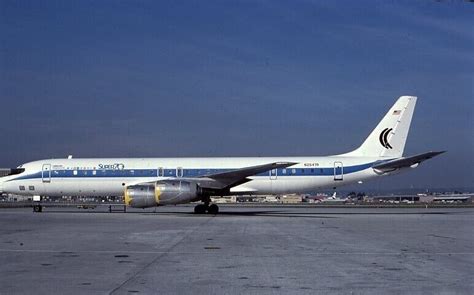
DC-8 Super 70: Extending the Jet Age and Reinventing Fleet Economics
When Douglas introduced the DC-8 in 1959, commercial aviation was entering an entirely new era. Alongside the Boeing 707, the aircraft helped usher airlines away from piston-powered airliners and firmly into the age of jet transportation.
Although the 707 initially dominated sales, the DC-8 evolved into one of aviation’s most enduring success stories. Early shortcomings—including a limited range of variants—were gradually addressed through the introduction of the highly successful Super 60 series, which offered airlines longer fuselages, increased passenger capacity, and improved operating economics.
What truly cemented the DC-8’s legacy, however, was the emergence of the Super 70 conversion program.
By the late 1970s, fuel prices had risen dramatically, and increasingly strict noise regulations threatened the viability of older first-generation jets. Airlines faced the prospect of retiring relatively young aircraft prematurely. McDonnell Douglas recognized an opportunity to extend the life of the DC-8 fleet through re-engining.
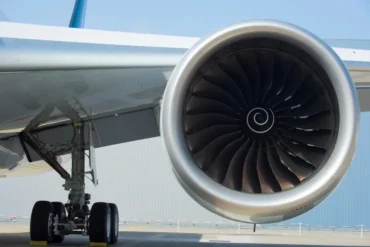
The solution came in the form of the revolutionary CFM56 high-bypass turbofan, developed by CFM International, a joint venture between General Electric and Snecma.
United Airlines became the launch customer in 1979, selecting the new engines for its DC-8-61 fleet. Delta Air Lines and Flying Tiger Line quickly followed. The transformation was remarkable. The re-engined aircraft consumed significantly less fuel, generated substantially less noise, and offered dramatically improved performance.
More than 100 aircraft were eventually converted.
Perhaps even more importantly, the Super 70 program demonstrated that commercial airliners could be economically modernized rather than simply replaced. This philosophy continues today through cabin upgrades, avionics retrofits, and passenger-to-freighter conversions across the global airline industry.
The program also played a pivotal role in establishing the CFM56 as the most successful commercial jet engine family ever produced.
After many Boeing 707s had disappeared from airline fleets, upgraded DC-8s continued flying passengers and cargo well into the twenty-first century.
DC-9: Bringing Jet Travel to Smaller Communities
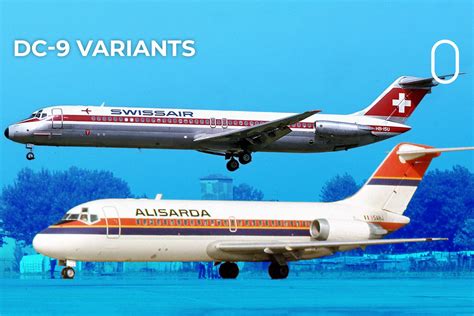
Few aircraft have had a broader societal impact than the DC-9.
Introduced in 1965, the aircraft addressed a growing problem faced by airlines worldwide. While large jets like the Boeing 707 and DC-8 efficiently connected major cities, many smaller destinations lacked sufficient demand to justify operating such large aircraft.
The DC-9 changed that equation completely.
Designed as a compact, short-haul twinjet, the aircraft allowed airlines to introduce fast, comfortable jet service to hundreds of secondary cities and regional markets. Its rear-mounted engines, low operating costs, excellent short-field performance, and simplified maintenance characteristics made it exceptionally versatile.
For passengers living outside major metropolitan areas, the DC-9 represented something revolutionary: access to the Jet Age.
Instead of relying on slower turboprops or piston-powered aircraft, travelers in smaller communities could suddenly enjoy the speed and comfort previously available only on major trunk routes. This dramatically expanded the reach of commercial aviation and accelerated the global transition toward all-jet fleets.
The aircraft’s commercial success was substantial. Nearly 1,000 DC-9s were produced, making it one of the most successful narrowbody airliners of its era.
Its influence extended far beyond its original production run.
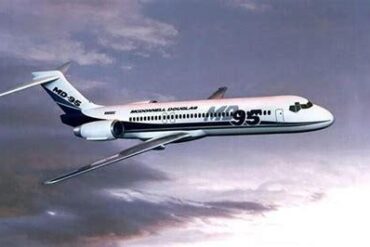
The basic airframe evolved into the highly successful MD-80, later into the MD-90, and ultimately into the Boeing 717 after the Boeing-McDonnell Douglas merger. Remarkably, some DC-9 derivatives remain in airline service decades after the original design first entered operation.
The DC-9 also intensified competition with Boeing’s emerging 737 family. Together, these aircraft established the template for modern short-haul aviation: twin engines, efficient operations, rapid turnarounds, and high-frequency service.
Today’s ubiquitous narrowbody networks owe much to the pioneering work accomplished by the DC-9.
DC-10: Creating the Modern Medium-Capacity Widebody
The introduction of the Boeing 747 in 1970 revolutionized air travel through unprecedented passenger capacity. Yet many airlines quickly realized that filling a jumbo jet on every route would be difficult.
The market required something different: a widebody aircraft that retained the economic advantages of twin-aisle travel without the immense size and cost of the 747.
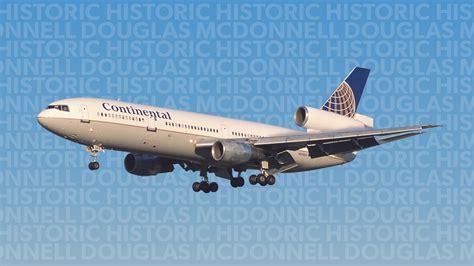
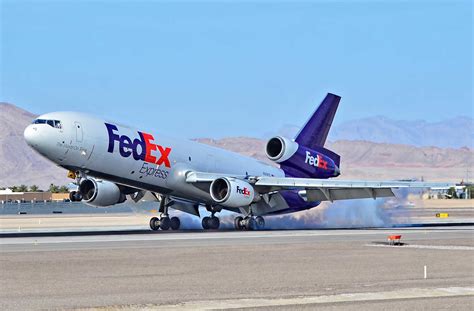
Enter the McDonnell Douglas DC-10.
Developed partly in response to American Airlines’ requirements, the DC-10 became the first major commercial program designed entirely under the McDonnell Douglas banner following the 1967 merger.
The aircraft featured a three-engine configuration, reflecting the regulatory environment of the era. At the time, restrictions on long overwater operations made twin-engine aircraft impractical for many international routes.
McDonnell Douglas deliberately pursued a conservative technological approach. Rather than incorporating numerous unproven innovations, the company emphasized reliability, maintainability, and affordability.
This strategy proved highly attractive to airlines.
The DC-10 offered operators a significantly smaller and less expensive alternative to the 747 while still delivering the advantages of a widebody cabin. Airlines could deploy the aircraft on transcontinental and transatlantic routes that lacked sufficient demand for jumbo jets.
The aircraft ultimately established the blueprint for what would become the medium-capacity long-haul segment.
Despite suffering several high-profile accidents during its early years—events that severely damaged public confidence—the DC-10 gradually demonstrated reliability comparable to other aircraft of its generation after design modifications and operational improvements were implemented.
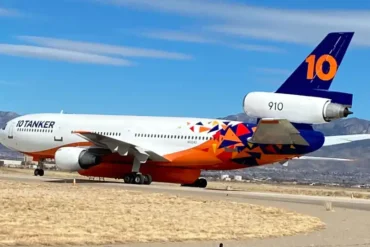
The aircraft also developed a reputation for durability. Many passenger examples later transitioned into cargo service, where numerous DC-10 freighters continued operating for decades.
Most importantly, the DC-10 proved that airlines did not need enormous aircraft to operate profitable international services. This concept fundamentally influenced future aircraft designs, including the Airbus A300, Airbus A330, and Boeing 767.
MD-80: Ending the Boeing 727’s Dominance
During the 1960s and 1970s, the Boeing 727 dominated short- and medium-haul aviation. Airlines across the globe relied on the trijet for everything from domestic trunk routes to international regional services.
By the late 1970s, however, the industry was changing rapidly.
Fuel prices were rising, operational efficiency had become critical, and airlines increasingly preferred two-pilot flight decks over the traditional three-person cockpit.
McDonnell Douglas responded by thoroughly modernizing the DC-9 platform.
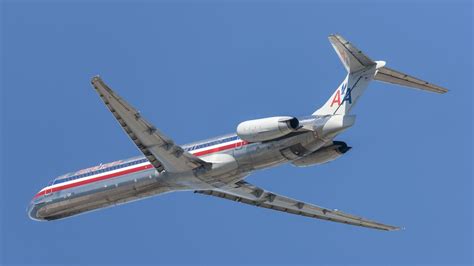
Originally known as the DC-9 Super 80, the aircraft eventually entered service as the MD-80 in 1980. Although visually similar to its predecessor, the aircraft incorporated substantial improvements, including a stretched fuselage, increased maximum takeoff weight, aerodynamic refinements, and more efficient engines.
Crucially, the MD-80 delivered performance comparable to the Boeing 727 while consuming less fuel and requiring only two pilots.
Timing proved decisive.
The Boeing 757 had not yet entered service, while the Boeing 737 Classic family and Airbus A320 remained years away. Consequently, the MD-80 arrived precisely when airlines needed a modern replacement for aging 727 fleets.
Many carriers transitioned directly from the 727 to the MD-80.
Major operators such as American Airlines built enormous MD-80 fleets, with the aircraft becoming synonymous with domestic air travel throughout the 1980s and 1990s.
Although later eclipsed by newer designs, the MD-80 effectively ended the 727’s reign as the world’s default short-to-medium-range airliner.
Production eventually reached nearly 1,200 aircraft, securing its place among aviation’s most commercially significant narrowbody programs.
The aircraft also demonstrated how existing platforms could be successfully modernized to meet evolving market demands, a strategy later adopted extensively throughout the aerospace industry.
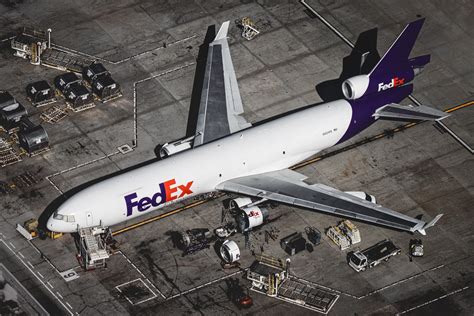
MD-11: Pioneering the Modern Ultra-Long-Haul Twin-Aisle Market
The MD-11 occupies a unique place in aviation history.
Commercially, the aircraft failed to achieve its ambitious sales goals. Historically, however, its influence was profound.
Throughout much of the 1970s and early 1980s, airlines seeking ultra-long-haul capability had limited options. The Boeing 747 offered exceptional range but required enormous passenger volumes to operate economically.
McDonnell Douglas recognized an emerging market opportunity: airlines increasingly desired aircraft capable of flying very long routes without the capacity burden imposed by jumbo jets.
The MD-11 represented the company’s answer.
Derived from the DC-10, the aircraft incorporated extensive improvements, including advanced avionics, composite materials, redesigned wings, winglets, increased fuel capacity, and a fully modern glass cockpit.
The aircraft was intended to combine near-747 range with significantly lower operating costs.
Although the MD-11 ultimately fell short of its promised performance targets, its underlying market vision proved remarkably accurate.
Today, long-haul aviation increasingly revolves around medium-sized widebody aircraft capable of connecting city pairs directly without requiring massive passenger demand. Aircraft such as the Boeing 777, Boeing 787, and Airbus A350 dominate precisely this segment.
In many respects, the MD-11 anticipated this transformation years before competitors fully embraced it.
The aircraft also found extraordinary success as a freighter. Cargo operators valued its large payload capability, long range, and robust airframe. Even as passenger airlines retired their fleets, dedicated cargo carriers ensured the MD-11 remained a familiar sight in global skies.
Its commercial shortcomings should not obscure its historical significance.
The MD-11 was among the first aircraft to seriously pursue the concept of economical, medium-capacity ultra-long-haul operations—a concept that now defines modern international aviation.
The Lasting Legacy of McDonnell Douglas Commercial Aircraft
McDonnell Douglas no longer exists as an independent manufacturer, yet its influence remains deeply embedded within modern aviation.
The DC-8 extended the practical life of jet fleets through groundbreaking modernization. The DC-9 democratized jet travel by connecting smaller communities. The DC-10 created the medium-capacity widebody category. The MD-80 replaced the aging generation of tri-jets and reshaped domestic airline economics. The MD-11 pioneered concepts that would later define ultra-long-haul travel.
Collectively, these aircraft transformed airline business models, expanded passenger access, and established operational philosophies that continue to shape commercial aviation today.
Long after the McDonnell Douglas name disappeared, its innovations continue flying in the DNA of the world’s modern airliner fleet.