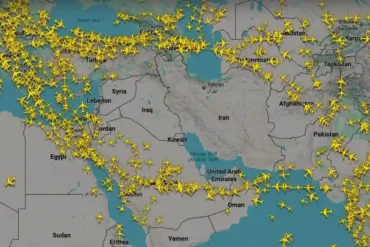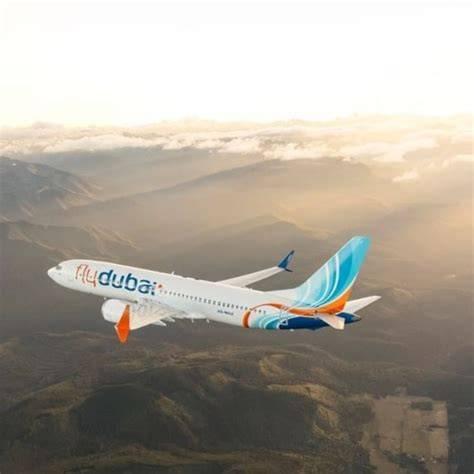
United Arab Emirates-based flydubai has resumed selected flights over Iranian airspace, bringing back a routing strategy that had largely disappeared from commercial aviation amid heightened military tensions across the Middle East. The decision is notable because the European Union Aviation Safety Agency (EASA) continues to advise operators not to fly within Iran’s Tehran Flight Information Region at any altitude or flight level.
The first reported flight using the restored route was flydubai flight FZ709, which operated from Dubai International Airport (DXB) to Baku Heydar Aliyev International Airport (GYD) on August 16 using a Boeing 737 MAX 8. Rather than taking a longer path around Iran, the aircraft crossed Iranian airspace, restoring a much more direct connection between Dubai and Azerbaijan. The move highlights the difficult balance airlines face between operational efficiency and the security risks associated with conflict-zone airspace.
For flydubai, the attraction is straightforward: flying directly across Iran can save significant time, reduce fuel consumption and avoid congestion on alternative routes. According to the reference analysis, the Dubai-Baku flight took approximately three hours and 10 minutes using the Iranian route, compared with around three hours and 50 minutes when aircraft were required to circumvent Iranian airspace. A saving of roughly 40 minutes on a single sector becomes operationally meaningful when multiplied across a large number of flights.
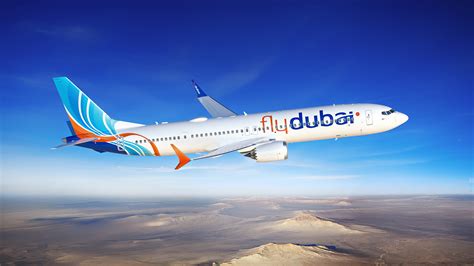
Why flydubai Is Returning to Iranian Airspace
The decision comes after months in which airlines operating from the Gulf have been forced to redesign routes around areas considered unsuitable for civilian aviation. Detours through neighboring airspace, including corridors over Iraq and Saudi Arabia, can add distance and increase fuel burn while simultaneously concentrating more aircraft into already busy routes. For airlines operating narrowbody fleets on relatively short regional sectors, those additional minutes can have a measurable impact on aircraft utilization, fuel costs and schedule reliability.
Iran occupies a particularly important geographical position for flights linking the United Arab Emirates with the Caucasus, Central Asia and parts of Eastern Europe. A direct east-northeast track across the country is often considerably more efficient than routing around its perimeter. Removing the detour can therefore shorten the geographical distance between Dubai and destinations such as Baku, while also reducing the amount of fuel required for each journey.
The benefits extend beyond the airline’s immediate operating costs. Shorter flights generally mean lower fuel consumption and fewer associated carbon emissions, while faster sectors can improve aircraft rotation throughout the day. An aircraft that reaches its destination earlier has more time available for subsequent flights, potentially allowing the airline to improve schedule resilience or extract additional utilization from its fleet.
For passengers, the most visible benefit is simply a shorter journey. A reduction approaching 40 minutes can make a noticeable difference on a regional flight, particularly for travelers connecting onward through Dubai. However, passengers are also likely to see the consequences if the security situation changes rapidly and the airline has to restore a longer routing at short notice.
EASA Still Warns Against Flights Over Iran
The most important factor surrounding flydubai’s decision is that EASA’s warning remains active. EASA’s current Conflict Zone Information Bulletin for Iran, issued July 8, 2026, covers the entire Tehran Flight Information Region (OIIX) and remains valid through August 31 unless reviewed earlier. The agency explicitly recommends that operators not operate within Iranian airspace at all altitudes and flight levels.
EASA says the advisory reflects continuing risks associated with the regional military situation. Although the intensity of the conflict has changed following ceasefire arrangements, the agency considers the situation sufficiently unstable to warrant continued restrictions. Iranian air force and air-defense units remain on a high level of alert, creating an increased possibility of misidentification of civilian aircraft.
That concern is especially significant because civilian aircraft can operate relatively close to areas where military forces are monitoring potential threats. Modern air-defense networks are designed to identify and respond rapidly to aircraft, missiles and drones, but in an environment characterized by heightened alert levels and rapidly changing military activity, the consequences of an identification error can be catastrophic.
EASA also points to the unpredictable nature of military developments. Temporary airspace restrictions can be introduced when fighting intensifies, but a sudden escalation may occur faster than civil aviation authorities and airlines can fully adjust their operations. The agency therefore considers the combination of military activity, weapons systems and air-defense operations to represent a high risk to civil flights in Iranian airspace.
A Calculated Airline Risk Assessment
flydubai’s return to the route does not necessarily mean the carrier has dismissed the security concerns raised by international aviation authorities. The airline has indicated that the decision followed detailed safety checks and risk assessments, suggesting that its operational planners considered current military, navigational and airspace-management conditions before restoring the route.
That distinction is important because EASA’s CZIB recommendations apply directly to EASA-regulated operators and certain third-country operators authorized by EASA. Other airlines and national authorities can conduct their own risk assessments under their respective regulatory frameworks. In practice, this means that different carriers can reach different conclusions about the same airspace, particularly when conditions change quickly.
For flydubai, the calculation appears to involve weighing the benefits of a direct route against the residual security risks identified by authorities. The airline is not understood to have restored every route through Iran indiscriminately. Instead, only selected destinations are currently using the corridor, indicating a more targeted approach rather than a wholesale return to Iranian airspace.
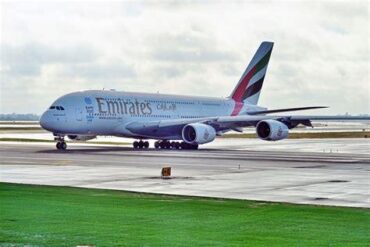
The decision also contrasts with the approaches of other major UAE carriers. Emirates and Etihad Airways have continued to use routing strategies that avoid Iranian airspace where appropriate, demonstrating that airlines based in the same country can still adopt different operational responses to the same regional security environment.
Why the Decision Matters for Middle Eastern Aviation
flydubai’s move could become an important indicator of how commercial aviation responds if regional tensions continue to ease. Airspace closures and conflict-driven diversions have reshaped airline networks, creating longer flight times, higher fuel bills and increased congestion across alternative corridors. A gradual reopening of previously avoided routes could reverse some of those effects.
At the same time, the decision does not mean that Iranian airspace has returned to normal. EASA’s active bulletin makes that clear, and the agency continues to monitor developments closely. Its current assessment specifically warns that a breakdown in the existing truce could expose Iranian airspace to renewed and potentially immediate threats.
The broader Gulf region also remains under heightened scrutiny. EASA currently maintains a separate advisory covering the airspace of Bahrain, Kuwait, Qatar, the United Arab Emirates and parts of the Gulf of Oman, citing the possibility of missile and drone activity, interceptions, falling debris and unintended engagement involving air-defense systems. That bulletin is also valid through August 31, 2026.
This means airlines are making routing decisions within a regional security environment that remains unusually fluid. A route that is considered practical today can become unsuitable with very little warning. For flydubai, therefore, the return over Iran represents less a declaration that the danger has disappeared than a calculated operational decision based on the carrier’s current assessment of risk.
Fuel Savings Versus Conflict-Zone Exposure
The economics are compelling. A route that saves approximately 40 minutes can reduce fuel consumption, lower emissions and free aircraft capacity. Across repeated flights, those savings can accumulate into substantial operational benefits. The alternative is to continue flying around the affected airspace, accepting longer sectors and higher costs in exchange for a more conservative risk profile.
Yet aviation safety decisions cannot be reduced to fuel prices or schedule efficiency. The central issue is the possibility that military developments can change faster than commercial flight plans. EASA’s warning exists precisely because normal aviation assumptions become less reliable when air-defense systems are active and geopolitical tensions remain elevated.
For passengers flying flydubai’s affected routes, the immediate result may simply be a faster journey. Behind that shorter flight, however, is a complex series of decisions involving dispatchers, pilots, air navigation authorities, security specialists and the airline’s own risk-management procedures. The restoration of the Iranian corridor therefore represents a significant development in the continuing effort by Gulf airlines to rebuild efficient flight networks while navigating one of the world’s most volatile aviation environments.
With EASA’s Iranian airspace warning still active, flydubai’s decision will be closely watched by other airlines operating between the Gulf, the Caucasus and Central Asia. If the security assessment continues to support the route, additional carriers could eventually reconsider their own detours. If tensions rise again, however, the newly restored corridor could disappear almost as quickly as it returned.
A useful follow-up is to examine which flydubai routes are currently using Iranian airspace and how much additional time airlines save compared with the Iraq detour.