In a significant move marking the normalization of regional air traffic, Air France, the national carrier of France, has resumed utilizing Pakistani airspace for its international flights. This decision comes after weeks of suspension, following escalated tensions between Pakistan and India due to the Pahalgam attack and subsequent cross-border incursions. The suspension of overflights by numerous international carriers, including Air France, was primarily a precautionary measure taken in response to these heightened tensions. However, with diplomatic de-escalation and stabilization of the situation, several airlines are now gradually reinstating their flight routes through Pakistan.
The Context Behind Air France’s Suspension
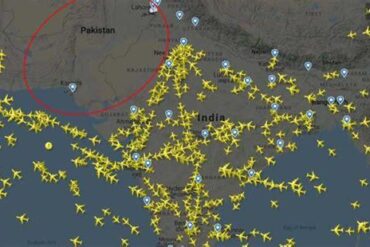
On April 24, a crucial development occurred when Pakistan closed its airspace to Indian airlines and aircraft in response to military skirmishes near the border. This decision prompted a number of international airlines to re-route their flights to avoid the tense region. Air France was among those carriers that halted its overflights of Pakistan’s airspace. The French airline, along with other major carriers, cited the growing regional instability as the primary reason for the suspension. The tensions between Pakistan and India had reached a boiling point, especially after the attacks in Pahalgam, which led to a diplomatic and military standoff between the two nations.
The Gradual Resumption of Air Routes
Over time, as the situation between India and Pakistan gradually stabilized, international airlines began to resume their regular routes through Pakistani airspace. Notable carriers such as Swiss Air, British Airways, Emirates, Etihad, and Lufthansa were among the first to revert to their original flight paths, cutting down on costly detours over the Arabian Sea or Gulf regions. The resumption of these routes marked the beginning of a broader return to normalcy in the region’s aviation landscape.

For Air France, however, the process took a bit longer. The airline had continued to avoid Pakistani airspace until now, continuing to operate flights around the region, which caused operational inefficiencies. The prolonged rerouting significantly increased fuel costs and flight durations. According to aviation experts, the airline faced a substantial challenge, both in terms of fuel consumption and logistical coordination, as the detours caused significant delays, particularly for flights traveling to destinations like Paris-Delhi, Mumbai-Paris, Bangkok, Singapore, Manila, and Ho Chi Minh City.
Strategic Importance of Pakistan’s Airspace
The resumption of Air France flights through Pakistan signifies much more than just a return to shorter routes for the airline. It underscores Pakistan’s critical role in the broader aviation connectivity of South Asia. The nation’s airspace serves as a vital corridor for numerous international airlines traveling between Europe and the Far East. As one of the most strategic locations for aviation in the region, Pakistan’s airspace offers airlines a direct and fuel-efficient route, drastically cutting down on costs compared to alternative flight paths over the Arabian Sea or through Gulf air corridors.
The Diplomatic De-escalation
The return of Air France flights through Pakistani airspace also highlights the ongoing diplomatic de-escalation between Pakistan and India. Following the military skirmishes, both countries made concerted efforts to reduce hostilities and restore diplomatic dialogue. This has been crucial not just for the airlines operating in the region but also for the economies of both countries, as well as the broader South Asian region, which depends on air connectivity for commerce and travel.
The Pakistani government’s efforts to engage in dialogue with India have not only restored normalcy in the airspace but have also paved the way for renewed cooperation in other areas, including trade, tourism, and regional security. The normalization of air travel between the two countries and the resumption of overflights is seen as a positive step forward in fostering peaceful relations.
The Economic Implications for Air France
The decision to resume flights over Pakistan is also a critical one from an economic standpoint for Air France. The rerouting of its flights had been a significant drain on the airline’s resources. The detours, often taking passengers on longer routes through the Arabian Sea or Gulf, increased fuel consumption and operational costs, which directly impacted the airline’s bottom line. The airline’s ability to use Pakistani airspace once again will help optimize flight routes, reduce fuel costs, and improve operational efficiency. Moreover, the resumption of regular flight paths will also allow the airline to streamline its schedules, offering passengers shorter travel times and potentially boosting demand for these routes.
Operational Efficiencies
One of the immediate benefits that Air France will enjoy is the optimization of flight routes. With Pakistani airspace open to international flights once more, airlines can revert to the most fuel-efficient and time-effective flight paths. This will not only save Air France millions in fuel costs but also increase the speed and efficiency of its operations. For travelers, this means quicker travel times between major hubs like Paris, Delhi, Mumbai, and Southeast Asia. The move to restore regular overflights through Pakistan will also allow the airline to offer better service levels by maintaining timely schedules.
Pakistan’s Role in South Asia’s Aviation Connectivity
In light of the recent developments, it is clear that Pakistan plays an instrumental role in the aviation industry of South Asia. Serving as a transit hub for flights between the West and the East, Pakistani airspace offers a direct route that is both economically and logistically advantageous. The suspension of overflights earlier this year sent ripples across the aviation industry, affecting not just airlines like Air France but also impacting global air traffic and trade. Now, with diplomatic tensions cooling down and the return of overflights, Pakistan is once again an essential player in the region’s aviation network.
The Way Forward
The resumption of overflights through Pakistan is a promising sign for the future of regional air travel. As diplomatic ties continue to improve between Pakistan and India, it is likely that more international airlines will follow in Air France’s footsteps, resuming their routes through Pakistani airspace. This will not only benefit airlines in terms of cost savings and operational efficiency but will also have a positive impact on regional economies that rely on efficient air transport.
The return to normalcy in the region’s aviation landscape, signified by Air France’s decision to resume its operations, is a welcome development for the airline industry and a hopeful sign for the future of South Asia’s economic and diplomatic relations.