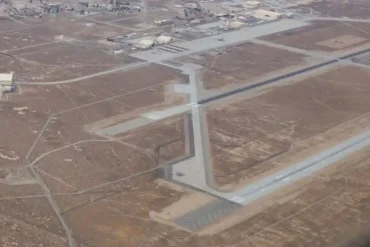
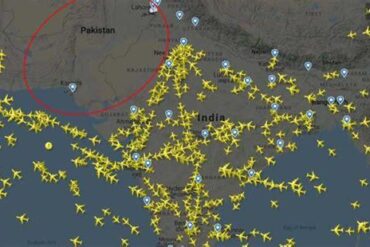
India’s unprecedented airstrikes deep inside Pakistani territory have left significant destruction across six major airfields, marking the most assertive Indian military operation against Pakistan since the 1971 war. An in-depth visual analysis of satellite imagery and on-ground footage by The Washington Post reveals substantial damage to critical Pakistani air force infrastructure, including three aircraft hangars, two runways, and two mobile air command structures. The strikes have intensified tensions between the nuclear-armed rivals and signaled a new strategic doctrine in India’s military engagements.
Scope and Precision of the Strikes
The airstrikes conducted last Saturday were distinguished not only by their scale and precision but also by the depth of penetration, with some targets located nearly 100 miles inside Pakistani territory. Analysts confirmed that among the sites targeted were high-value air force installations at Bholari, Shahbaz, Mushaf, Sukkur, and Nur Khan, as well as the Sheikh Zayed International Airport.
Damage Assessment from Satellite Imagery
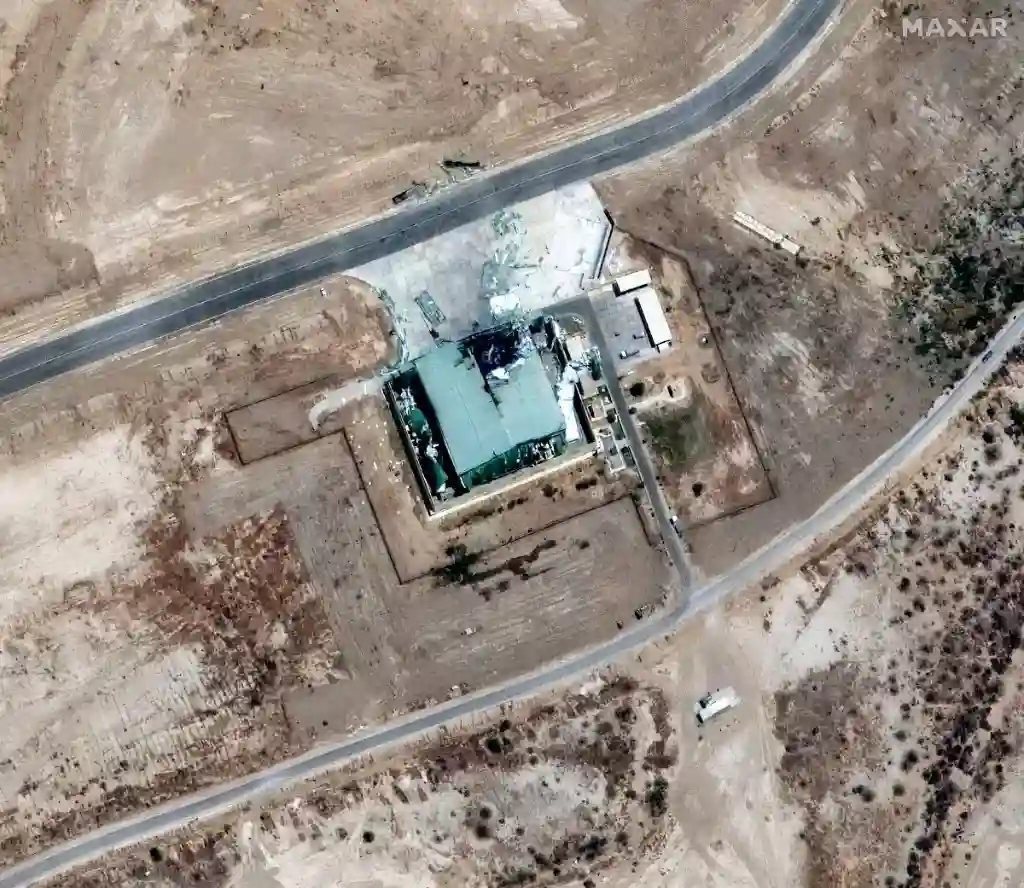
The imagery shows multiple missile impact points and structural collapses, including:
- A 60-foot-wide hole in the roof of a hangar at Bholari Air Base, a facility known to house Saab 2000 AEW&C surveillance aircraft.
- A second hangar at Shahbaz Air Base showing a 100-foot-wide roof breach, consistent with direct missile strikes, and severe damage to a nearby control tower.
- Destruction of two mobile command centers at Nur Khan Air Base, located near Pakistan’s nuclear command infrastructure and General Headquarters.
- Collapsed hangar structures and a likely destroyed radar installation at Sukkur Airport, used jointly by civilian and military aviation.
- Large craters evident in the runways of Mushaf Air Base and Sheikh Zayed International Airport, temporarily crippling takeoff and landing capabilities.
High-Profile Targets: A Shift in Doctrine
The deliberate selection of military targets far beyond the usual flashpoints in Kashmir indicates a strategic escalation. According to Walter Ladwig of King’s College London, “these are the most extensive Indian air attacks on Pakistani military infrastructure since the 1971 war.” The targeting of core command and surveillance facilities suggests India aimed to undermine Pakistan’s offensive and defensive air capabilities.
Tactical Intent and Strategic Signaling
Indian officials described the operation as “measured and calibrated,” emphasizing a calculated show of force in response to a deadly militant attack in Indian-administered Kashmir on April 22 that left 26 civilians dead. New Delhi squarely blamed Islamabad for harboring the attackers — a claim Pakistan denies.
Jeffrey Lewis, a military analyst at Middlebury College, remarked that while the bases “suffered some damage,” they were not rendered permanently inoperable. Nevertheless, Christopher Clary, author and security scholar, assessed that the strikes inflicted “meaningful — though not devastating — damage” on Pakistani air capabilities.
Pakistani Military Reaction and Retaliation
Pakistan acknowledged hits on five military air bases and one civilian airport, with six air force personnel killed, including five at Bholari and one at Mushaf. Lt. Gen. Ahmed Sharif Chaudhry, Pakistan’s chief military spokesperson, confirmed the damage but asserted that most incoming missiles were intercepted.
“A few managed to sneak in,” Chaudhry said, downplaying the severity but acknowledging the breach. Despite this, he reaffirmed Pakistan’s “full confidence in its air defenses.”
Pakistan’s retaliatory airstrikes claimed to have hit Indian military targets in Punjab and Indian-administered Kashmir. New Delhi has denied or declined to confirm these claims. Furthermore, Islamabad asserted that it had downed five Indian warplanes during the first exchange on May 7. Satellite data analyzed by The Post confirmed that at least two Indian jets were downed.
Nur Khan Air Base: A Strategic Target
Particularly notable was the strike on Nur Khan Air Base, located near Rawalpindi, the headquarters of Pakistan’s military establishment. William Goodhind, a geospatial analyst with the Contested Ground project, noted the destruction of two mobile buildings critical for air operations control. The site’s proximity to the Strategic Plans Division, responsible for Pakistan’s 170 nuclear warheads, has alarmed international observers.
A defense researcher, speaking anonymously, stated, “Such an attack could have been interpreted as a move to target Pakistan’s nuclear command infrastructure.”
Civilian Infrastructure Also Affected
The Sheikh Zayed International Airport, though a dual-use facility, sustained damage to its Royal Lounge, named after UAE’s late founding leader. Civil aviation at Sukkur and Sheikh Zayed was temporarily suspended, raising concerns over the implications for civilian populations in these zones.
Global Reactions and Ceasefire
The rapid escalation alarmed Washington, with U.S. officials warning of a potential slide into full-scale conflict between two nuclear-armed states. Within hours, a ceasefire was brokered with intervention from then-President Donald Trump. While both sides have since de-escalated, tensions remain high, with India warning of further action should another cross-border militant attack occur.
Indian Prime Minister Narendra Modi characterized the strikes as a pause, not an end, to military operations. He warned that any further provocation would result in immediate and strong retaliation.
The Broader Implications
According to military observers, India’s decision to strike deeper into Pakistan represents a significant doctrinal shift. In past conflicts, such as Kargil in 1999 and the 2019 Balakot airstrikes, Indian operations were largely confined to border zones or specific insurgent camps. This new approach demonstrates India’s intent to treat militant attacks as grounds for conventional military response, reshaping the conflict dynamic in South Asia.
Walter Ladwig observed, “India is no longer limiting itself to symbolic strikes or border skirmishes. It is treating terrorism as an act of war, and responding accordingly.”
Ongoing Tensions and Unanswered Questions
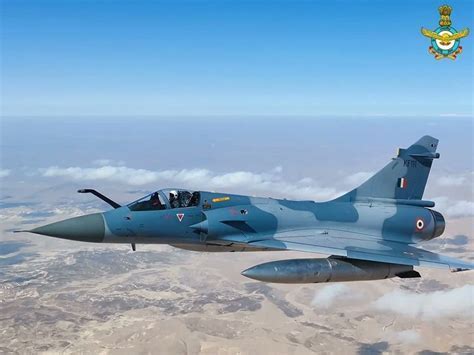
Despite the apparent pause, neither side has disclosed the full scope of damages or losses. India’s silence on the reported downing of its jets and Pakistan’s ambiguity about the location and severity of its losses continue to shroud the episode in uncertainty.
Nonetheless, the use of open-source intelligence, such as high-resolution satellite imagery, has offered an unprecedented level of insight into this confrontation. The ability to independently verify claims has changed the landscape of modern warfare journalism and conflict analysis.
As India and Pakistan remain in a tense standoff, the broader regional and international community watches closely. The next provocation — whether militant or military — could set the stage for a more dangerous escalation, especially given the precedent established in these strikes.
Conclusion
The Indian airstrikes on May 10 represent a watershed moment in the long-standing India-Pakistan conflict. With precision attacks on strategic airfields, the Indian military has signaled a departure from past restraint, aiming to send a powerful message not only to Islamabad but to the international community. While the immediate threat of war has been contained, the underlying volatility remains unresolved, leaving South Asia on edge as both nations recalibrate their military and political strategies.