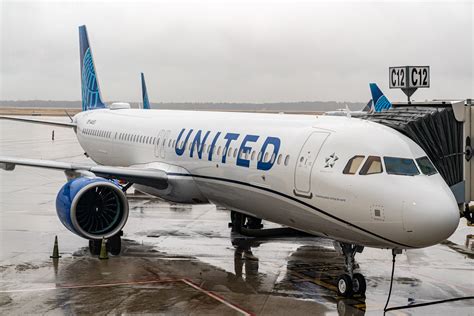
A routine domestic flight ended in an extraordinary aviation incident when a United Airlines Airbus A321neo suffered a nose wheel detachment during landing at Orlando International Airport (MCO), leaving the nearly new aircraft grounded with damage extending far beyond the landing gear. The aircraft, operating as United Flight 2323 from Chicago O’Hare (ORD), touched down in challenging weather conditions, transforming an otherwise standard arrival into a technical and operational headache for one of the world’s largest carriers.
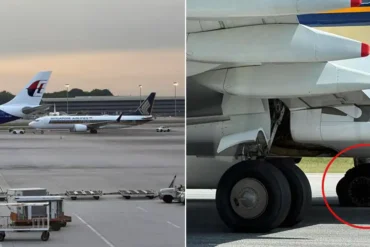
The aircraft involved, registration N14502, is just over two years old, making the severity of the damage particularly notable. Video footage captured from the airfield shows the A321neo initially settling onto its main landing gear before rebounding slightly, a dynamic sequence that placed abnormal stress on the forward landing assembly. As the nose gear contacted the runway, one of the nose wheels appears to have separated, veering away from the aircraft and scattering debris along the right side of the runway.
Inside the cabin, passengers and crew experienced what was described as a forceful and uneven landing. Despite the dramatic nature of the event, no injuries were reported among the 200 passengers and six crew members onboard, a testament to modern aircraft structural resilience and crew training. Passengers were later bused to the terminal after the aircraft was cleared from the runway, allowing airport operations to resume.
The Landing Sequence That Changed Everything
Flight tracking data shows UA2323 departed Chicago just 15 minutes behind schedule and cruised at approximately 32,000 feet during its two-hour-and-nineteen-minute journey. The approach into Orlando coincided with unsettled weather, conditions that demand precise energy management during touchdown. Footage reveals the aircraft’s left side briefly lifting after main gear contact, a sign of uneven load distribution that likely amplified stress on the nose gear as it came down moments later.
When the nose assembly met the runway, the forces involved appear to have exceeded tolerance limits for at least one component. The result was not merely a detached wheel but a cascade of secondary damage that would soon render the aircraft unflyable until extensive inspections and repairs could be completed.
Damage Beyond the Nose Gear
Initial assumptions might suggest a simple landing gear repair, but post-incident inspections revealed a far more complex situation. A detailed damage summary shared by industry sources outlines foreign object debris (FOD) ingestion affecting both Pratt & Whitney PW1133G geared turbofan engines, including damage to fan blades, acoustic panels, thrust reversers, and fan cases. Such engine exposure dramatically escalates repair timelines and cost, as each affected module must undergo meticulous inspection or replacement.
The damage list extends across multiple critical structures: the nose gear upper strut, torque links, and left axle sustained harm; one main landing gear tire was cut; and the right main gear door suffered structural damage. Additional findings include flap damage, fuselage surface dings, and a compromised tow attach point. Each item alone might be manageable, but together they form a repair package that keeps the aircraft sidelined for an extended period.
Why This Aircraft Will Be Grounded for Weeks, Not Days
For airlines, landing gear incidents are rarely isolated events. The separation of a wheel introduces immediate concerns about alignment, stress fractures, and hidden damage within surrounding structures. When combined with engine FOD, the maintenance response shifts from routine to intensive. Engines must be partially disassembled, borescoped, and tested before being cleared for flight, while landing gear components require precise replacement and recalibration.
Given the aircraft’s young age and modern design, United Airlines is expected to pursue a by-the-book repair strategy, ensuring every affected system meets strict airworthiness standards before returning the jet to service. This conservative approach protects long-term fleet reliability but comes at the cost of short-term capacity loss.
Aircraft Background and Fleet Context
Aircraft N14502 carries manufacturer serial number 11598 and first flew in November 2023 before delivery to United later that month. Configured with 20 United First seats and 180 economy seats, it represents a key asset in United’s domestic and near-international narrowbody operations. The A321neo’s fuel efficiency and range make it central to the airline’s growth strategy, which magnifies the operational impact of losing even a single airframe temporarily.
United operates 58 A321neos, supported by a broader narrowbody fleet that includes Airbus A319s, A320s, and multiple Boeing 737 variants. While the airline has sufficient fleet depth to absorb the disruption, incidents like this highlight how quickly a single landing event can ripple through scheduling, maintenance planning, and spare aircraft availability.
A Reminder of Modern Aviation’s Thin Margins
This Orlando landing serves as a sharp reminder that even with advanced avionics, fly-by-wire controls, and highly trained crews, aviation remains a discipline of narrow tolerances. Minor deviations during landing can translate into major mechanical consequences, especially when compounded by weather and runway conditions. The most important outcome remains unchanged: everyone walked away safely.
As repairs continue, the incident will likely be studied internally by United and externally by industry analysts, not as a failure, but as a case study in aircraft survivability, maintenance response, and operational resilience. In a system engineered around safety margins, the true success story lies in how those margins performed when tested hardest.