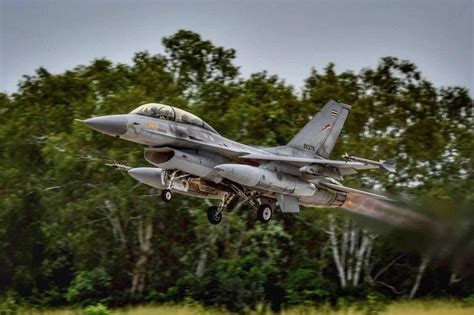
The Royal Thai Air Force (RTAF) has drawn global attention after imagery surfaced showing one of its F-16A fighter jets armed with a South Korean KGGB-guided bomb, just hours before a precision strike operation reportedly targeted Cambodian military installations. As the conflict between Thailand and Cambodia intensified following a border dispute escalation on July 24, 2025, the presence of such an advanced air-to-surface munition marks a significant leap in Thailand’s aerial warfare capability.
Hostilities, now entering their third day, have claimed at least 14 lives, many of whom are civilians, with Trat Province in southern Thailand witnessing the brunt of the confrontations. The Thai government has declared a state of emergency across eight border provinces, while travel advisories have been issued for citizens. Meanwhile, military analysts are closely monitoring developments on both sides of the border, with Thai F-16s now at the forefront of regional defense.
The KGGB: South Korea’s Precision Airstrike Solution
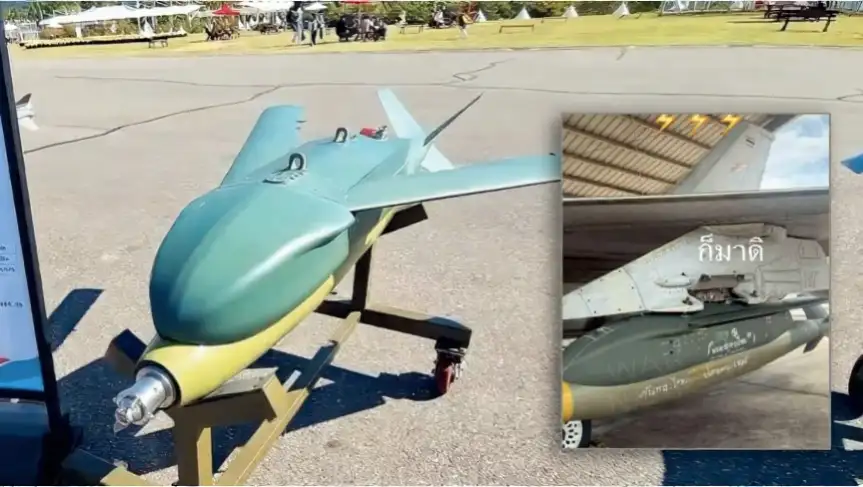
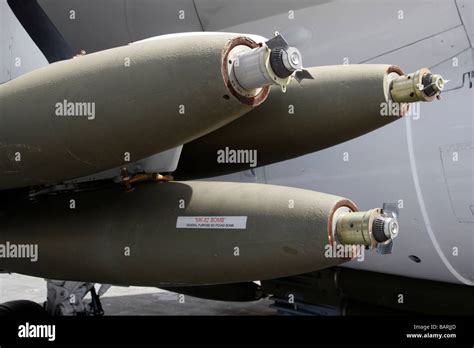
The KGGB (Korean GPS-Guided Bomb), developed by LIG Nex1, transforms a standard Mk-82 unguided bomb into a high-precision, medium-range glide munition. Photos of a Thai F-16 carrying a KGGB-equipped Mk-82 emerged on June 25, 2025, confirming the integration of the weapon into Thailand’s fleet. This marks a major operational milestone since the RTAF’s 2022 acquisition of 20 KGGB kits.
Similar in concept to the American JDAM-ER (Joint Direct Attack Munition – Extended Range), the KGGB utilizes a GPS/INS (Global Positioning System / Inertial Navigation System) guidance system and deploys an advanced folding wing kit to extend its range. South Korean sources report the KGGB can strike targets up to 103 km away depending on release altitude. Thai sources suggest in-country tests confirmed a maximum reach of 110 km with 3-meter Circular Error Probability (CEP)—a level of accuracy that dramatically improves the effectiveness of airstrikes against hardened or concealed targets.
Combat Use and Targeted Messaging
In the latest photos, Thai aircrews had reportedly hand-written slogans on the Mk-82s, similar to the infamous “Hello Hunsen” bomb spotted in earlier sorties—a chilling psychological tactic harking back to Cold War-era messaging. One of the visible bombs was also outfitted with the Israeli-made Elbit Systems Lizard III guidance kit, suggesting multiple smart-bomb solutions are now deployed in parallel.
These weaponized messages speak volumes about Thailand’s strategic messaging, especially as ceasefire negotiations falter. Cambodian Prime Minister Hun Manet has lashed out at Bangkok’s withdrawal from the ASEAN-brokered ceasefire terms proposed by chairperson Anwar Ibrahim, deepening fears of a drawn-out conflict.
Thailand and South Korea: Deepening Defense Ties
The Royal Thai Air Force’s use of the KGGB underscores a growing military-technical partnership between Thailand and South Korea. While South Korea’s RoKAF (Republic of Korea Air Force) began deploying the KGGB in 2018, Thai acquisition came four years later, in 2022, following rigorous evaluations and testing.
Initial integration began with the KAI T-50TH Golden Eagle, a supersonic trainer/light attack aircraft. The T-50TH, of which Thailand operates 14 units, served as the KGGB’s first operational testbed in Thai inventory. This smooth transition from training platforms to frontline F-16A multirole fighters demonstrates the bomb’s modular architecture and easy integration—reportedly requiring no software or mission system modifications. Instead, pilots use an external interface called the PDU (Pilot Display Unit) to control and guide the munition.
How the KGGB Works: Range, Precision, and Targeting
The KGGB is designed to improve both the survivability of the launch aircraft and the destructive capability of the bomb. Once released, the bomb’s wing kit deploys, allowing it to glide toward the target. During flight, the PDU interface enables pilots to send target coordinates or retask the bomb mid-flight—a highly desirable feature when engaging mobile or concealed targets, such as enemy artillery units hidden in rugged terrain.
Archived materials from LIG Nex1 showcase the KGGB in various use-case simulations. In one 2021 video, an F-15K Slam Eagle is seen releasing two KGGBs, each adjusting course mid-glide to strike mountain targets simulating North Korean artillery sites. This capability directly parallels the kinds of targets Cambodia may be using today—BM-21 Grad MLRS systems, tunnel bunkers, and mobile anti-aircraft platforms.
Strategic Implications for Thai Air Operations
The deployment of the KGGB gives the RTAF a game-changing edge in targeting accuracy and survivability. In previous decades, Thai aircraft had to fly dangerously close to hostile borders to drop unguided munitions with any certainty. With the KGGB-equipped Mk-82, strikes can be launched from well within Thai airspace—potentially avoiding Cambodian air defenses, especially as fears grow over foreign-supplied MANPADS or radar-guided SAMs along the border.
This stand-off capability is crucial for protecting RTAF aircrews and minimizing collateral damage. With a reported 3-meter CEP, the KGGB rivals American and Israeli smart munitions in accuracy, all while costing less. Korean media also touted the KGGB as being more cost-effective than the JDAM-ER, providing a budget-conscious option for allied nations seeking precision-strike capabilities without relying on U.S. procurement systems.
Advanced Variants and Future Outlook
South Korea’s defense sector is reportedly working on a next-generation upgrade called the KGGB 2. This variant will include dual-mode seekers, specifically Mid-Wave Infrared (MWIR) and Semi-Active Laser (SAL) guidance, along with a Weapons Data Link (WDL). Such features would allow for real-time retargeting, coordination with forward air controllers, and dynamic battlefield adaptation.
Should Thailand pursue this upgrade, it would catapult the RTAF’s strike capabilities into a higher tier of sophistication. Given that Thailand is also planning to procure the Saab Gripen E/F, future integration of the KGGB or KGGB 2 into this platform would ensure cross-platform compatibility, particularly since the current KGGB already functions independently of specific mission computer systems.
Cambodian Response and the Escalating Border War
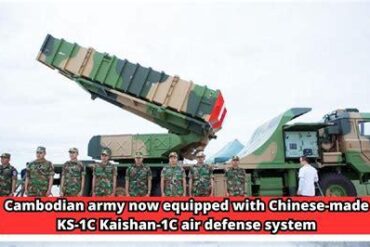
As Thai air operations become more precise and lethal, Cambodia’s military is expected to reassess its air defense posture. While Cambodia relies heavily on older Soviet/Russian artillery and limited aerial platforms, it may turn to foreign defense suppliers to bolster its capabilities. The use of BM-21 Grad rocket artillery in recent clashes, while potent in saturation fire, lacks precision and is susceptible to preemptive airstrikes like those made possible by the KGGB.
Both nations have seen previous border skirmishes over disputed temple sites and resource-rich lands, but the current flare-up appears to be escalating beyond historical patterns. With ASEAN mediation faltering and both capitals signaling hardened stances, the introduction of precision-guided air-to-ground weapons like the KGGB could shape the trajectory of this emerging war.
Conclusion: Precision Weapons in a Fragmenting Region
The appearance of the South Korean KGGB on Thai F-16s, timed just before active combat missions against Cambodian positions, signals a broader shift in Southeast Asia’s defense dynamics. As military technology becomes more modular, precise, and accessible to middle-power nations, the threshold for precision warfare has lowered. Thailand’s swift adoption and battlefield use of the KGGB marks a milestone in airpower modernization and strategic deterrence.
What remains uncertain is whether the regional diplomatic architecture can restrain this rapidly evolving crisis. With new-generation weapons in play, the cost of miscalculation increases dramatically, and the world will be watching closely whether the KGGB becomes a symbol of deterrence—or escalation.