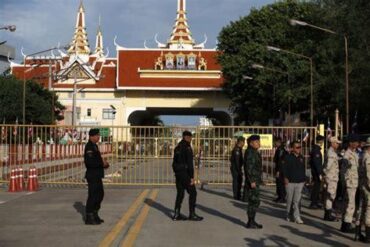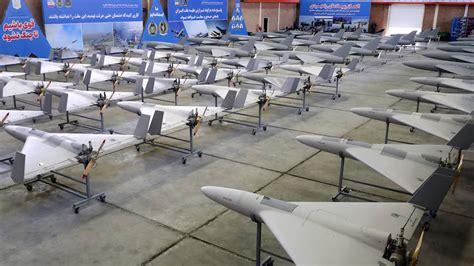
Tensions between Thailand and Cambodia have escalated dramatically following a massive drone assault, with over 250 kamikaze drones reportedly launched by Cambodia into Thai territory. This unprecedented aerial incursion occurred just 24 hours after both nations signed a ceasefire agreement, raising urgent questions about Cambodia’s motives and, more crucially, the extent of China’s involvement behind the scenes.
Ceasefire Breached Within Hours
The ceasefire agreement, brokered after weeks of intense border clashes, was designed to stabilize the region, halt troop movements, and ensure the return of more than a million displaced civilians. A core condition was the return of 18 Cambodian soldiers captured by Thailand in July—on the premise that both sides maintained the truce. That condition is now under serious threat.
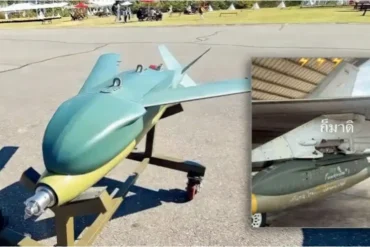
The Royal Thai Army confirmed that drones, believed to be launched from Cambodian military installations, violated Thai airspace on Sunday evening. These drones, assessed to be FPV (First-Person View) kamikaze drones, mirror models used in the Russia-Ukraine conflict, suggesting foreign influence in their procurement and deployment.
China’s Deepening Military Ties with Cambodia
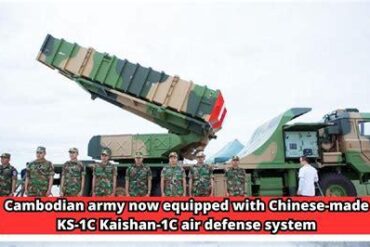
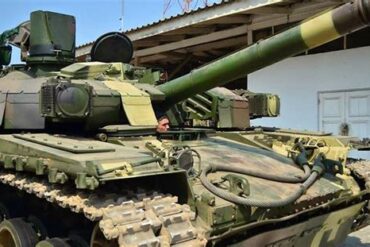
Cambodia’s military has undergone a significant transformation in recent years, largely powered by Chinese military support. Beijing remains the kingdom’s top arms supplier, delivering everything from small arms and artillery to drones and armored vehicles. Most notably, China has exported several variants of its CH-series drones, along with dual-use commercial platforms—often from companies like DJI—which can be weaponized for military operations.
These drones, although not part of a large or advanced fleet, are sufficient for targeted incursions and sabotage missions. According to Thai military sources, the drones used in the recent border violation are believed to have been locally assembled using Chinese-made components, likely circumventing export controls by importing individual parts rather than completed UAVs.
Strategic Implications of the Drone Assault
This strike, timed immediately after a ceasefire agreement, signals not only Cambodia’s willingness to test the limits of international diplomacy but also raises alarms about China’s indirect military projection in Southeast Asia. The ability to deploy over 250 kamikaze drones—whether for reconnaissance or lethal strikes—underscores a chilling new phase of warfare in the region.
Thailand, in response, has labeled the drone assault as “provocative” and a breach of the signed joint statement. Spokesman Winthai Suvaree emphasized that the incident “could affect the security of military personnel and civilians in border areas,” while hinting that the release of the detained Cambodian soldiers may now be off the table.
Regional Diplomacy in Crisis
This latest confrontation adds to an already volatile situation. In July, five days of intense clashes along the Cambodia-Thailand border left dozens dead before a truce was mediated with help from the United States, China, and Malaysia, the then-chair of ASEAN. However, hopes for long-term peace quickly faded as both sides resumed accusations and intermittent hostilities.
The breach of the new ceasefire risks derailing not just bilateral relations, but also wider efforts by ASEAN to maintain stability in the Indo-Pacific region. China’s role as both a mediator and primary supplier to one of the warring parties complicates the diplomatic equation significantly.
Cambodia has attempted to downplay the incident. Foreign Minister Prak Sokhonn, speaking on state television, described it as “a small issue related to flying drones seen by both sides along the border.” However, this dismissive stance fails to address the scale and intent of the assault.

The Chinese Drone Footprint in Cambodia
While there is no concrete evidence that China directly authorized the drone strike, the technological footprint is unmistakable. Commercial Chinese drones are easily modified for combat, particularly FPV-style UAVs, which are agile, affordable, and ideal for kamikaze missions.
Moreover, China’s deepening defense cooperation with Cambodia includes training, military infrastructure development, and the controversial Ream Naval Base modernization project, which U.S. officials fear could give China a permanent strategic outpost in the Gulf of Thailand.
Escalation or De-escalation Ahead?
Following the drone incident, Thailand, Cambodia, and China released a carefully worded joint statement after emergency talks in Yunnan province, pledging to “work step by step” to rebuild trust and stabilize the region. Cambodia has also proposed another bilateral border demarcation meeting in early January, aiming to defuse tensions.
But with trust eroded, the question remains whether such diplomatic overtures can hold. The massive drone deployment has introduced a new asymmetric threat that traditional ceasefire agreements fail to anticipate or control. It also reveals how low-cost drone warfare, fueled by global supply chains, can reshape regional conflict dynamics.
Conclusion: A New Era of Border Tensions

The Cambodian drone attack represents more than a ceasefire violation—it marks a dangerous evolution in modern warfare in Southeast Asia. The use of drone swarms, likely powered by Chinese components, reflects a shift toward proxy-enabled conflicts where deniability and technological advantage replace traditional military might.
As Thailand recalibrates its border defense and reconsiders prisoner exchanges, the eyes of ASEAN and global powers will remain sharply focused on how this fragile peace process unfolds—and whether Beijing’s growing influence will help stabilize or further inflame the region.