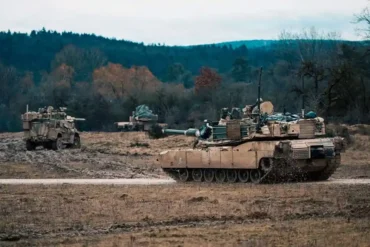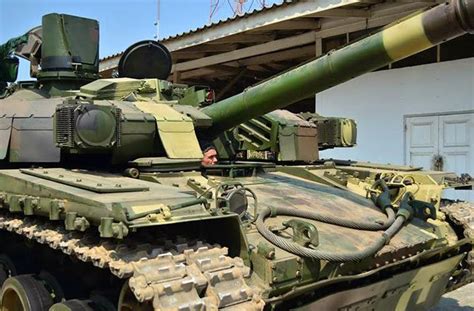
The Royal Thai Army has made a significant and unprecedented military move by deploying its Ukrainian-made T-84 Oplot-M main battle tanks in live combat for the first time. The tanks were used during a border clash with Cambodia on July 24, 2025, in the Preah Vihear area, a long-disputed region between the two Southeast Asian nations. According to official sources, the tanks engaged Cambodian positions near Wat Kaeo Siharatsavararam, escalating a long-standing geopolitical standoff into open conflict involving heavy armor.
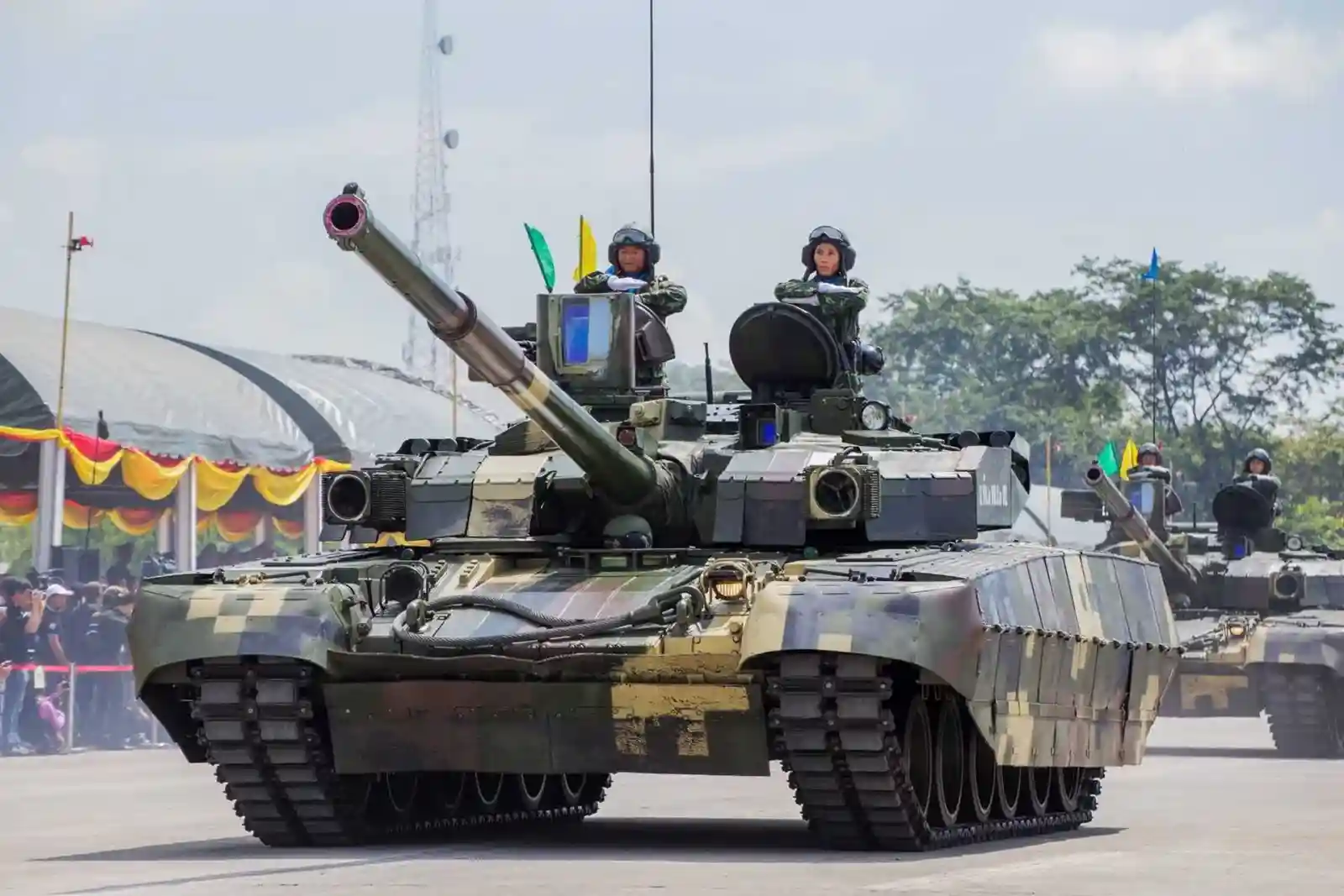
T-84 Oplot-M Deployed in Live Combat
The confrontation unfolded as Thai infantry, supported by T-84 Oplot-M tanks, advanced toward strategically elevated ground near the Preah Vihear temple. This move marks the first known combat use of the T-84 Oplot-M by Thailand since the country acquired the tanks from Ukraine. Defense sources have noted that this was not a routine patrol or show of force — it was a deliberate military operation designed to secure terrain that both nations lay claim to.
Multiple Thai cavalry battalions operate the T-84s, including units based in Prachinburi, Bangkok, Nakhon Ratchasima, and Phitsanuloke. The deployment reportedly involved elements from the 2nd, 4th, 8th, and 9th Cavalry Battalions, signaling a coordinated and high-priority maneuver. Observers have described the offensive as a mission to retake contested territory, although independent verification remains limited amid restricted access to the conflict zone.
The Preah Vihear Flashpoint Reignites
The clash near Preah Vihear, known in Thai as Khao Phra Wihan, is deeply rooted in a decades-old border dispute. Although the International Court of Justice ruled in 1962 that the ancient Hindu temple belongs to Cambodia, the surrounding 4.6-square-kilometer area has remained fiercely contested. Previous skirmishes, such as those in 2008 and 2011, turned deadly, prompting international condemnation and calls for restraint.
The latest outbreak was preceded by increased border activity in mid-July, including troop movements, fortifications, and allegations of incursions from both sides. The Thai use of main battle tanks in this context is a dramatic escalation, underscoring the strategic value of the disputed territory and the symbolic significance of the Preah Vihear site to both countries.
Anatomy of the T-84 Oplot-M: Engineering Power and Precision
Developed by the Kharkiv Morozov Machine Building Design Bureau in Ukraine, the T-84 Oplot-M is a modern main battle tank that descends from the Soviet T-80UD lineage. Designed with an emphasis on mobility, protection, and digital fire-control systems, the Oplot-M represents one of the most advanced armored platforms exported by Ukraine.
Weighing 51 tonnes, the Oplot-M features a compact yet powerful design. Its hull and turret incorporate advanced electro-slag remelted steel, layered with ceramic and aramid-fiber composites, along with Duplet explosive reactive armor (ERA) modules. The tank’s protection system also includes NBC shielding, internal spall liners, and the Varta active protection suite, which counters both infrared-guided and laser-guided threats using high-speed sensors and multi-spectral smoke grenades.
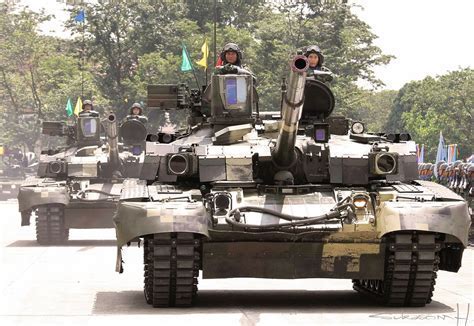
Armament Designed for the Modern Battlefield
At the heart of the T-84 Oplot-M’s firepower is a 125 mm KBA-3 smoothbore cannon, paired with an automatic loader and capable of firing advanced munitions, including laser-guided ATGMs. It can engage targets up to 5,000 meters, including moving armored vehicles and low-flying helicopters. Secondary weapons include a 7.62 mm KT coaxial machine gun and a 12.7 mm remotely operated anti-aircraft gun.
The 1G46M gunner’s sight, PNK-6 commander’s panoramic sight, and PTT-2 thermal sight offer multi-range targeting capabilities under diverse lighting conditions. The fire-control system is further enhanced by the LIO-V ballistic computer, which integrates meteorological data, barrel wear, and target tracking to optimize firing accuracy in both static and dynamic scenarios.
Engineered for Harsh Environments
Powered by either a 6TD-2E engine (1,200 hp) or a 6TD-4 (1,500 hp), the tank achieves a power-to-weight ratio of up to 30 hp/ton, delivering superior mobility across rugged terrain. It can reach speeds of 70 km/h and operate across 500 km without refueling. The torsion bar suspension with hydraulic dampers allows the tank to maintain stability over uneven terrain. Additionally, its deep fording capability — up to five meters — enables operations in riverine and monsoonal landscapes, particularly relevant in Southeast Asia’s climate.
Strategic Significance of the Deployment
Thailand’s choice to use the Oplot-M in an active combat zone sends a strong message about both military readiness and strategic intent. The Oplot’s deployment may indicate Thailand’s resolve to establish technological superiority in its armored corps, especially in comparison to Cambodia’s more limited tank arsenal. The move also reinforces Thailand’s long-standing focus on modernization of its cavalry forces, leveraging foreign-manufactured precision systems to deter adversaries and secure territorial objectives.
The T-84’s presence on the battlefield offers clear advantages: survivability, striking power, and digital battlefield integration. Through its GPS/GLONASS-based TIUS-NM navigation and combat management suite, the Oplot-M can coordinate with infantry and artillery units, enhancing joint operations and command responsiveness.
Background on Thailand’s Oplot Acquisition
Thailand ordered 49 BM Oplot-T tanks from Ukraine in 2011 for an estimated 7.155 billion baht (~$200 million USD). The program, however, faced considerable delays due to the outbreak of war in Ukraine and subsequent production disruptions. Despite rumors in 2017 that Thailand would abandon the project, all units were delivered by March 2018. The tanks now serve in elite cavalry formations at:
- Fort Chakrabongse (2nd Battalion)
- Kiakkai Barracks (4th Battalion)
- Fort Suranari (8th Battalion)
- Fort Ekathotsarot (9th Battalion)
Ukraine integrated European subsystems into the Thai export models to meet NATO compatibility standards. These include thermal imaging from Thales, FN Herstal’s machine guns, navigation systems by Germany’s LITEF, and atmospheric sensors by IRDAM Switzerland. The modular design allows for further upgrades and adaptations to mission-specific environments.
The Broader Geopolitical Implications
The Thai-Cambodian clash in 2025 underscores the fragility of regional peace mechanisms in Southeast Asia. With ASEAN diplomacy unable to contain the flare-up, the use of main battle tanks by Thailand could trigger an arms escalation in the region. Cambodia’s military — while smaller and less technologically advanced — has sought support from China in recent years, raising the specter of great power influence in what was previously a localized border issue.
More broadly, the deployment of Ukrainian-made armor in an Asian conflict zone illustrates the global reach of Ukraine’s defense exports, despite the country’s own wartime challenges. It also places Ukrainian systems under the microscope in real-world combat performance, a scenario that could shape future procurement decisions in other nations observing the conflict.
Conclusion: A New Chapter in Thailand’s Armored Warfare Doctrine
The combat debut of the T-84 Oplot-M tanks by the Royal Thai Army marks a turning point not only in Thailand’s military operations but also in the broader balance of power in mainland Southeast Asia. By leveraging advanced Ukrainian armor, Thailand signals its intention to assert military dominance in border conflicts that have long remained unresolved. As the situation near Preah Vihear continues to develop, attention will focus not just on the political consequences, but also on the performance and survivability of these tanks in live battle conditions.
What unfolds next along the Thai-Cambodian frontier could redefine the tactical doctrines of both nations — and reshape military procurement trends across the region for years to come.