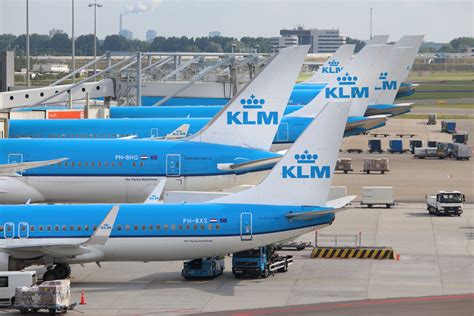
KLM Royal Dutch Airlines has quietly redrawn the aviation map over the Middle East, becoming one of the first major European carriers to restart flights while many competitors remain grounded by unresolved security fears. The airline’s decision to resume limited services to Dubai and Tel Aviv signals cautious confidence rooted in updated risk assessments rather than optimism. At a time when airspace closures, missile alerts, and electronic interference dominate flight planning, KLM’s move underscores how fragmented global aviation strategy has become.
Since late 2025, airlines have been forced into near constant recalculation as political instability ripples across the region. Routes once considered routine now demand diplomatic awareness, real time intelligence, and contingency fuel planning. Airports such as Dubai International and Tel Aviv’s Ben Gurion have remained operational, yet access to them has fluctuated as airlines weigh indirect threats rather than runway security alone. This environment has produced uneven connectivity, higher fares, and significant uncertainty for travelers.
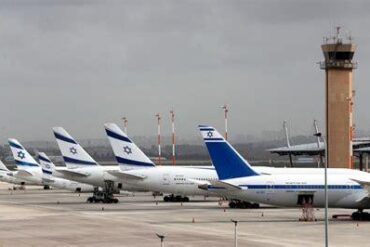
KLM resumed flights to Dubai on February 1 and to Tel Aviv on February 2, operating under revised schedules designed to preserve maximum flexibility. The airline emphasized that these services may change at short notice, reflecting an industry where predictability has become a luxury. Rather than signaling a full scale return, KLM’s restart represents a calibrated test of stability, monitored hour by hour through international coordination.
KLM’s Calculated Return To Middle East Skies
The Dutch carrier’s decision followed weeks of internal safety reviews and consultation with aviation authorities. According to Dutch media reports, KLM relied on updated threat intelligence, satellite monitoring, and overflight risk modeling before restoring services. Flight paths have been adjusted to avoid sensitive airspace where possible, even when that results in longer flying times and increased fuel burn. Crew scheduling has also been modified to account for potential diversions or delays.
KLM publicly reiterated that passenger and crew safety remains non negotiable, framing route selection as a daily operational judgment rather than a fixed commitment. This approach allows the airline to scale capacity up or down without locking itself into rigid schedules. Industry observers note that such flexibility is increasingly vital as conditions can deteriorate with little warning.
Rivals Extend Suspensions As Risk Calculations Diverge
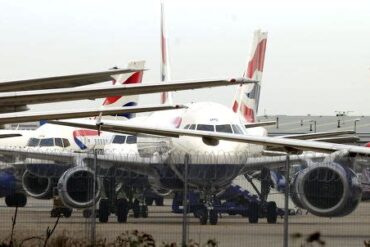
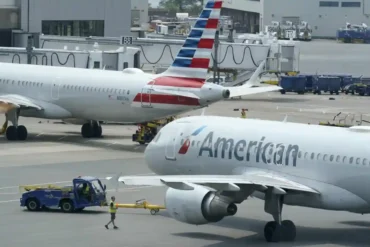
While KLM edges back, many global airlines are choosing restraint. American Airlines, British Airways, Lufthansa, Iberia, and several others have extended suspensions to destinations including Tel Aviv and Dubai well into 2026. Their reluctance is driven less by airport security and more by en route risks, including missile activity, drone incursions, and the possibility of sudden airspace closures.
Airlines remain haunted by past incidents involving GPS interference and misidentification of civilian aircraft in conflict zones. Even limited exposure to these risks carries unacceptable consequences, both human and reputational. As a result, some carriers have decided that commercial opportunity does not justify operational uncertainty, especially when alternative routes are available elsewhere.
Why Airspace Matters More Than Airports
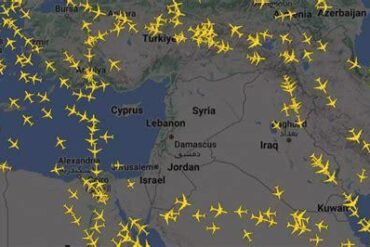
Dubai’s experience illustrates this dilemma. The city itself has not been a direct target, yet surrounding airspace has complicated access. Long haul flights that once crossed Iran, Iraq, or Syria now require extensive detours, increasing costs and stretching crew duty limits. These changes ripple across airline networks, affecting aircraft utilization and timetable reliability far beyond the Middle East.
Low cost carriers have felt this strain acutely. In recent weeks, some were forced to make technical fuel stops in Cyprus to avoid restricted corridors, undermining the economics that define their business models. For full service airlines, the challenge lies in absorbing higher costs without eroding already fragile margins.
A European Trend Toward Selective Reentry
KLM’s move reflects a broader European tendency toward selective reentry rather than blanket avoidance. Geographic proximity allows some European airlines greater routing flexibility compared with US carriers, whose transcontinental services face fewer viable alternatives. Even so, European operators remain cautious, relying heavily on government advisories and real time intelligence feeds.
Analysts stress that these decisions are provisional. A single escalation could reverse progress overnight, forcing renewed suspensions. Airlines are therefore treating Middle East routes as dynamic assets, continuously reassessed rather than permanently restored.
What This Means For Passengers And Global Aviation
For passengers, the landscape remains unpredictable. Demand is uneven, with many travelers opting for refundable tickets or postponing trips altogether. Travel insurers have tightened coverage definitions for conflict zones, adding another layer of complexity. Limited capacity on operating routes has also driven fares higher, particularly for last minute bookings.
Historically, Middle East aviation has shown remarkable resilience, rebounding quickly after crises. Yet experts warn that prolonged instability could accelerate structural shifts in global networks. Airlines may increasingly favor southern or western routings that bypass sensitive regions entirely, reshaping traditional hubs and traffic flows.
For now, KLM continues to advise travelers to monitor flight status closely and remain flexible. The airline has made clear that services will be suspended again if conditions worsen. Its cautious return stands in contrast to rivals’ extended withdrawals, highlighting an industry navigating uncertainty with sharply different risk appetites.
In this fragmented recovery, aviation has become a mirror of geopolitics, where strategy is written in pencil rather than ink. KLM’s restart does not declare the region safe, but it demonstrates how airlines adapt through intelligence, agility, and restraint. As rivals wait for clearer signals, the skies over the Middle East remain a proving ground for modern risk management, where every flight is both a commercial service and a calculated decision globally.