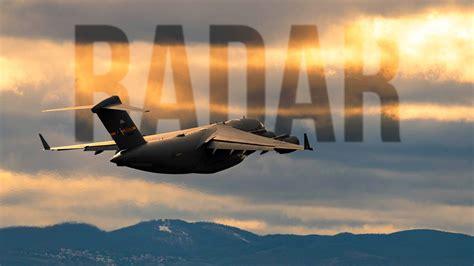
The C-17 Globemaster III is widely known for hauling troops, armored vehicles, humanitarian cargo, and oversized military equipment across continents. What receives less public attention is the aircraft’s ability to survive in airspace where transport aircraft are prime targets. In hostile regions, the challenge is not simply landing on a rough runway or delivering cargo quickly. The real challenge is reaching that runway while enemy radars scan the sky and missile teams wait for a slow, descending aircraft.
That is where the C-17’s defensive architecture becomes decisive. The aircraft combines radar warning sensors, missile launch detectors, automated countermeasures, laser-based jamming systems, and aggressive tactical flying techniques into one tightly linked survival package. Instead of relying on a single gadget or one dramatic last-second response, the C-17 uses layered protection that begins long before a missile leaves its launcher.
Modern combat zones are saturated with threats that range from shoulder-fired infrared missiles to radar-guided surface-to-air systems. A transport aircraft cannot outfight these threats like a fighter jet, so it must out-detect, outmaneuver, and outlast them. The C-17 was built with exactly that reality in mind.
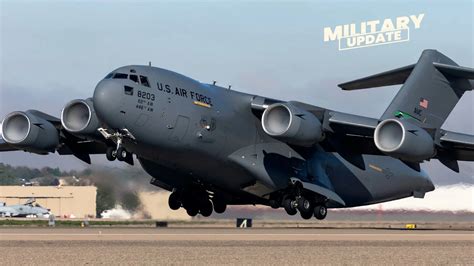
Why Combat Approaches Are So Dangerous For Large Airlifters
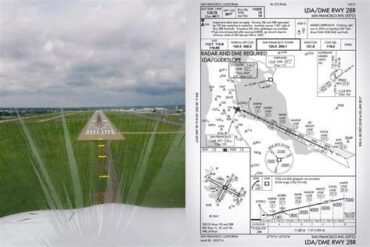
Approaching an airfield in a contested region places an aircraft into its most vulnerable phase of flight. Speed is reduced, altitude drops, maneuvering space shrinks, and the destination becomes predictable. Enemy forces know where aircraft must go, which means they can position radar systems or missile teams near likely arrival corridors.
For a large transport aircraft, this danger is magnified. The C-17 is powerful and agile for its size, but physics still matters. It is a large radar target, produces strong engine heat signatures, and cannot dart away like a lightweight fighter. During descent, every second spent exposed increases risk.
Because of this, the aircraft’s protection systems are designed to shorten the enemy’s decision cycle. If hostile forces need time to detect, identify, lock, launch, and guide a weapon, the C-17’s systems aim to disrupt every step of that chain.
AN/ALR-69A: How The C-17 Detects Radar Threats First
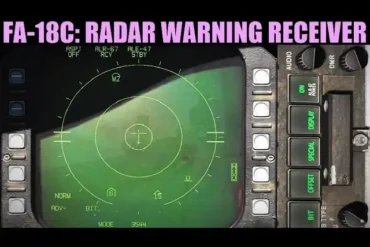
The AN/ALR-69A Radar Warning Receiver (RWR) acts as the aircraft’s electronic ears. Enemy radars emit energy when searching for aircraft, tracking targets, or guiding missiles. Those emissions are invisible to the human eye, but they are loud signals to a modern warning receiver.
Distributed antennas around the aircraft allow near full-circle coverage. When a radar pulse is detected, the system rapidly analyzes characteristics such as frequency, pulse repetition, scan style, and signal behavior. Within moments, it can determine whether the source is likely a surveillance radar, targeting radar, airborne interceptor, or missile guidance system.
That distinction matters enormously. A distant search radar may require monitoring. A fire-control radar locking onto the aircraft may require immediate action.
Inside the cockpit, the crew receives directional cues and threat priority alerts. Instead of vague warnings, pilots can know where the threat is relative to the aircraft and how dangerous it appears. This speeds tactical decisions such as altering heading, descending faster, dispensing chaff, or executing evasive procedures.
The ALR-69A’s digital design also allows updated threat libraries. That is crucial because adversaries frequently modify radar behavior to confuse older warning systems. A radar that changes frequencies or pulse patterns can defeat outdated sensors. The C-17’s upgrade path helps keep it relevant against evolving systems.
AN/AAR-47: Protection Against Heat-Seeking Missiles
Not every missile uses radar. In many conflict zones, the most common danger comes from MANPADS—man-portable air defense systems. These shoulder-fired missiles use infrared seekers that chase engine heat. They emit no radar energy, meaning a radar warning receiver alone cannot detect them.
The AN/AAR-47 Missile Approach Warning System fills that gap. It uses passive electro-optical sensors to watch for the distinct signature of a missile launch, especially the hot exhaust plume created during boost phase. Since the system does not transmit energy, it can monitor quietly without revealing the aircraft.
Detecting a missile launch is only part of the problem. Battlefields contain many false heat sources: fires, vehicles, industrial sites, sun reflections, and terrain heating. The AAR-47 uses processing logic to distinguish a true missile trajectory from harmless background noise.
Once confirmed, the system immediately identifies direction and urgency. That speed is essential because short-range infrared missiles often provide only seconds of reaction time.
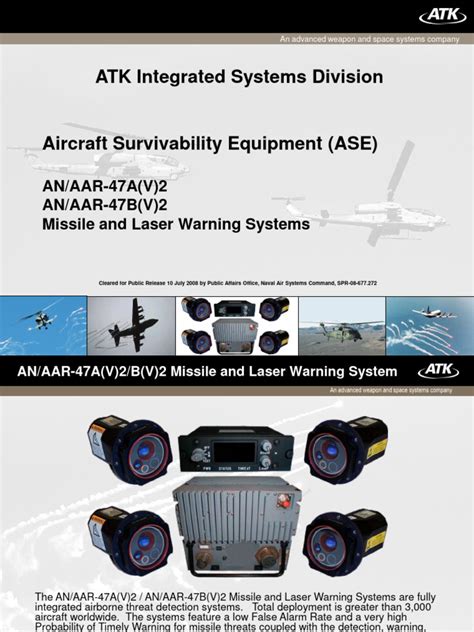
AN/ALE-47: The Countermeasure System That Reacts In Seconds
Once a threat is identified, the aircraft needs more than awareness. It needs a physical response. The AN/ALE-47 Countermeasures Dispenser System provides that response through automated release of defensive decoys.
For radar-guided threats, the aircraft can release chaff—clouds of metallic fibers that reflect radar energy and create false targets. These echoes can confuse missile seekers or break tracking solutions.
For infrared threats, the aircraft uses flares—intense heat sources designed to appear more attractive to a missile seeker than the aircraft’s engines. A missile that turns toward the flare instead of the aircraft may miss entirely.
The ALE-47 can operate in several modes:
- Automatic: releases programmed countermeasures instantly after a validated threat cue.
- Semi-automatic: recommends a response for crew approval.
- Manual: pilots command releases directly.
In real combat approaches, automatic mode is often the most valuable because missile engagements unfold faster than human reaction time. The system can begin dispensing before a crew member finishes verbally calling out the warning.
Loadouts can also be tailored. Missions entering radar-heavy environments may emphasize chaff. Flights into insurgent zones with MANPADS risk may prioritize flares.
LAIRCM: The Laser Shield Against Infrared Missiles
Flares are effective, but they are expendable. Once used, they are gone. A heavily threatened corridor with multiple missile teams could drain supplies quickly. To solve that limitation, the C-17 fleet received LAIRCM—Large Aircraft Infrared Countermeasures.
This system uses sensors to detect an incoming missile and then directs a turreted laser beam at the missile seeker. Rather than distracting the missile with a hotter object, LAIRCM attempts to jam or blind the seeker itself. If the missile can no longer interpret the aircraft’s infrared signature correctly, it may lose lock and veer away.
That creates several advantages.
First, it is not dependent on finite flare inventory in the same way expendables are. Second, it can engage repeated threats sequentially. Third, it works during moments when flares alone may be less reliable against advanced seekers.
For a transport aircraft operating into austere airfields where ambush positions may exist along approach paths, LAIRCM adds a powerful final defensive layer.
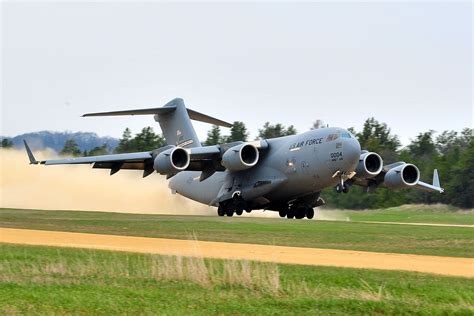
Tactical Flying: When Pilots Become Part Of The Defense System
Technology helps, but the C-17’s survival model does not rely on electronics alone. Crew tactics are equally important. One of the best-known methods is the combat descent, a steep, rapid approach designed to minimize exposure time.
Instead of slowly descending from distance like a civilian airliner, the aircraft may remain higher for longer, then descend aggressively near the airfield. This reduces the time spent in the altitude band where many missiles are most dangerous.
The C-17’s thrust-reverser capability and strong flight controls allow unusually steep descent profiles for an aircraft of its size. While exact procedures vary by mission and threat conditions, the principle is simple: stay exposed for the shortest practical time.
Other tactical measures can include:
- Offset approaches rather than straight predictable lines
- Tight turns into final approach
- Variable routing to avoid routine patterns
- Night operations when tactically appropriate
- Coordination with escorts or surveillance assets
This is a crucial truth of military aviation: the safest missile is the one never launched because the target was hard to predict.
Why Integration Matters More Than Any Single Device
Many aircraft can carry flares. Many can use radar warning receivers. What makes the C-17 notable is how these systems are integrated.
A radar threat can be detected by the ALR-69A, categorized instantly, and linked to a programmed countermeasure response. An infrared launch cue from the AAR-47 can trigger ALE-47 flare release while LAIRCM begins seeker jamming. Meanwhile, cockpit alerts keep pilots informed without overwhelming them.
That integration compresses time. In air combat and missile defense, time is everything. If a crew must manually interpret every warning, select every response, and activate every dispenser, survival odds fall. Automation allows the aircraft to react at machine speed while pilots focus on flying.
The result is not invincibility—no aircraft is invulnerable in hostile airspace—but dramatically improved survivability.
Why The C-17 Still Matters In 2026 And Beyond
Even as militaries discuss future airlifters and autonomous logistics platforms, the C-17 remains indispensable. It can move outsized cargo across oceans, land on relatively short runways, evacuate civilians, support disaster relief, and sustain forward operations. Those missions often occur where danger is real, not theoretical.
Because the fleet is expected to remain relevant for decades, modernization matters. Updated avionics, refreshed defensive software, improved sensor libraries, and sustainment upgrades ensure the aircraft remains useful in a threat environment very different from the one it entered service in.
That longevity says something important: good design ages well when it can adapt.
The Real Secret Behind C-17 Survivability
The C-17 Globemaster’s radar warning system is not merely a warning buzzer telling crews bad news. It is the front edge of a comprehensive survival network that detects threats early, classifies them intelligently, and triggers rapid defensive action.
Radar-guided systems are countered through detection and chaff. Infrared missiles are challenged through launch warning, flares, and laser jamming. Tactical descents reduce exposure windows. Automation reduces reaction delay. Crew training ties every piece together.
In plain terms, the aircraft survives combat approaches because it does not rely on luck. It relies on layers.
That layered philosophy is why the C-17 continues to deliver cargo, troops, and hope into places where ordinary aircraft would think twice about descending at all.