Introduction to the F-16 Radar Warning Receiver (RWR)
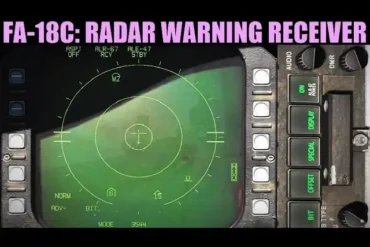
The Radar Warning Receiver (RWR) is a crucial component of the F-16 Fighting Falcon’s electronic warfare suite, designed to detect and classify radar emissions from potential threats. The system provides real-time situational awareness to pilots by identifying radar-guided threats and enabling effective countermeasure deployment through the Countermeasure Dispenser System (CMDS).
The integration of the RWR with the F-16’s defensive avionics enhances survivability by ensuring rapid threat detection and response. However, its performance depends on the aircraft’s block variant, maintenance conditions, and the experience of the pilot operating the system.
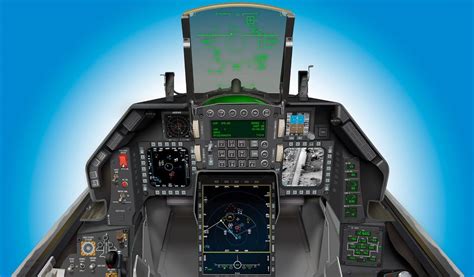
Core Functions of the F-16 RWR System
The F-16 RWR system plays a vital role in threat awareness and defensive action. Its core functionalities include:
Threat Detection and Classification
- The RWR continuously scans the electromagnetic spectrum for radar signals.
- It classifies detected emissions based on frequency, pulse repetition interval (PRI), and signal strength.
- The system distinguishes between search radars, tracking radars, and missile guidance radars, providing pilots with detailed threat information.
Warning Indications and Audio Alerts
- Threats appear on the RWR display as symbolic representations based on priority.
- Audible tones indicate the type of radar detected, enabling pilots to react instantly without relying solely on visual cues.
Countermeasure Coordination with CMDS
- The RWR source switch determines whether detected threats are considered for CMDS countermeasure allocation.
- The JMR (Jammer) source switch enables data sharing between onboard jamming systems and CMDS, enhancing defensive effectiveness.
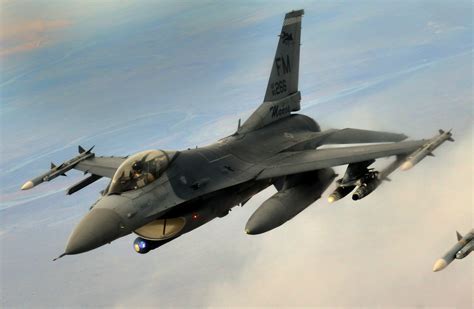
CMDS Modes and RWR Integration
The Countermeasure Dispenser System (CMDS) in the F-16 works in tandem with the RWR, determining how countermeasures such as chaff and flares are deployed. CMDS features several operational modes, each influencing the response to detected threats.
CMDS Operating Modes
1. OFF Mode
- Completely disables the countermeasure system.
- No defensive measures can be deployed.
2. STANDBY Mode
- Allows pilots to manually adjust release parameters via the UFC (Up-Front Control Panel).
- Countermeasures cannot be released in this mode.
3. MAN (Manual) Mode
- The pilot manually selects one of four preset programs (1-4) and activates countermeasures by pushing the stick forward.
4. SEMI (Semi-Automatic) Mode
- The system recommends a response based on threat level, requiring pilot confirmation via aft stick pull before dispensing.
5. AUTO (Automatic) Mode
- Fully automated response; the system deploys countermeasures without pilot intervention.
- Activation requires an aft stick pull, while a right stick push cancels deployment.
6. BYP (Bypass) Mode
- Enables manual dispensing of chaff and flares in case of system failure.
Operational Constraints and Key Considerations
Despite its advanced capabilities, the F-16 RWR has operational constraints that impact its effectiveness in combat.
Countermeasure Inventory Management
- Chaff (CH) and Flare (FL) quantities are monitored in real-time.
- When stock runs low, the system displays a “LO” (Low Quantity) warning, prompting pilots to adjust defensive tactics.
Dispensing Readiness Indications
- In semi-automatic and automatic modes, the system illuminates the “DISPENSE READY” indicator if a manual confirmation is required before releasing countermeasures.
Missile Warning System (MWS) Limitations
- In F-16 Block 50 variants, the MWS switch is non-functional, meaning pilots must rely entirely on RWR and other threat detection systems for missile threat awareness.
Challenges in Combat Operations
While the F-16’s RWR is a critical defensive tool, its effectiveness in real-world engagements depends on several factors, including the aircraft’s block version and operational environment.
Older Block Variants and Detection Limitations
- Countries such as Denmark and the Netherlands have supplied early F-16 models (Block 10/15) to Ukraine.
- These versions have outdated radar and avionics, limiting the RWR’s ability to detect modern air defense threats.
Logistical and Training Challenges
- Ukraine lacks adequate maintenance infrastructure to keep F-16 RWR systems operational at peak efficiency.
- Pilot training for optimal countermeasure coordination is essential, but training timelines may be limited.
Integration with Other F-16 Systems
The F-16 RWR works alongside multiple avionics and data-sharing systems to enhance situational awareness and defensive capabilities.
Helmet-Mounted Cueing System (HMCS)
- Pilots use HMCS to visually track and prioritize threats detected by the RWR.
- The system features adjustable symbology brightness to ensure clarity under different lighting conditions.
Radar and Data Link Upgrades
- Modernized F-16 variants (e.g., Danish MLU models) include:
- Link-16 Data Link for real-time threat sharing.
- AN/APG-66V2 Radar, improving multi-target tracking and indirectly enhancing RWR threat analysis.

Conclusion
The F-16 Radar Warning Receiver is an indispensable component of the aircraft’s electronic warfare suite, providing threat detection, classification, and countermeasure coordination. While the system significantly enhances pilot survivability, its combat effectiveness is influenced by aircraft version, maintenance quality, and pilot training. For nations operating older F-16 variants, reliance on the RWR for defense against modern threats remains a considerable challenge.
FAQ
1. How does the F-16 RWR detect enemy radar signals?
The RWR scans the electromagnetic spectrum, identifying radar emissions based on frequency, signal strength, and pulse repetition patterns. It classifies threats and alerts the pilot through visual symbols and audio tones.
2. What is the difference between Semi-Automatic and Automatic CMDS modes?
In Semi-Automatic Mode, the system suggests a response but requires the pilot’s confirmation to dispense countermeasures. In Automatic Mode, the system independently deploys chaff and flares based on detected threats.
3. Why do older F-16 variants have limited RWR capabilities?
Early models like Block 10/15 lack modern radar and avionics, reducing the RWR’s ability to detect and classify advanced air defense threats. Upgraded variants feature enhanced data links and radar systems, improving overall threat awareness.