In recent years, the proliferation of military-grade drones has transformed battlefields and raised urgent concerns about domestic security. Cheap, portable, and widely available, unmanned aerial systems have been detected over U.S. military installations with alarming frequency—350 incursions in 2024 alone—exposing critical vulnerabilities in homeland defense. As traditional countermeasures risk collateral damage and interfere with vital communications, defense planners have turned to innovative, non-kinetic solutions that can neutralize threats quietly and safely.
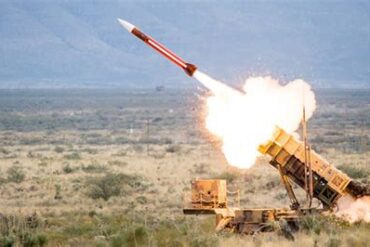
The Pentagon’s short-term response has been the rapid deployment of “flyaway kits,” fieldable packages that combine radar, radio-frequency scanners, and rudimentary jamming systems. Yet these kits are plagued by limitations: jamming disrupts local communications, high-power microwave pulses can disable friendly electronics, and kinetic interdiction—bullets, nets, or missiles—carries the danger of falling debris and unintended casualties. Recognizing these constraints, the Defense Innovation Unit’s Replicator 2 Project seeks low-collateral, scalable technologies capable of operating at sensitive sites such as nuclear facilities, airports, and densely populated bases.
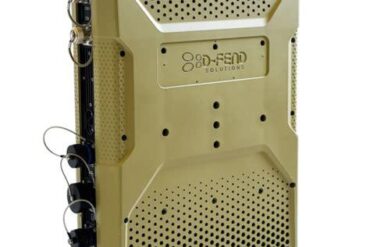
At the forefront of this emerging field is Israel’s D-Fend Solutions, whose EnforceAir2 system employs a cyber‑takeover methodology to intercept and hijack hostile drones without firing a single bullet. Rather than obliterating the intruder, EnforceAir2 mimics a portable radio router, latching onto a drone’s control link and redirecting it to a predetermined safe landing zone for forensic analysis and return to its operator. This approach preserves valuable intelligence, minimizes debris, and avoids broad-spectrum signal disruption.
The Escalating Drone Threat to Homeland Security
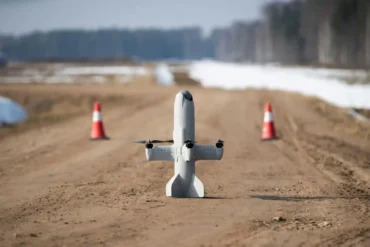
The rapid commercialization of unmanned aerial systems has blurred the line between civilian gadget and weaponized platform. In theater operations, drones provide reconnaissance, targeting assistance, and even direct attack capability. But when these same systems appear over American soil—surveying, loitering, or preparing for hostile action—the consequences could be severe. Power plants, ammunition depots, and command centers lack the armor of combat zones, making them prime targets. Intelligence officials report that 2024 drone incursions spanned more than 100 military bases, prompting emergency assessments of defensive posture and fueling a projected anti-drone market growth from $4.5 billion to $14 billion by 2030.
Limitations of Conventional Countermeasures
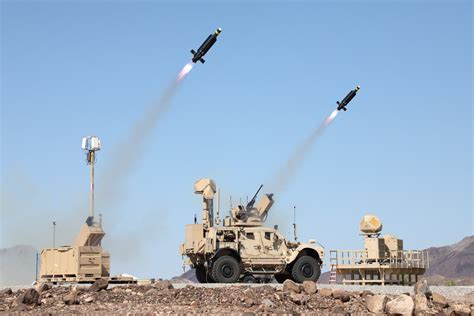
Jamming remains the most common tactic: emitting high-power radio frequencies to sever the link between a drone and its pilot. While effective in isolation, jamming cannot distinguish friend from foe, often incapacitating essential military and civilian communications. GNSS spoofing—which feeds counterfeit satellite signals to misdirect a drone’s navigation—suffers similar shortcomings, risking civilian air traffic and emergency responders. Electromagnetic and high‑power microwave pulses promise kinetic-free interdiction but carry the peril of frying nearby electronics and critical infrastructure. Kinetic options, from interceptor missiles to shotgun-fired nets, guarantee physical neutralization yet risk collateral trauma: in 2022, a Saudi attempt to down a drone near Yemen injured twelve bystanders struck by falling debris. Advanced lasers face sightline obstructions and weather dependency, making them unreliable in the variable climates of global installations.
Revolutionizing Defense with Cyber‑Takeover: EnforceAir2
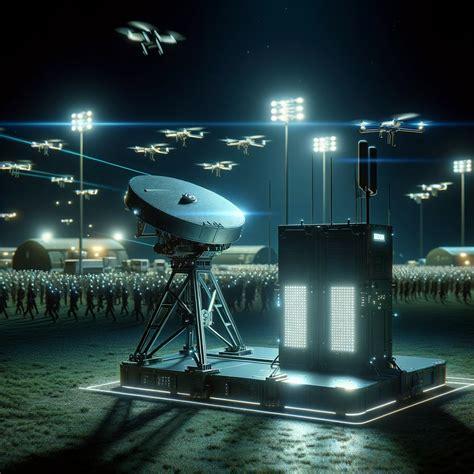
D-Fend Solutions has packaged its counter-drone technology into the EnforceAir2 system, a portable, software-defined radio that targets a drone’s command-and-control frequencies. Once deployed, EnforceAir2 scans the 400 MHz to 6 GHz spectrum, identifies the unique signature of a hostile drone’s link, and initiates a stealth hijack. The drone’s autopilot is coerced to follow encrypted commands, guiding it to a secure, user-defined touchdown zone for inspection and evidence gathering. By preserving the drone intact, operators gain unprecedented attribution data—serial numbers, firmware versions, and potential launch points.
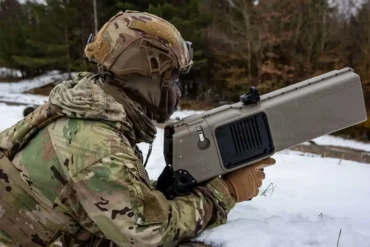
Configurable for fixed installations, vehicle mounts, tripods, or backpack-portable kits, EnforceAir2 offers 360° protection and up to 2.5 hours of battery endurance. For larger areas or networked sites, D-Fend’s Multi-Sensor Command & Control (C2) platform aggregates data from multiple EnforceAir nodes, providing a unified dashboard that streamlines threat identification and mission coordination.
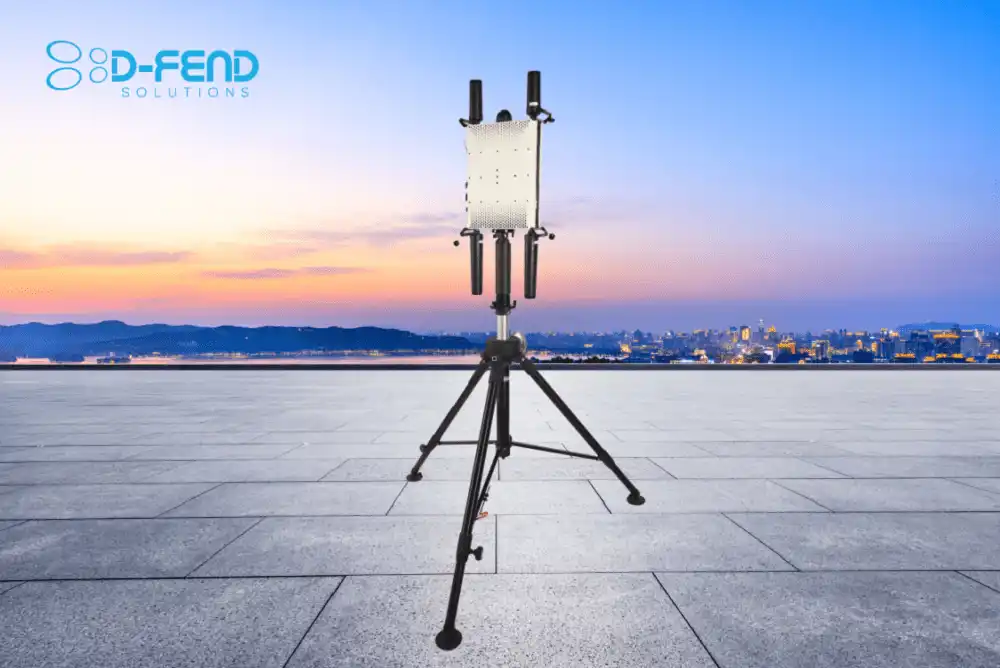
Technical Specifications:
- Operational Radius: Up to 2.5 miles from deployment point
- Frequency Range: 400 MHz–6 GHz, covering civilian and military bands
- Power Source: Internal battery (2.5 h life) or external supply
- Form Factors: Tripod, vehicle, fixed mount, backpack
- Coverage: 360° RF scanning and mitigation
- Scalability: Networked via Multi‑Sensor C2 server for synchronized operations
Deployment Flexibility and Tactical Adaptations
Beyond military bases, EnforceAir2 has applications for homeland security, critical infrastructure, and law enforcement. At airport perimeters, the system can neutralize surveillance drones without disrupting air traffic control. In urban environments, EnforceAir2’s narrowband cyber takeover avoids interference with first responders’ radios. During joint exercises, the device integrates with existing air defense nets, providing a non-lethal layer within multi-domain operations. For expeditionary forces, the backpack configuration allows special operations teams to establish immediate anti-UAS defenses in austere environments.
Lessons from Historic Ground‑Attack Aircraft
The evolution of ground-attack aircraft underscores the perennial tension between offensive power and operational risk. From the wood-and-fabric frames of World War I’s Halberstadt CL.II—armed with twin 7.92 mm guns and a rear gunner dropping 110 lb of bombs—to the armored Bentley-powered Sopwith Salamander, militaries have sought resilient platforms that survive under fire. The Messerschmitt Bf 110’s transition from heavy fighter to ground‑attack workhorse, equipped with dozens of rockets and 20 mm cannons, mirrored changing tactical doctrines in World War II. The Soviet Ilyushin Il‑2 Sturmovik earned its “flying tank” moniker through armored plating, twin cannons, and devastating PTAB bomblets, with over 30,000 built.
In the jet age, the piston Douglas A‑1 Skyraider demonstrated that endurance and payload—8,000 lb of ordnance over 300 mi—remained critical; its Medal of Honor–earning missions in Korea and Vietnam attest to its versatility. The A‑4 Skyhawk’s compact design and speed record of 695 mph highlighted the benefits of jet propulsion for close support. Advanced platforms such as the F‑111 Aardvark introduced variable-sweep wings and precision-guidance pods, enabling supersonic low-level strike with nuclear and conventional loads. The AV‑8B Harrier’s VTOL prowess expanded basing options, while the Sukhoi Su‑25 Frogfoot continued the Sturmovik legacy with ten weapon pylons and all-weather targeting in modern conflicts.
The A‑10 Thunderbolt—American infantry’s “flying tank”—retains the GAU‑8/A 30 mm Gatling and a 16,000 lb payload for persistent close air support, even as its retirement draws near in 2030. The Lockheed AC‑130 Gunship, with its 105 mm and 25 mm cannons and advanced optics, exemplifies precision loitering firepower. Each of these aircraft solved specific battlefield challenges, yet all shared a trade‑off: firepower versus collateral risk. EnforceAir2’s cyber‑takeover approach transcends this trade‑off, offering lethal deterrence without lethal force.
Charting the Future of Non‑Kinetic Defense
As drone technology continues to advance—autonomy, swarming capabilities, and stealth materials—defenders must adapt. Cyber‑takeover systems like EnforceAir2 represent a paradigm shift: focusing on signal exploitation rather than physical destruction. Such solutions promise to protect sensitive sites, civilian populations, and military assets without devastating consequences. Ongoing developments will likely enhance range, precision, and automation, enabling rapid, networked responses to drone threats worldwide.
The intersection of electronics warfare and counter‑UAS strategies is now a strategic imperative. Training protocols must evolve to include cyber‑takeover tactics, and base layouts should integrate dedicated RF corridors for safe drone landing zones. Intelligence sharing between allies can refine signature libraries, improving identification speed. As the anti-drone industry grows, standards and regulations will guide ethical deployment, ensuring that advanced defenses remain compliant with domestic and international law.
In an era where unmanned systems redefine warfare, the ability to neutralize airborne threats without firing a shot is no longer science fiction—it is a battlefield necessity. The EnforceAir2 cyber‑takeover system offers a blueprint for future non-kinetic defenses, safeguarding critical infrastructure and military readiness while preserving lives and minimizing disruption. As technology races ahead, embracing sophisticated, cyber-driven countermeasures will be essential to maintaining a decisive edge in the skies above and on the ground below.