Warfare has historically transformed in lockstep with technology. From bronze blades to ballistic missiles, each leap in military capability has redefined the battlefield. In the 21st century, cyberspace has emerged as the newest and arguably most volatile domain of conflict. As the digital world permeates every aspect of modern life—from utilities to military systems—the necessity for a specialized, technologically advanced defense unit has become paramount. In the United States, this need gave birth to the U.S. Cyber Command (USCYBERCOM).
The Rise of Cyberspace as a Warfighting Domain
As information technology began to underpin global communication, economic operations, and military systems, the battlefield shifted to virtual terrain. Cyberspace is now weaponized through malware, ransomware, phishing, and advanced persistent threats (APTs), enabling adversaries to bypass traditional borders and strike critical infrastructure in seconds. Recognizing this seismic shift, the U.S. Department of Defense formally established Cyber Command in 2009, marking a foundational moment in digital-era warfare.

This new command was not just another bureaucratic layer. It was designed to actively defend military networks, launch offensive cyber operations, and coordinate with national security and intelligence agencies. While its roots lie in safeguarding the Department of Defense’s information networks, Cyber Command’s role has expanded to encompass global cybersecurity and digital warfare strategy.
Mission and Mandate of the U.S. Cyber Command
USCYBERCOM operates with a clear mandate: to defend national interests in cyberspace. It is tasked with protecting against foreign incursions, enabling safe and efficient military operations, and deterring adversarial use of cyberweapons. Central to its strategy is achieving what the military refers to as decision dominance—ensuring U.S. forces retain freedom of action in the cyber realm while denying the same to adversaries.
Its operations are divided into three main missions:
- Defend Department of Defense networks, systems, and information.
- Strengthen the nation’s ability to withstand and recover from cyberattacks.
- Direct and conduct full-spectrum military cyberspace operations.
Cyber Command also functions in close partnership with other U.S. federal agencies, especially the National Security Agency (NSA). Their shared headquarters at Fort George G. Meade in Maryland facilitates real-time intelligence sharing and operational coordination, reinforcing national cybersecurity defenses.
The Cyber Mission Force: The Operational Backbone
At the heart of Cyber Command’s tactical execution lies the Cyber Mission Force (CMF). This elite operational component is structured around 135 specialized teams, each with distinct responsibilities aligned to specific mission objectives. These teams include:
- Cyber Protection Teams (CPTs): Defend priority DoD networks and respond to critical incidents.
- Cyber National Mission Teams (CNMTs): Counter significant cyber threats to the nation.
- Cyber Combat Mission Teams (CCMTs): Conduct offensive operations to support combatant commands.
- Cyber Support Teams (CSTs): Provide analysis and intelligence to other cyber units.
These teams are manned by highly trained personnel from across all branches of the U.S. military. Their work ranges from active threat hunting to red-teaming defense systems and launching counter-offensives when necessary.
Offensive and Defensive Cyber Capabilities
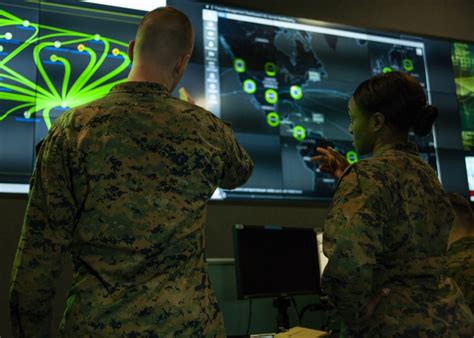
Contrary to popular belief, Cyber Command isn’t limited to playing defense. It possesses formidable offensive cyber capabilities, capable of disrupting enemy communications, disabling command systems, and executing precision digital strikes. These are governed by stringent legal frameworks and strategic doctrines to prevent escalation and ensure compliance with international law.
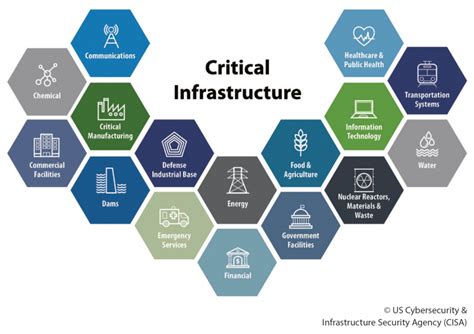
On the defensive front, Cyber Command focuses on shielding America’s critical infrastructure from hostile incursions—particularly sectors like energy, finance, defense manufacturing, and transportation. This includes partnerships with the private sector, given that much of the U.S.’s digital infrastructure is commercially operated.
One notable initiative is Hunt Forward Operations, where U.S. cyber teams are deployed alongside allies to detect and neutralize foreign adversary presence within their networks. These forward operations help pre-emptively stop cyber threats before they reach American soil.
Collaboration with the NSA and National Cybersecurity
U.S. Cyber Command’s location alongside the NSA is far more than symbolic. The two entities maintain a synergistic relationship wherein the NSA contributes real-time threat intelligence, cryptographic support, and cyber surveillance capabilities, while Cyber Command converts those insights into actionable defense or offense.
The NSA’s vast experience in signals intelligence (SIGINT) enhances Cyber Command’s ability to identify foreign adversaries operating in cyberspace. This integration is particularly crucial in countering nation-state actors, many of whom—such as Russia, China, Iran, and North Korea—deploy state-sponsored hacker groups for digital espionage and sabotage.

The Strategic Importance of Cyber Exercises: Cyber Guard 25-2
One of the most impactful illustrations of USCYBERCOM’s preparedness and coordination comes through its annual joint training exercise, known as Cyber Guard. The 2025 iteration, Cyber Guard 25-2, involved more than a dozen federal agencies and military units simulating large-scale cyberattacks on national infrastructure.
The exercise tested coordination between cyber defenders, tested new response protocols, and allowed teams to practice repelling state-sponsored digital incursions. Cyber Guard is a critical tool not just for readiness, but for discovering gaps, validating tools, and maintaining operational cohesion across branches and agencies.
The Threat Landscape: Cyberwarfare in the Modern Era
The cyber threat landscape is dynamic, complex, and relentlessly evolving. Today’s threats go beyond spam and viruses—they involve sophisticated campaigns targeting nuclear power stations, financial clearinghouses, election infrastructure, and even satellite communications. Attacks like SolarWinds and Colonial Pipeline have shown that even the most secure networks are vulnerable.
State-sponsored attacks are often cloaked behind layers of anonymity and proxy servers, making attribution difficult and response more politically sensitive. In response, Cyber Command has worked to develop attribution tools, engage in cyber diplomacy, and collaborate with global allies to create a more secure international cyberspace.
Emerging Technologies and the Future of Cyber Command
The evolving threat environment requires equally adaptive solutions. Recognizing this, the leadership of Cyber Command has proposed the creation of a cutting-edge facility: the Cyber Innovation Warfare Center. This center would focus on integrating artificial intelligence (AI) and machine learning (ML) to enhance detection, prediction, and response times in cyberspace operations.
AI will play a crucial role in future cyber defense—analyzing massive datasets, identifying anomalies, and enabling autonomous response mechanisms to counter fast-moving threats. This center will also serve as a hub for developing and retaining elite cyber talent, a pressing issue in a sector facing intense competition for skilled personnel.
As of 2025, Cyber Command is also investing heavily in quantum-resistant cryptography, next-gen cybersecurity architecture, and automated cyber red teaming, positioning itself for long-term resilience in an era defined by digital conflict.
Conclusion: A Permanent Digital Frontier
The establishment and evolution of U.S. Cyber Command underscores a fundamental reality: the digital domain is no longer a support function—it is the battlefield itself. With geopolitical rivals aggressively expanding their cyber capabilities, America’s ability to maintain supremacy in this space is now inseparable from national security.
Through its hybrid role of both shield and sword, U.S. Cyber Command stands at the forefront of America’s defense doctrine, ensuring that the country remains not just reactive to cyber threats—but proactive, prepared, and dominant. As the stakes in cyberspace continue to escalate, this command’s role will only grow more pivotal in the decades to come.