Ukraine’s modern air war has evolved into a brutal contest of speed, precision, and seconds. Russian forces increasingly rely on ballistic and aeroballistic weapons designed to overwhelm defenses through velocity alone, shrinking warning times to moments and leaving little margin for error. In that environment, the U.S.-made Patriot air defense system has emerged not as a general-purpose shield, but as a strategic scalpel—reserved for the most dangerous threats and deployed where failure is not an option.
Since entering Ukrainian combat service in 2023, Patriot batteries have become the country’s last and most reliable line of defense against Russia’s fastest missiles. Their role is narrow, costly, and unforgiving, yet their impact has been decisive. According to Ukraine’s Air Force, a single Patriot unit has intercepted more than 140 ballistic missiles and nearly 250 total aerial targets, a record unmatched by any other system in the country’s inventory.
This performance is not accidental. It is the result of architecture, doctrine, training, logistics, and hard-earned combat experience converging under relentless pressure.
A Battlefield Defined by Speed and Saturation
Russia’s missile campaign against Ukraine has steadily shifted toward high-speed, high-impact weapons. Systems such as the Iskander-M, the Kh-47M2 Kinzhal, and modified S-300/S-400 missiles repurposed for surface attack are designed to exploit gaps in air defense coverage. Their trajectories are steep, their terminal phases violent, and their engagement windows measured in seconds rather than minutes.
For Ukraine, this creates a stark hierarchy of threats. Drones and subsonic cruise missiles can be countered by short- and medium-range systems. Ballistic and aeroballistic missiles cannot. These weapons demand sensors that can see far, track precisely, and cue interceptors fast enough to meet targets moving at several kilometers per second. That requirement effectively narrows the field to one system: Patriot.
The system’s combat debut in Ukraine came with historic weight. In May 2023, a Patriot battery achieved the first confirmed interception of a Russian Kinzhal missile, a weapon Moscow had repeatedly described as “unstoppable.” The claim collapsed in a flash of radar returns and interceptor debris, signaling a shift in the psychological and operational balance of the air war.
The Architecture That Makes Seconds Matter
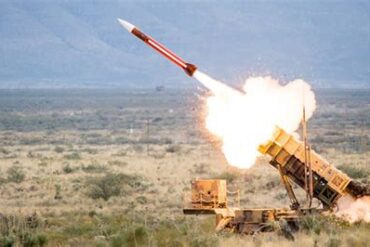
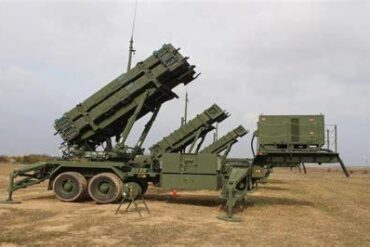
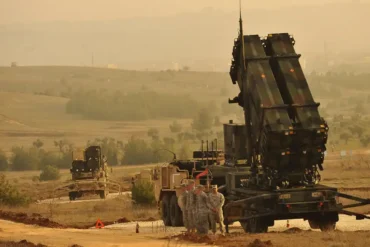
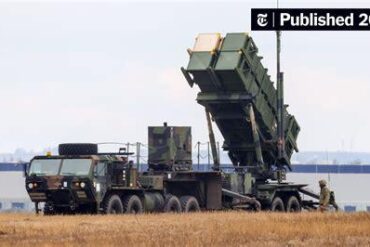
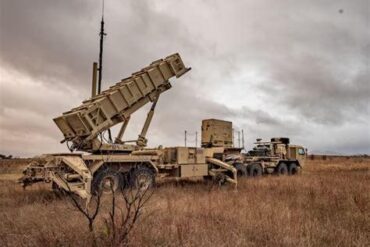
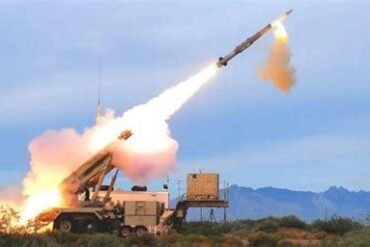
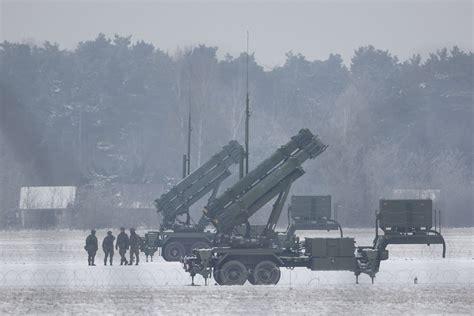
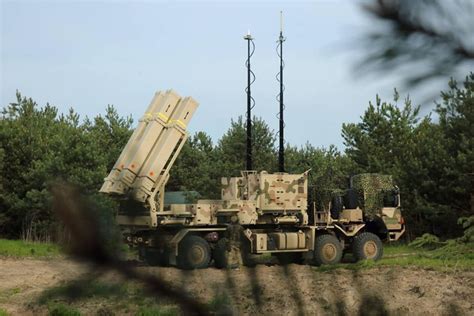
At the heart of Patriot’s effectiveness is its distributed system architecture. Unlike legacy Soviet-era air defense systems, Patriot separates its core components across a wide area, reducing vulnerability while increasing flexibility. A typical battery combines the AN/MPQ-65 multifunction radar, the AN/MSQ-132 engagement control station, and multiple M903 launchers, which can be positioned up to 10 kilometers apart.
This layout allows the radar to focus exclusively on detection and tracking while the command post manages engagement logic and launcher assignment. The separation complicates enemy targeting and prevents a single strike from neutralizing the entire battery. More importantly, it allows Patriot to compress the detect–track–engage cycle, a capability that becomes decisive when ballistic missiles appear on radar only moments before impact.
Automatic and semi-automatic engagement modes further reduce human reaction time. When warning windows shrink to tens of seconds, doctrinal discipline and machine-speed decision-making are no longer luxuries—they are survival tools.
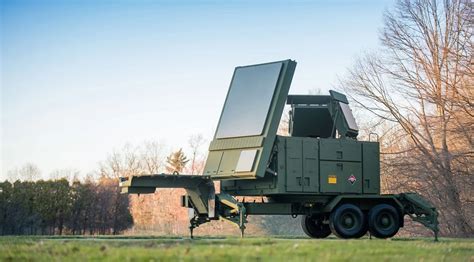
In Ukraine’s operational environment, missiles often approach from multiple azimuths simultaneously. Patriot’s radar and fire control architecture allows continuous engagement during overlapping, multi-vector attacks, maintaining track quality even as targets enter and exit the engagement envelope in rapid succession.
Interceptors Chosen for the Job, Not the Statistics
Patriot’s reputation often centers on the PAC-3 interceptor, but its battlefield success in Ukraine depends on a carefully managed mix of missiles rather than a single silver bullet. Ukrainian units employ PAC-2 variants primarily against aircraft and cruise missiles, while reserving PAC-3 interceptors for ballistic and aeroballistic threats.
The PAC-2/GEM and GEM+ variants offer engagement ranges of roughly 150 to 160 kilometers, making them suitable for early interception of cruise missiles such as the Kh-101, Kh-555, Kalibr, and even high-speed threats like the Kh-22 and Kh-32 under favorable conditions. These interceptors use proximity-fused warheads, trading precision for area coverage against less agile targets.
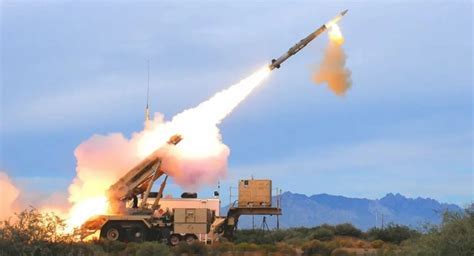
Against ballistic missiles, the equation changes entirely. The MIM-104F PAC-3 employs a hit-to-kill mechanism, destroying targets through kinetic energy rather than explosive force. Weighing just over 300 kilograms, it allows each launcher to carry up to 16 ready missiles, compared to four larger PAC-2 rounds. The PAC-3 MSE variant extends this capability further with a more powerful motor, pushing effective intercept ranges to approximately 60 kilometers for ballistic targets.
This layered interceptor strategy allows Ukrainian crews to match missile to threat, conserving scarce PAC-3 rounds for the missions that only they can perform.
Training Under Fire and the Discipline of Adaptation
Transitioning from Soviet-designed air defense systems to Patriot is not trivial. The system demands strict procedural discipline, advanced radar management, and confidence in automated engagement logic. Ukrainian air defense crews underwent accelerated training abroad before returning to combat service within weeks, a compressed timeline that left little room for error.
What followed was an unforgiving learning environment. Patriot batteries were deployed directly into regions experiencing frequent mass missile attacks, particularly around Kyiv. Every engagement became both a defensive action and a live-fire lesson. Crews refined target prioritization, interceptor allocation, and reload procedures under real-world stress, where mistakes carried immediate consequences.
Repeated exposure to ballistic missile attacks reinforced reliance on automatic modes, where human reaction time alone would be insufficient. Over time, familiarity bred confidence, and confidence bred consistency. The result was a measurable improvement in interception outcomes, turning early success into sustained performance.
A System That Thrives in a Layered Defense
Ironically, the complexity of Russian strike packages has strengthened Patriot’s role rather than undermined it. Most large-scale attacks combine ballistic missiles, cruise missiles, and drones, launched nearly simultaneously from different directions. This forces Ukrainian commanders to triage threats based on speed, trajectory, and potential damage.
Patriot is therefore assigned the most dangerous and time-critical targets, while systems such as NASAMS, IRIS-T, and short-range defenses handle lower-altitude and slower threats. This division of labor prevents the premature depletion of PAC-3 stocks and ensures that Patriot interceptors are used where their unique capabilities matter most.
The outcome is not blanket coverage, but maximum effect per missile fired. In an environment where interceptors are expensive and finite, efficiency becomes a strategic virtue.
Logistics: The Quiet Determinant of Survival
Patriot’s battlefield success is inseparable from logistics and resupply. Each interceptor represents a significant investment in time, money, and industrial capacity. Sustaining interception rates depends directly on the timely delivery of missiles from partner nations.
In January 2026, Ukrainian President Volodymyr Zelensky confirmed that fresh stocks of Patriot and NASAMS interceptors arrived one day before a major Russian strike, enabling the interception of 27 missiles and 315 drones in a single combined attack. The timing was not coincidental—it was decisive.
Stock management shapes firing doctrine, influencing decisions such as whether to launch single or multiple interceptors per target. With only a limited number of batteries available, Patriot coverage remains concentrated around priority urban centers and critical infrastructure, leaving much of the country outside its protective umbrella.
Allied Support and Industrial Constraints
Germany has transferred five Patriot systems to Ukraine but has publicly acknowledged that further deliveries are constrained by its own readiness and training requirements. Other partners contribute primarily through interceptor shipments rather than complete batteries, reflecting the global scarcity of fully configured Patriot units.
At the industrial level, U.S. and European manufacturers are expanding missile production capacity, investing in new lines to increase annual output. These efforts shape the medium-term sustainability of Ukraine’s air defense but do not immediately translate into battlefield availability. For now, Patriot remains a high-demand, low-density asset, employed with caution and precision.
The Limits of Excellence
Despite its success, Patriot is not invulnerable. Interceptor shortages remain the most immediate risk, particularly under sustained ballistic missile pressure. Russia continues to adapt, experimenting with launch coordination, flight profiles, and multi-directional attacks designed to stress radar coverage and compress engagement timelines.
The small number of deployed batteries limits defended areas, while the potential use of decoys, electronic warfare, or strikes against supporting infrastructure could degrade effectiveness without directly destroying the system. Patriot’s performance, therefore, is not guaranteed by technology alone. It depends on supply continuity, disciplined employment, and strategic prioritization.
In Ukraine’s air war, Patriot is not a shield that covers everything. It is a final barrier, positioned where failure would be catastrophic. Its success to date reflects not just American engineering, but Ukrainian adaptation under fire—and a narrow margin where preparation, timing, and seconds align just well enough to stop the fastest weapons Russia can launch.