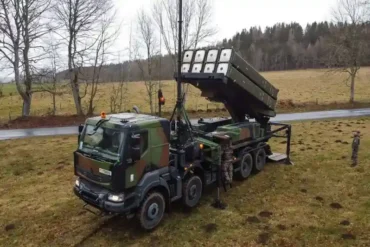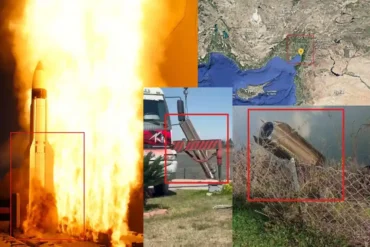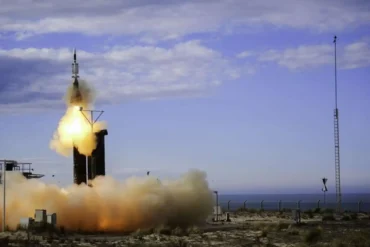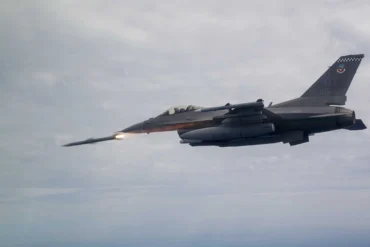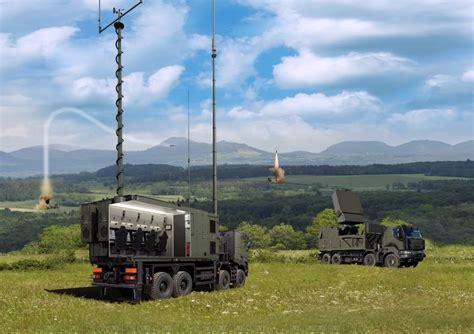
Denmark has taken a decisive step into the upper tier of European air and missile defense by ordering the SAMP/T NG ground-based system from France, acquiring for the first time a true theater-level ballistic missile interception capability. The move significantly elevates Copenhagen’s defensive posture and reinforces NATO’s integrated air and missile defense architecture across the Baltic Sea and Arctic approaches, regions where strategic friction has intensified in recent years.
The acquisition reflects more than a routine modernization program. It signals Denmark’s transition from a limited ground-based air defense framework to a high-end, multi-layered missile shield capable of engaging advanced combat aircraft, cruise missiles, and short- to medium-range ballistic missiles. Built by the Franco-Italian consortium Eurosam, the SAMP/T NG combines the upgraded Aster 30 Block 1NT interceptor with the advanced Thales Ground Fire 300 AESA radar, forming one of Europe’s most sophisticated land-based air defense architectures.
French Defense Minister Catherine Vautrin confirmed the landmark order in late February 2026, noting growing interest in the system among other European states, including Romania and Greece. Although specific contract values and delivery schedules remain undisclosed, the political and military message is unmistakable: Denmark intends to anchor its territorial defense within a modern, digitally integrated missile defense ecosystem aligned with NATO standards.
A Strategic Leap into Theater-Level Missile Defense
Denmark’s geography has always been strategic. Sitting astride the Danish Straits and controlling access between the Baltic Sea and the North Sea, the country occupies a maritime chokepoint of immense importance. In an era where ballistic and cruise missile proliferation is accelerating, such geography transforms from advantage to vulnerability unless protected by credible defensive layers.
The original SAMP/T, fielded by France and Italy in the 2010s, provided robust medium- to long-range air defense and limited ballistic missile interception capability. The SAMP/T NG, however, represents a generational shift. It expands the defended footprint and strengthens performance against faster, longer-range ballistic threats, including those employing maneuvering reentry vehicles or reduced radar signatures.
For Denmark, this means the ability to protect critical infrastructure—air bases, naval ports, command centers, and energy facilities—against more sophisticated missile arsenals. It also enhances alliance burden-sharing, contributing to NATO’s collective shield across Northern Europe at a time when layered missile defense is no longer optional but essential.
The Aster 30 Block 1NT: Precision Against High-Speed Threats
At the heart of the NG configuration lies the Aster 30 Block 1NT interceptor, an evolution of the earlier Block 1 missile. While the original variant could already counter tactical ballistic missiles with ranges up to approximately 600 kilometers, the Block 1NT pushes the envelope further.
Its upgraded Ka-band seeker improves target discrimination, allowing the missile to distinguish genuine warheads from decoys and debris during high-speed engagements. Enhanced onboard processing algorithms refine tracking accuracy against maneuvering ballistic targets descending at hypersonic velocities. In practical terms, this translates into a higher probability of interception in complex threat environments where seconds—and computational precision—decide outcomes.
Unlike legacy systems that rely heavily on external cueing, the Aster architecture integrates agile thrust-vector control, enabling extreme maneuverability during the terminal phase of interception. The result is a missile designed not merely to chase targets, but to outthink and outmaneuver them in real time.
Ground Fire 300: The Radar That Redefines Awareness
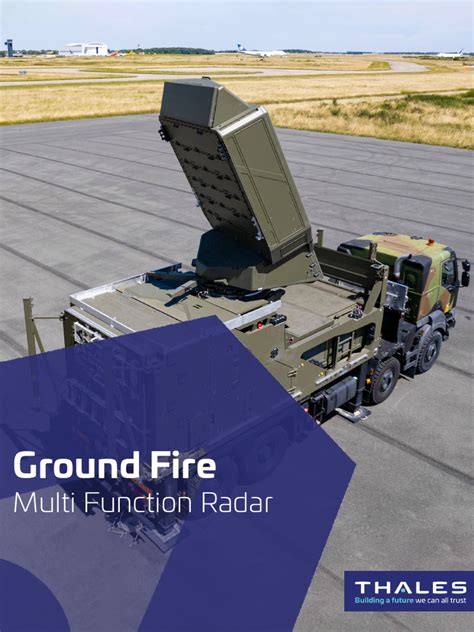
The transition from the earlier Arabel X-band radar to the Thales Ground Fire 300 marks another critical leap. Ground Fire 300 is an active electronically scanned array (AESA) radar, meaning it uses numerous small transmit/receive modules to steer beams electronically rather than mechanically. This allows faster refresh rates, greater reliability, and the ability to track multiple targets simultaneously.
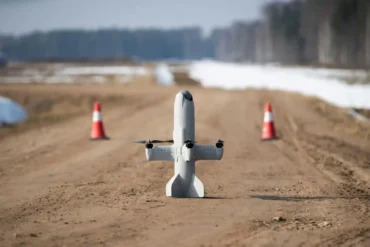
The system offers full 360-degree coverage and can manage dense, saturation-style attacks involving drones, cruise missiles, and ballistic projectiles launched in coordinated salvos. Its digital beam steering enhances detection range and improves discrimination between closely spaced objects, a capability vital in modern missile warfare where adversaries employ mixed salvos to overwhelm defenses.
In essence, the radar is not simply a sensor; it is the cognitive engine of the battery. It filters noise from signal, prioritizes threats, and feeds real-time data into the command network that orchestrates intercept decisions.
Digital Backbone and NATO Integration
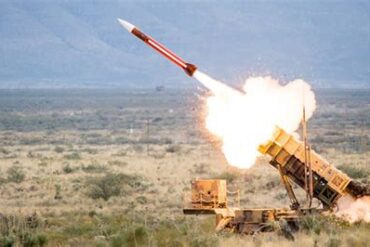
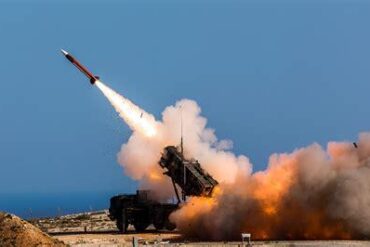
The NG variant introduces a redesigned engagement module and a modernized command-and-control system engineered for deep interoperability within NATO’s Integrated Air and Missile Defence architecture. Increased processing power, enhanced cybersecurity resilience, and open digital interfaces allow seamless coordination with systems such as Patriot, NASAMS, and Aegis Ashore.
Layered defense depends on information flow. A ballistic missile detected by one radar can be engaged by another system hundreds of kilometers away if networks are synchronized. The SAMP/T NG’s architecture is built precisely for this environment, enabling cross-platform engagement planning and real-time data exchange across allied territory.
This digital backbone also future-proofs the system. Software updates can integrate new threat libraries and missile enhancements without requiring extensive hardware redesign, a crucial advantage in an era where missile technology evolves rapidly.
Mobility and Survivability in High-Intensity Conflict
Modern missile defense units must assume they are targets themselves. The NG configuration improves mobility and survivability through streamlined launcher arrangements, faster emplacement procedures, and secure communication links. Enhanced “shoot-and-scoot” capability reduces vulnerability to counterbattery fire and long-range precision strikes.
The modular battery architecture allows tailored deployment. Depending on mission requirements, components can be dispersed or concentrated, balancing coverage with survivability. In contested environments, adaptability becomes a form of armor.
Regional Security Implications in the Baltic and Arctic
The timing of Denmark’s decision aligns with Europe’s broader reassessment of air defense needs following the war in Ukraine. Saturation attacks combining drones, cruise missiles, and ballistic systems exposed weaknesses in older architectures. The lesson was stark: missile defense must be layered, networked, and technologically agile.
By selecting the NG variant rather than an earlier configuration, Denmark positions itself ahead of the threat curve. The acquisition strengthens NATO’s northern flank, particularly across the Baltic Sea region and the High North, where strategic competition has intensified and airspace complexity continues to grow.
For neighboring states, Denmark’s move enhances collective deterrence. A credible missile shield complicates adversary planning, raises the threshold for coercion, and reinforces alliance cohesion.
European Industrial Momentum and Strategic Autonomy
Beyond operational considerations, the order carries industrial significance. Eurosam—jointly backed by MBDA, Thales, and Leonardo—benefits from sustained production lines and expanded export prospects. As additional NATO members explore procurement, the NG configuration could emerge as the reference standard within Europe’s missile defense landscape.
The program underscores Europe’s capacity to design, upgrade, and deploy high-end missile defense systems domestically while maintaining interoperability with U.S.-led architectures. In strategic terms, it strengthens the European pillar of NATO and reduces reliance on external suppliers without fragmenting alliance cohesion.
A Shield for an Era of Missile Proliferation
Denmark’s adoption of the SAMP/T NG is not merely a procurement milestone. It is a structural shift toward an advanced, digitally integrated, ballistic-capable air defense network tailored for high-intensity, multi-domain conflict. As missile technologies proliferate and adversaries refine their tactics, credible deterrence increasingly depends on the ability to detect, discriminate, and intercept at scale.
With the Aster 30 Block 1NT interceptor, the Ground Fire 300 radar, and a NATO-integrated command architecture, Denmark has positioned itself within the upper echelon of European missile defense capability. In a security environment defined by speed, precision, and complexity, the country has chosen a system designed not just to respond—but to anticipate and adapt.
The message radiating from Copenhagen is clear: territorial defense in the 21st century demands technological depth, alliance integration, and a shield robust enough to meet the evolving spectrum of ballistic and cruise missile threats.