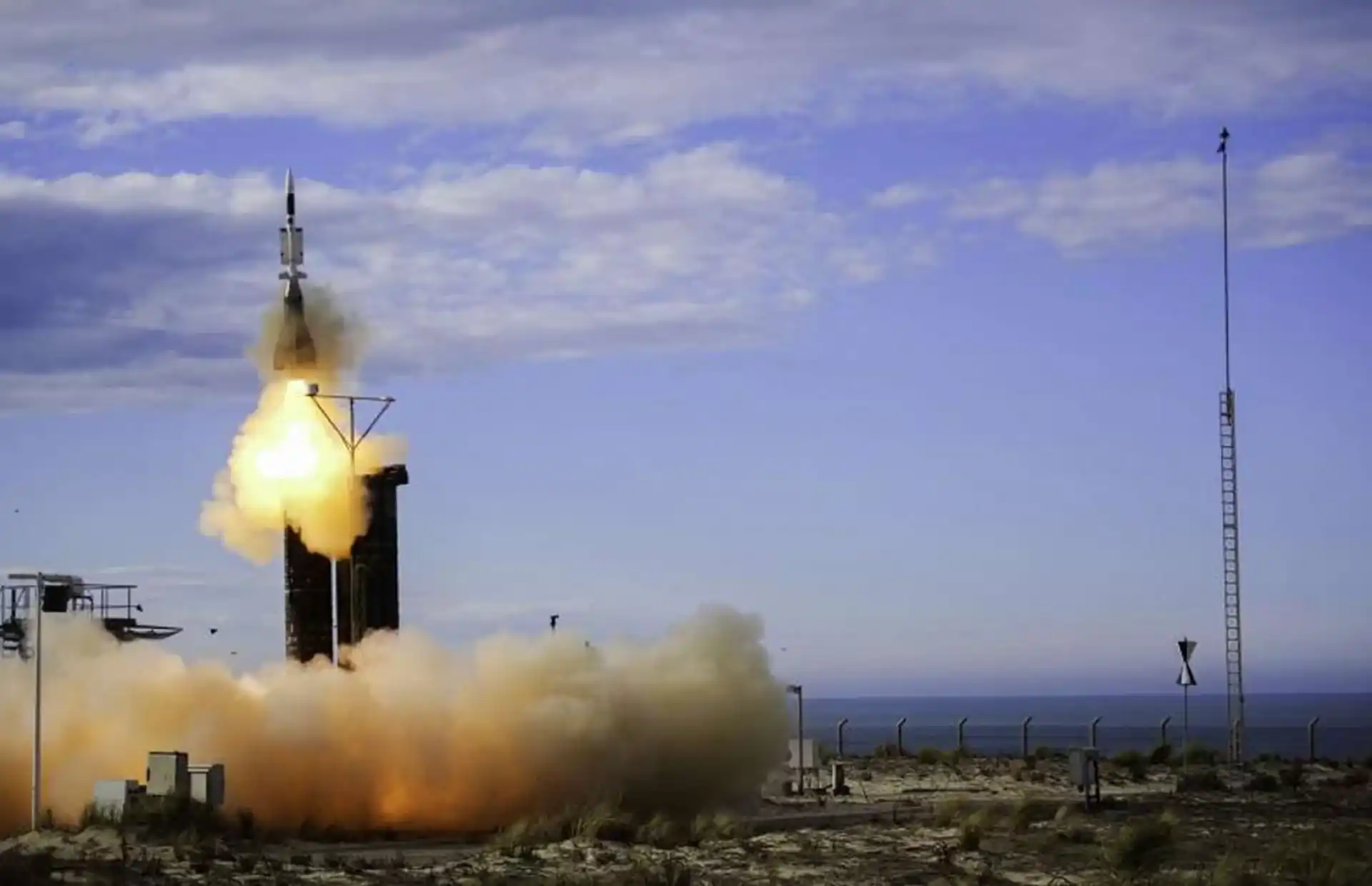
France’s defense innovation took a dramatic leap forward with the successful live-fire test of the SAMP/T NG air defense system, marking a crucial milestone not only for European military capability but also for Ukraine’s prospective 2026 airspace defense. The December 2025 test at the DGA Essais de Missiles range in Biscarrosse validated both the upgraded engagement module and Thales’ advanced Ground Fire radar, setting the stage for delivery timelines and renewed geopolitical discussions around deployment to the Ukrainian front.
SAMP/T NG: A Next-Generation Air Defense Game-Changer
The SAMP/T NG (Surface-to-Air Missile Platform/Terrain New Generation) is not just an upgrade—it is a transformative reengineering of the European air defense landscape. Co-developed by Thales, MBDA, and Eurosam under OCCAR management, it serves as Europe’s premier medium- and long-range air and missile defense solution.
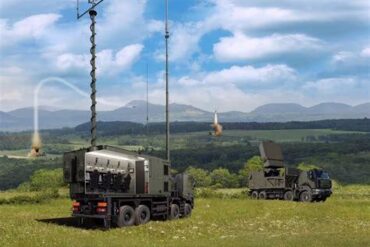
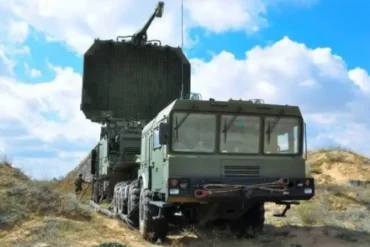
At the heart of this modernization is the Ground Fire 360-degree AESA radar, offering uninterrupted omnidirectional coverage, real-time 1-second refresh rates, and up to 400 km surveillance range. This radar, already in series production since early 2025, makes the SAMP/T NG stand out not merely as an incremental upgrade but as a generational leap in threat detection and tracking.
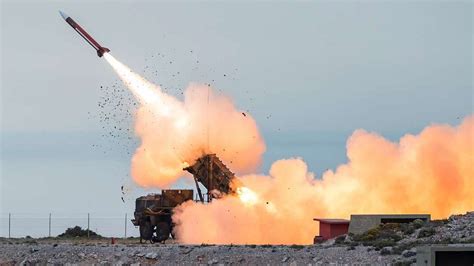
Test Details and Validation Milestones
The system’s inaugural firing in French configuration took place on December 15, 2025, following an earlier Italian test on December 3. Both events mark the culmination of years of development and integration work that began with the 2021 OCCAR contract and continued through the 2023 production agreements. France’s version features the Ground Fire 300 radar, while Italy will field Leonardo’s Kronos GM HP.
Thales released official DGA imagery, revealing the system’s performance under combat-simulated conditions. According to Raphael Desi, a senior executive at Thales, the test validated the new engagement module’s ability to fuse tracking data, assign interceptors, and engage targets under complex threat conditions—including ballistic, maneuvering, and saturating attacks.
Integrated, Mobile, and Survivable Defense Architecture
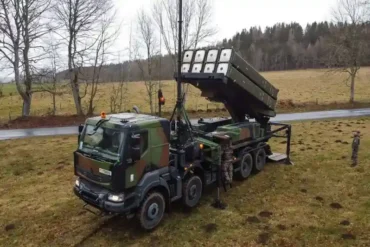
The SAMP/T NG is designed as a road-mobile, digitalized battery capable of protecting city-sized areas or high-value strategic installations. It can seamlessly integrate into larger networked defense systems or operate autonomously in standalone mode.
Key design advantages include:
- High mobility: Rapid relocation after engagement to avoid anti-radiation threats.
- Scalable architecture: A battery typically includes six vertical launchers, each armed with eight Aster 30 interceptors.
- Digital command: A centralized module fuses radar tracks and assigns weapons in real time.
Unlike legacy systems that struggle with sector-specific coverage, SAMP/T NG provides continuous 360-degree protection—a decisive advantage against unpredictable multi-axis threats such as low-flying drones or cruise missiles launched from beyond national airspace.
Aster 30 Missiles and the Block 1 NT Evolution
Interception capabilities are delivered through the Aster missile family, particularly the Block 1 New Technology (NT) variant. These vertically launched missiles are equipped with inertial guidance, mid-course update capability, and active radar seekers in the terminal phase.
Their agility comes from a PIF-PAF control system, which uniquely combines aerodynamic control surfaces with lateral thrusters to ensure pinpoint accuracy against fast-moving, high-G targets such as tactical ballistic missiles.
Ukraine Deployment: A Strategic Discussion Gaining Momentum
Following the successful test, the French government—echoed by President Emmanuel Macron—has voiced a strong desire to prioritize Ukraine as the first operational theater for SAMP/T NG in 2026.
This proposal holds strategic value: rather than placing SAMP/T NG directly on the trench lines, Ukrainian forces would use the system as a layered defense asset, positioned to protect:
- Strategic airbases
- Command-and-control hubs
- Critical energy infrastructure
Its long reach and high-altitude intercept profile make it ideal against cruise missiles and stand-off munitions launched from within Russian-controlled airspace. Furthermore, its digital radar feed could integrate into Ukraine’s broader air defense command architecture, enhancing targeting data for both fighters and other short-range systems.
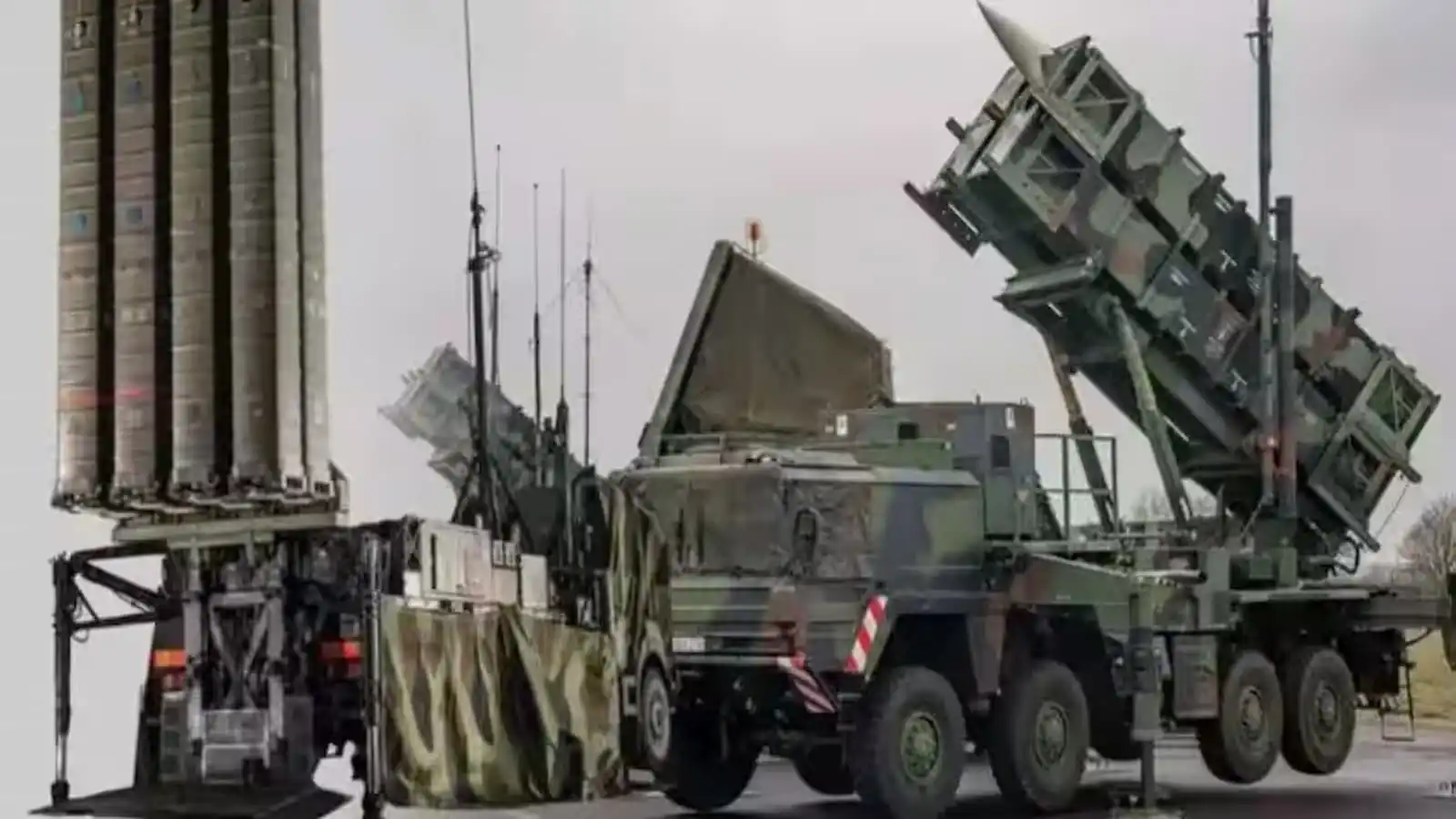
Patriot vs SAMP/T NG: The European Alternative
SAMP/T NG’s closest Western peer is the Raytheon Patriot system, widely deployed and combat-proven. However, Patriot’s older radar architecture historically required sector-specific engagement, limiting its ability to respond to multi-vector threats without additional sensor support.
SAMP/T NG surpasses this with its 360-degree baseline coverage, broader defended area, and robust anti-ballistic capabilities. Compared to NASAMS or IRIS-T SLM—other NATO-standard solutions—it provides greater firepower against higher-tier threats but demands a more extensive logistical framework and comes with a higher unit cost.
OCCAR and the Road to 2026
The timeline for deployment is grounded in OCCAR’s structured procurement milestones:
- March 2021: Development and qualification contract signed.
- February 2023: Production contract initiated, confirming sensor and module configurations.
- December 2025: Final validation firings in both Italy and France.
With full system commissioning scheduled for 2026, both France and Italy are on track for initial deliveries, with Ukraine’s deployment window aligning with this schedule—pending political and logistical arrangements.
Strategic Significance for Europe and NATO
The SAMP/T NG’s success also carries broader strategic consequences for Europe’s defense autonomy. As the only domestically developed and produced European air and missile defense system with long-range capabilities, it underscores a shift towards reducing reliance on U.S. defense platforms.
With NATO expanding its air defense coverage across Eastern Europe, SAMP/T NG offers a compelling European-built complement to U.S. systems, reinforcing the continent’s industrial and strategic sovereignty. Its deployment in Ukraine would further serve as a real-world combat validation, showcasing European defense technology under operational conditions.
Conclusion: A New Chapter in Air Defense Begins
With successful testing complete and deliveries imminent, SAMP/T NG stands at the frontier of next-generation air and missile defense. For Ukraine, it could become the backbone of high-tier threat interdiction, shielding essential assets from increasingly sophisticated attacks. For Europe, it represents a bold assertion of technological leadership and strategic independence.
If deployment to Ukraine proceeds as projected in 2026, it will not only reshape the battlefield—it will redefine the future of coalition-based, mobile, integrated air defense in 21st-century warfare.