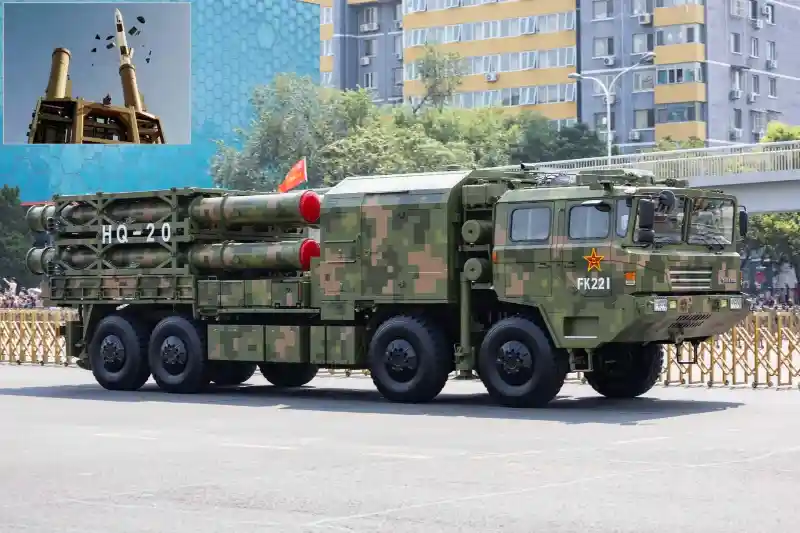
On November 11, 2025, the People’s Liberation Army Air Force (PLAAF) marked a significant milestone in its air defense evolution. The release of footage showing the first-ever public live fire test of the HQ-20 air defense missile system confirmed that this advanced interceptor has moved from ceremonial parade display to active operational status. This event, embedded in an Air Force anniversary film, signals China’s increasing transparency and confidence in the system’s combat readiness.
The HQ-20’s Transition from Parade to Combat Readiness
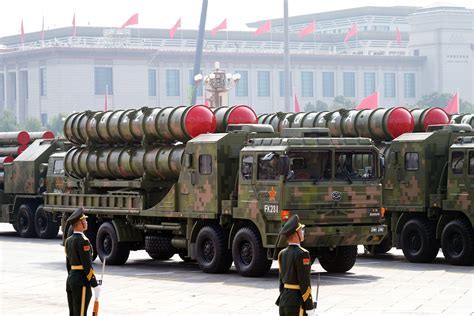
The HQ-20 was first seen in public during the September 3, 2025 Victory Day Parade in Beijing. At the time, its presence was symbolic—mounted on transporters as part of China’s layered air defense showcase, but with no operational demonstration. The November footage, however, captures the entire launch sequence: from canister elevation to missile ignition and release, providing clear evidence of field integration.
This transition underscores the HQ-20’s progression from conceptual or development stage to an Initial Operational Capability (IOC) weapon. The launch not only affirms the missile’s technical readiness but its adoption into routine training, a crucial benchmark for full-scale deployment.
A Modern Answer to Medium-Range Air Defense
Designed to fill the medium to upper-medium range air defense gap, the HQ-20 complements systems like the HQ-16 and HQ-22A. This strategic placement supports a continuous interception architecture, particularly between 50 to 200 kilometers. In real-world scenarios, this means more flexible engagement windows against aerial threats, especially in environments with multi-vector risks.
The HQ-20 responds to demands for:
- 360-degree azimuth engagement
- Faster reaction time
- Increased missile readiness per vehicle
- Integration into network-centric air defense environments
Design Evolution and Technological Advances
The development lineage of the HQ-20 traces back to a broader modernization of China’s surface-to-air missile (SAM) arsenal. Previous systems like the HQ-2, HQ-61, and HQ-12 employed inclined launchers with limited firing arcs. The HQ-20, however, reflects a significant leap in platform versatility and automation.
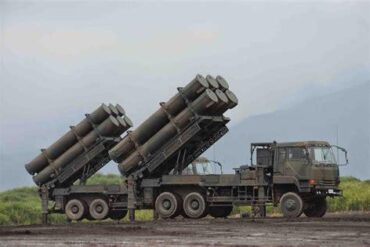
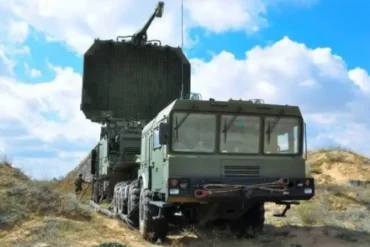
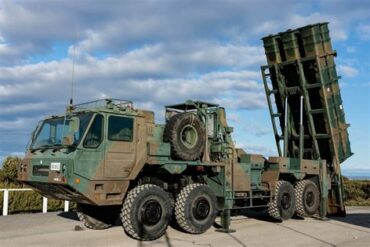
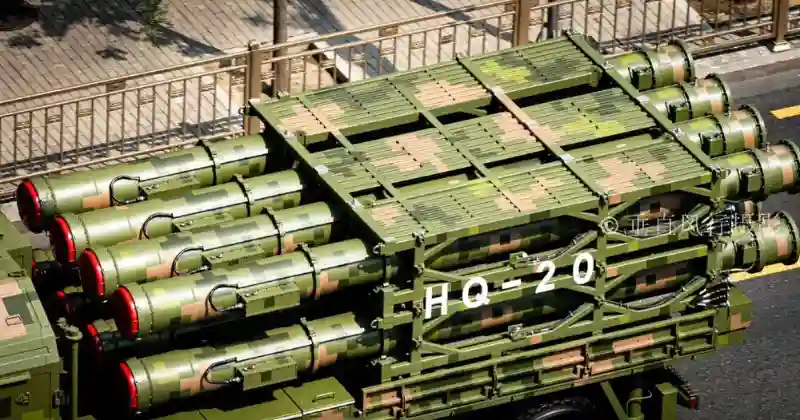
Mounted on 8×8 high mobility wheeled TELs, each HQ-20 launcher carries eight vertically launched canisters in two rows. Once deployed, the launcher can elevate and engage targets without repositioning the chassis—a critical advantage in fast-moving combat environments.
Key technological attributes include:
- Solid-fueled interceptor with vertical launch
- Inertial navigation and command-guided midcourse phase
- Terminal active radar homing, potentially with a dual-pulse motor for enhanced end-phase agility
- Firing probability estimated at 0.92 against aircraft and 0.85 against cruise missiles
- Engagement altitude from 10 meters up to 25 kilometers, with effective range estimates between 150–200 km, and some projections suggesting up to 500 km depending on variant and trajectory
Integrated Radar and Command Control Architecture
The HQ-20’s battlefield efficacy is tied deeply to its radar and command infrastructure. Paired with JY-27-class meter-wave early warning radars, the system demonstrates enhanced detection of low-observable (stealth) targets. Complementing this is a phased array fire control radar that supports precision target tracking, multi-target handling, and resistance to electronic interference.
This structure ensures the HQ-20 is not merely a standalone unit but a fully integrated node in China’s air defense matrix. Command posts dynamically assign targets, track priority threats, and coordinate launches across distributed launcher networks, minimizing vulnerability to localized saturation attacks or jamming.
Role Within the Layered Air Defense Ecosystem
The HQ-20 stands as a crucial layer within the Hongqi-series defense hierarchy. It bridges the coverage provided by short-range systems like the HQ-11 and HQ-17, and the long-range envelope of the HQ-9C and HQ-19.
Its strategic role can be outlined as follows:
- Fills the gap between the HQ-16 (40–160 km) and HQ-9B/C (125–400+ km)
- Increased fire density with eight missiles per launcher vs. four (HQ-9) or six (HQ-16)
- 360° engagement without physical vehicle rotation
- Higher mobility, allowing deployment for both fixed-site and mobile protection
During the 2025 parade, the HQ-20 appeared alongside a multi-layered ensemble of systems designed for comprehensive airspace denial: HQ-11, HQ-20, HQ-22A, HQ-9C, HQ-19, and HQ-29. This mix underlines China’s goal of continuous engagement capability across all altitude and range bands—from low-flying drones to ballistic missiles in terminal descent.
A Technical Comparison: HQ-20 vs HQ-16 vs HQ-9
When placed in direct comparison, the HQ-20 reveals its purpose as the density-optimized intermediary:
- HQ-9 Series: Long-range interceptor; ~125–400 km range; four missiles per TEL; designed for area defense and some ballistic threats.
- HQ-16 Series: Medium-range system; 40–160 km range; six missiles per TEL; used for regional air cover and unit-level protection.
- HQ-20: Bridges both; 150–200 km range; eight missiles per TEL; maximizes response speed and coverage in contested mid-range bands.
This configuration improves layered defense continuity, ensuring that targets evading the HQ-9 due to low altitude or stealth features can still be intercepted by the HQ-20, even when outside HQ-16’s most effective range.
Battlefield Deployment and Inter-Branch Integration
The flexibility of the HQ-20’s platform ensures its dual utility across China’s Air Force and Ground Force components. While the PLAAF manages national air defense, including long-range SAMs and early warning aircraft, the Ground Force focuses on battlefield and infrastructure protection.
As of 2023, with the Chinese Navy transferring ground-based air defense responsibilities to the Air Force, coordination between sea-based and land-based systems has been optimized. This realignment strengthens the HQ-20’s role as a bridge between mobile defense units and national command nodes.
The HQ-20’s verified use in live fire training scenarios now confirms its inclusion in active air defense drills, potentially including both coastal and inland response scenarios. This dynamic deployment capability suggests that the HQ-20 can support both peacetime airspace control and wartime rapid deployment.
A Node Within China’s ‘Golden Dome’ Early Warning System
Beyond its kinetic capabilities, the HQ-20 operates within the framework of China’s ambitious early warning prototype, the ‘Chinese Golden Dome’. This is a logically unified, physically distributed global missile alert network, integrating:
- Satellites
- Ground-based radars
- Optical sensors
- Electronic surveillance systems
This next-generation warning grid is designed to track up to 1,000 launches worldwide and provide real-time targeting data to interceptors like the HQ-20. It relies on QUIC-based data protocols and parallel signal processing, allowing rapid identification and threat classification.
Compared to the U.S. Golden Dome concept, China’s iteration is already being tested with integrated platforms such as the HQ-29 and HQ-19. The HQ-20, as a fielded system, now functions as one of the primary kinetic effectors in this network, transforming data-rich insights into real-world engagements.
Strategic Implications of the HQ-20’s Deployment
The HQ-20’s emergence as a functional part of China’s multi-tiered missile shield carries notable implications:
- Demonstrates strategic maturity in vertical launch design and network integration
- Enhances China’s ability to counter saturation strikes, especially involving stealth aircraft and cruise missiles
- Enables distributed defense in multiple theaters with unified command and sensor fusion
- Raises the cost of aerial intrusion for potential adversaries in contested airspaces like the Taiwan Strait or South China Sea
In sum, the public unveiling and activation of the HQ-20 marks a pivotal moment in the modernization of Chinese air defense. More than a technological showcase, it reflects the deployment of a capable, mobile, and networked interceptor system ready to support both territorial integrity and forward-operating forces in increasingly complex air combat environments.