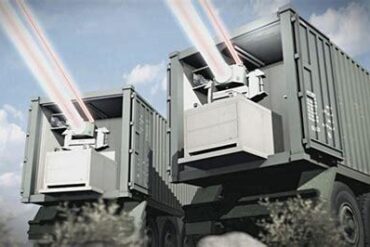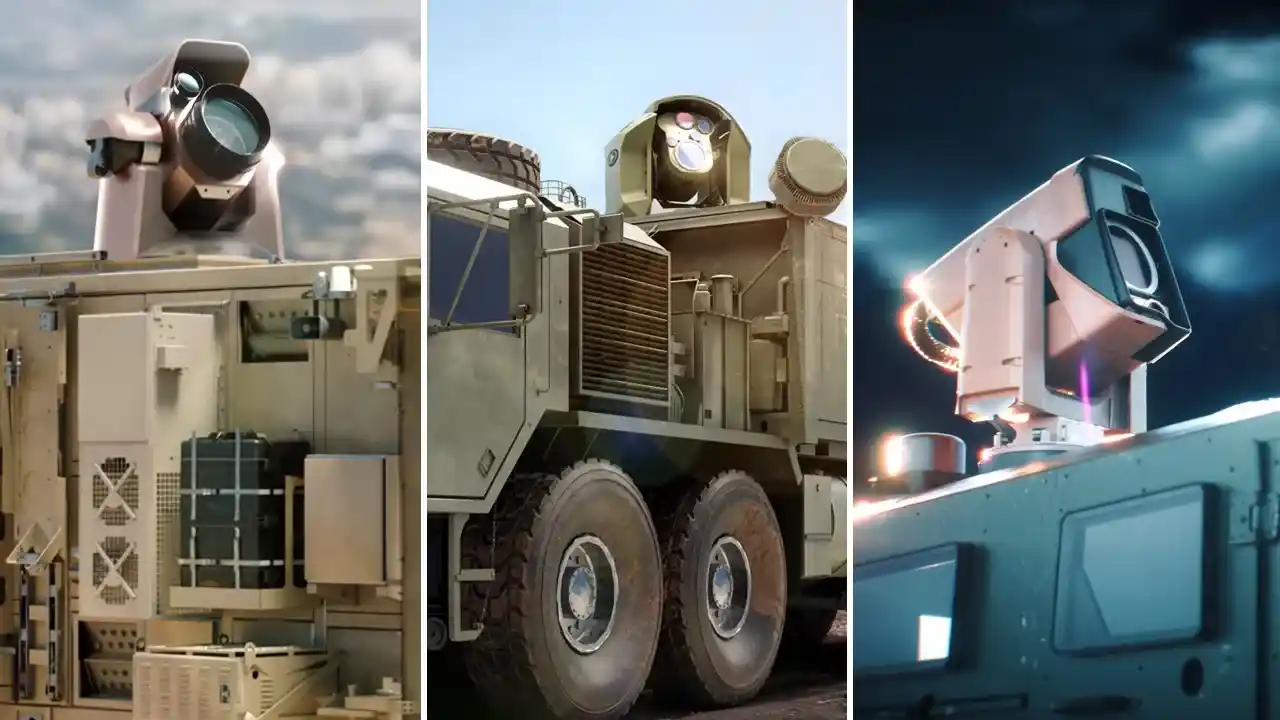
On December 28, 2025, the Israeli Ministry of Defense marked a historic milestone as it officially transferred the world’s first fully operational high-power laser defense system, known as Iron Beam, to the Israel Defense Forces (IDF). Developed by Rafael Advanced Defense Systems, this cutting-edge technology signifies a paradigm shift in modern air defense — introducing an energy-based weapon that promises both precision and unmatched cost-efficiency.
Iron Beam: A Technological Breakthrough in Air Defense
The Iron Beam system uses a 100-kilowatt high-energy laser to detect, track, and neutralize short-range airborne threats. It’s capable of disabling or destroying rockets, mortars, UAVs, and other projectiles mid-flight within a range of up to 10 kilometers. Unlike traditional interceptor missiles, which cost tens of thousands of dollars per shot, the operational cost of firing Iron Beam is equivalent to flipping a light switch — a revolutionary improvement in economic sustainability.
According to Defense Minister Israel Katz, this is not just a defense upgrade, but a strategic revolution. Katz emphasized that, “Iron Beam changes the rules of the game in defending our skies. It is precise, cost-effective, and capable of intercepting threats that conventional systems struggle with.” His words sent a clear message to adversaries: Israel is entering a new era of deterrence, backed by technological supremacy and strategic innovation.
Operational Integration and Combat Readiness
Rafael confirmed that the delivered Iron Beam unit has achieved full operational maturity, making Israel the first country in the world to deploy a massive operational laser weapon system. The system will now be integrated into Israel’s multi-layered air defense network, which includes Iron Dome, David’s Sling, and the Arrow system. Deployment will begin in phased stages, with priority regions along high-threat borders receiving the system first.
In a public statement on X (formerly Twitter), Rafael declared:
“Today marks a new era in air defense. Rafael has officially delivered the Iron Beam laser system to the IDF – the world’s first operational high-power laser interceptor.”
The technology had already made its combat debut in October 2024, when a lower-powered prototype of Iron Beam intercepted at least 40 drones launched by Hezbollah from southern Lebanon. The event demonstrated the system’s field viability, paving the way for full-scale deployment.
From Crisis to Creation: The October 7 Catalyst
The momentum behind Iron Beam’s final rollout gained urgency following the October 7 attacks, during which Hamas launched a barrage of thousands of rockets and drones. Traditional air-defense systems were challenged by the saturation-style offensive, highlighting the need for a more scalable and sustainable solution.
According to Dr. Y., one of the chief system engineers, “October 7 changed everything. We looked at each other and said, what can we do now? We knew laser was our realm. We had to make it work.”
This urgency spurred a focused development effort, transforming Iron Beam from prototype to operational in record time. Lt. Col. Y., head of MAFAT’s high-power laser branch, stated: “This is the first high-power laser weapon system in the world to enter regular operational service. It proved effective across a variety of threats.”
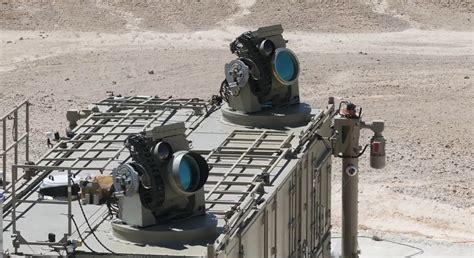
How Iron Beam Works: Inside the Laser Interceptor
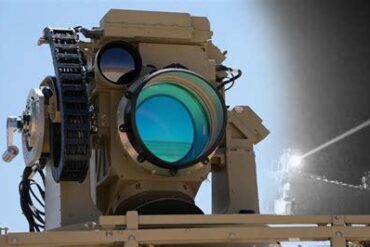
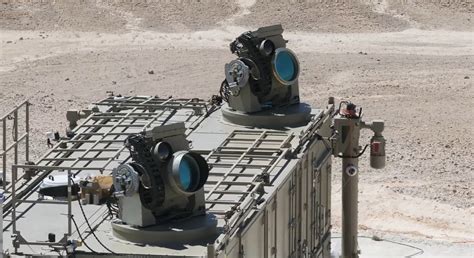
Iron Beam operates through a directed-energy weapon platform. Using electro-optic sensors, it detects and tracks incoming threats, then fires a concentrated laser beam that either melts, ignites, or destabilizes the projectile, rendering it ineffective before it can hit its target. This instantaneous, speed-of-light response is essential against fast-moving threats such as UAV swarms or short-range mortar attacks.
The system’s energy source is grounded, making it more adaptable to stationary defense installations. While the current version is optimized for fixed defensive positions, future variants may include mobile or aerial adaptations, extending its reach beyond border defense.
Advantages Over Traditional Missile Defense
The traditional missile defense systems — like Iron Dome — have proven their worth over the years, but they come with limitations:
- High per-shot cost: Interceptor missiles can cost up to $100,000 each.
- Finite ammunition: Stockpiles can run low in prolonged conflicts.
- Delayed reaction: Even fast missiles take time to reach their targets.
In contrast, Iron Beam offers:
- Minimal cost-per-interception, measured in single-digit dollars.
- Virtually unlimited ammunition, as long as energy is available.
- Instantaneous targeting, perfect for swarm threats.
During joint military simulations and tests, Iron Beam consistently demonstrated the ability to neutralize multiple threats simultaneously, including saturation attacks where hundreds of drones or rockets are launched in tandem. This positions Iron Beam as a force multiplier, reducing the operational burden on other systems in Israel’s defense architecture.
Strategic Implications: Redefining Future Warfare
Beyond Israel’s borders, Iron Beam is being viewed as a game-changer in global defense strategy. Defense Ministry Director-General Amir Baram stated that the success of Iron Beam lays the groundwork for a new doctrine of warfighting, where directed-energy weapons replace or augment traditional missile systems.
In future battlefields, Baram envisions a landscape where cheap drones and rockets are met with even cheaper and more efficient laser responses. The implications are staggering:
- Extended battlefield endurance without logistic dependence on physical munitions.
- Minimized collateral damage due to high-precision targeting.
- Adaptability to various threat environments, including urban, border, and naval theaters.
Looking Ahead: Scaling the Laser Defense Doctrine
With Iron Beam now operational, the question shifts to scaling. Israeli defense officials are already working on production lines to manufacture more units. There are also reports of foreign interest, particularly from allies seeking to bolster their own defenses against asymmetric threats like drone swarms and rocket attacks.
As new technological refinements are introduced, Iron Beam’s potential range and mobility are expected to grow. The ultimate vision is a networked system of laser platforms capable of real-time coordination, creating an interlocking web of laser coverage over critical assets.
Conclusion: Welcome to the Laser Era
The deployment of Iron Beam marks the dawn of a new defense era, not just for Israel, but for the global military community. With speed-of-light interception, negligible per-shot costs, and field-tested combat readiness, Iron Beam is no longer science fiction — it is strategic reality. As laser systems become more integrated into the modern battlefield, the defense world stands on the brink of a laser revolution.
Iron Beam’s successful transition from concept to combat system proves that vision, urgency, and innovation can yield extraordinary results. The skies over Israel now shimmer with more than hope — they are lit by precision-guided light.