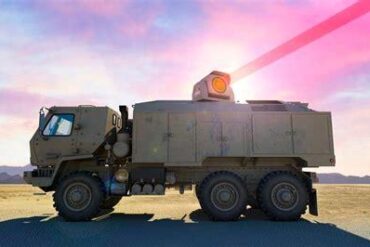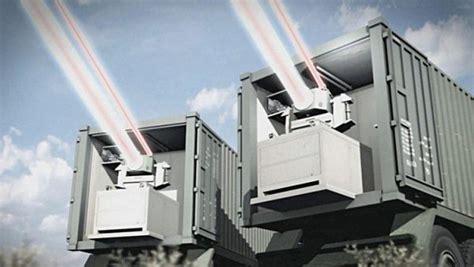
In a historic leap forward for modern warfare, Israel has become the first country to successfully intercept enemy drones using high-powered laser weapons during combat. This milestone not only affirms the combat-readiness of laser-based defense systems but also sets a precedent that could redefine global air defense strategies in the age of drone warfare.
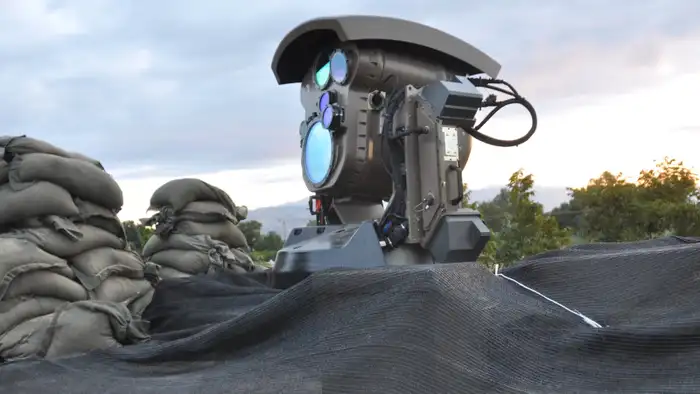
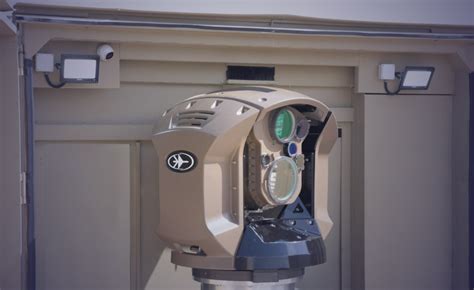
The announcement came directly from the Israeli Ministry of Defense, which confirmed the deployment of these prototype systems by the Israeli Air Force’s Aerial Defense Array. Developed by Rafael Advanced Defense Systems, the lasers were used to neutralize aerial threats during active operations—marking a pivotal turning point in real-world applications of directed energy weapons (DEWs).
Laser Warfare Arrives on the Battlefield
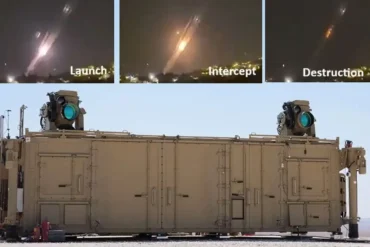
In the footage shared by the Ministry of Defense, laser systems are shown targeting enemy drones with precision. In one particularly striking sequence, a high-energy beam ignites the wingtip of an incoming drone, causing it to spiral out of control and crash in flames.
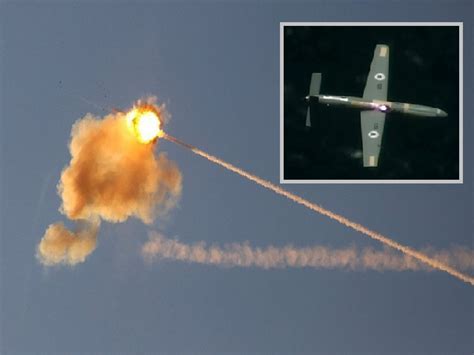
These events unfolded under active combat conditions, offering real-time validation of the system’s capabilities. According to Brig. Gen. Yehuda Elmakayes, head of Israel’s Directorate of Defense Research and Development, this achievement represents the “world’s first successful high-power laser interceptions on the battlefield.”
Unlike conventional anti-air defenses, which rely on expensive missiles with limited stockpiles, laser weapons offer effectively unlimited ammunition, constrained only by energy availability. This fundamental shift enables faster, cheaper, and repeatable interceptions, particularly useful in drone-saturated combat environments.
Rafael’s Directed Energy Breakthrough
The laser system is part of a wider family of directed energy weapons being developed by Rafael Advanced Defense Systems, a cornerstone of Israel’s defense sector. The working principle is simple but technologically demanding: a laser beam concentrates thermal energy on a specific target, effectively burning or disabling it through heat.
Each successful engagement depends on three critical elements:
- Pinpoint targeting: A sophisticated sensor suite is required to identify and lock onto threats.
- High-voltage energy source: Sustained and mobile power generation is vital for continuous operation.
- Atmospheric clarity: Laser beams degrade in adverse conditions like clouds, smoke, or humidity, limiting operational flexibility.
Despite these challenges, Rafael’s deployment indicates that current systems have matured enough for real-world combat, and the tactical advantages are clear. According to Yoav Tourgeman, CEO of Rafael, the weapon “will fundamentally change the defense equation by enabling fast, precise, cost-effective interceptions, unmatched by any existing system.”
Integration with Israel’s Layered Air Defense Network
This laser prototype is expected to complement the more robust Iron Beam system, another laser-based platform under development. Iron Beam, still in its final stages of testing and integration, is estimated to cost around $500 million and will form an essential component of Israel’s multi-layered air defense network.
The importance of Iron Beam lies in its role as an intermediary between Iron Dome and David’s Sling, offering a defense line against low-altitude, short-range threats like drones and mortar shells that may otherwise saturate traditional systems.
The latest combat deployment underscores the feasibility of adding a cost-effective, renewable layer to Israel’s defenses without over-reliance on interceptors that cost tens of thousands of dollars per shot. Instead, laser weapons—once connected to resilient power sources—can operate at a fraction of the cost per engagement.
A New Arms Race in the Middle East
Israel’s accomplishment has intensified the regional arms race in directed-energy warfare. Other Middle Eastern nations have also accelerated their investment in laser technologies:
- Saudi Arabia is collaborating with Chinese defense companies to create localized laser air defenses.
- The United Arab Emirates is building its indigenous laser systems with assistance from global partners.
These developments reflect a shared urgency: drones have become ubiquitous in modern conflicts, often deployed by non-state actors like Hamas, Hezbollah, and Yemeni Houthis, who rely on cheap, agile UAVs to overwhelm traditional defenses.
The U.S. and Global Laser Development Programs
The United States, a longstanding pioneer in directed energy technologies, has also been pushing forward. Key projects include:
- AN/SEQ-3 Laser Weapon System (LaWS) by Kratos Defense
- High-powered microwave emitters
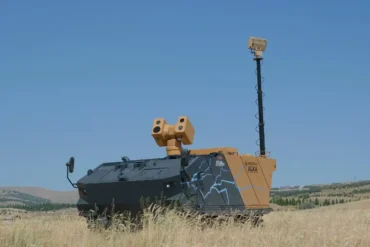
- Ground-based mobile laser units for anti-drone and anti-missile applications
The American military has reportedly spent over $1 billion in recent months shooting down Houthi drones over Middle Eastern waters using missiles. The economic disparity between a low-cost drone and a high-cost missile has reignited interest in cheaper, scalable solutions like lasers.
U.S. Navy officials have publicly stated that laser weapons, once fully integrated, could help reverse the economics of aerial warfare—a goal now visibly advanced by Israel’s battlefield demonstration.
Technical and Operational Challenges Remain
Despite the fanfare, laser weapons are not without significant hurdles. The main technical obstacles include:
- Power consumption: A reliable high-voltage power source is non-negotiable for sustained firing.
- Atmospheric interference: Dust, rain, fog, and smoke can scatter or absorb laser energy, reducing effectiveness.
- Target tracking: Small, fast-moving drones demand hyper-accurate tracking systems.
- Vulnerability of infrastructure: Mobile laser units and their energy sources could become targets themselves.
Nevertheless, Israeli officials are optimistic that these issues can be mitigated through engineering improvements, AI-based targeting, and better integration into the broader defense matrix.
What This Means for Future Conflicts
Israel’s successful use of laser weapons in war marks a paradigm shift. The country’s experience is expected to shape global doctrine regarding the application of energy weapons. The real-time feedback from this operational testbed is invaluable, not just for Israel but for allies like the United States who are watching closely.
Looking ahead, expect to see:
- Faster adoption of tactical laser systems by NATO and other western militaries
- Increased funding for DEW research and battlefield deployment
- AI-assisted fire control systems to manage drone swarms in real-time
As future battlefields evolve, the pressure will grow for cost-effective, high-precision defense systems that can operate under duress and without the logistical burden of reloading. Lasers, though still nascent, now appear to be firmly on the path to becoming the fourth pillar of modern air defense, joining guns, missiles, and interceptors.
Conclusion: A New Frontier in Military Defense
Israel’s combat use of high-power laser weapons is not just a technical breakthrough—it is a strategic signal. The age of experimental DEWs has entered its operational era. By pioneering the real-world interception of drones with lasers, Israel has shown that a low-cost, energy-based defense layer is not only feasible but indispensable in a world of proliferating aerial threats.
The rest of the world is now faced with a question that once belonged to science fiction: Can your army fight with light?