The idea of laser weapons has long lived in the realm of science fiction, yet modern battlefields are quietly proving that directed-energy warfare is no longer theoretical. The current generation of U.S. military laser systems is already capable of disabling drones, intercepting threats, and reshaping tactical defense—but these capabilities are merely a preview of what is rapidly approaching. The real story lies not in what exists today, but in how quickly the technology is accelerating toward something far more transformative.
From Sci-Fi Fantasy to Silent Battlefield Reality
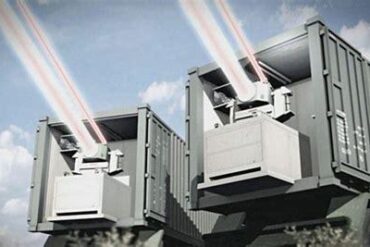
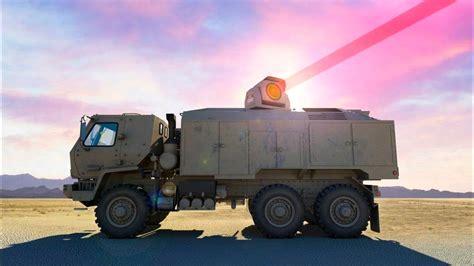
Laser weapons have evolved into practical tools of modern warfare, though they look nothing like their cinematic counterparts. There are no visible beams slicing through the sky, no dramatic flashes of light—just silent, precise bursts of energy traveling at the speed of light. This subtlety is precisely what makes them so effective.
Today’s systems are frequently deployed in what is known as “soft kill” operations. Instead of destroying a target outright, these lasers disable critical components such as sensors, cameras, or navigation systems. A drone, for example, can be rendered useless without ever exploding, dropping harmlessly from the sky.
This approach introduces a level of control that traditional munitions cannot match. It reduces collateral damage, eliminates the need for expensive interceptors, and allows for nearly instantaneous response times. In an era where drone warfare is becoming increasingly dominant, such precision is not just advantageous—it is essential.
HELIOS and the Rise of High-Energy Laser Systems
The U.S. Navy’s High Energy Laser with Integrated Optical-dazzler and Surveillance (HELIOS) represents a major milestone in operational laser weaponry. Installed on naval vessels, HELIOS combines surveillance, targeting, and directed energy into a single integrated platform. Its power output—exceeding 60 kilowatts—is sufficient to disable or destroy small aerial threats like drones.
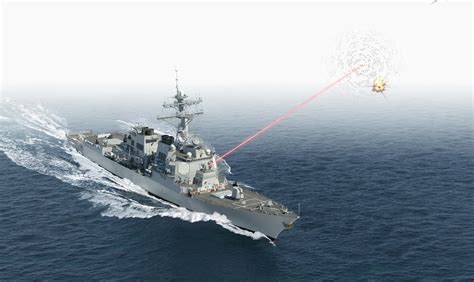
What makes HELIOS particularly significant is not just its power, but its adaptability. It can scale its energy output depending on the threat, shifting from non-lethal disruption to full destruction within seconds. This flexibility makes it a cornerstone of future naval defense strategies.
Yet even HELIOS is already being outpaced. New development programs are pushing toward systems capable of delivering 300 kilowatts or more, representing a dramatic leap in destructive potential. At that level, lasers could begin targeting larger aircraft, cruise missiles, and potentially even more complex threats.
The Power Leap: Five Times Stronger and Rapidly Advancing
The next generation of laser weapons is defined by a simple but profound shift: power scaling. Increasing a laser’s output is not just about making it stronger—it fundamentally changes what it can do. A 300kW system can engage targets faster, at greater distances, and with higher success rates.
This leap transforms lasers from defensive tools into multi-role weapons systems. Instead of merely countering drones, they become capable of intercepting high-speed projectiles, neutralizing incoming fire, and providing layered defense against a wide spectrum of threats.
The implications are enormous. Traditional missile defense systems rely on costly interceptors, each costing hundreds of thousands or even millions of dollars. Laser weapons, by contrast, operate at a fraction of that cost per shot, limited primarily by power generation rather than ammunition supply. This creates a strategic advantage in prolonged engagements, where sustainability becomes decisive.
Toward Missile Defense and ICBM Interception
Perhaps the most ambitious goal for laser weapon development is the interception of intercontinental ballistic missiles (ICBMs). While current systems are not yet capable of achieving this, the trajectory of innovation suggests it is no longer an impossible concept.
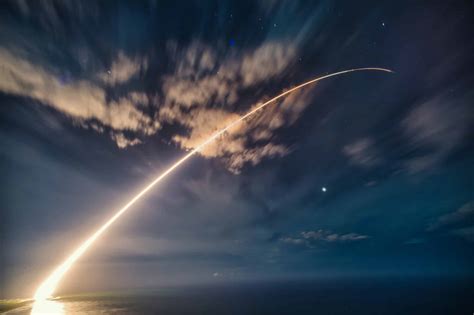
Intercepting an ICBM requires extraordinary precision and immense power. The laser must maintain a focused beam on a rapidly moving target over vast distances, overcoming atmospheric distortion and energy dispersion. These challenges are significant, but not insurmountable.
Advancements in beam control, adaptive optics, and energy storage are steadily closing the gap. Future systems may be deployed on land, at sea, or even in space, creating a layered defense network capable of neutralizing threats during multiple phases of flight.
If realized, such capabilities would redefine global defense strategies, shifting the balance from reactive interception to proactive neutralization.
The Strategic Shift: Speed, Cost, and Control
What truly sets laser weapons apart is not just their power, but their operational advantages. They deliver energy at the speed of light, making them effectively instantaneous. They require no physical ammunition, reducing logistical burdens. And they offer unparalleled precision, enabling targeted engagement with minimal unintended damage.
This combination introduces a new paradigm in warfare—one where efficiency and scalability become as important as raw firepower. Militaries can engage multiple targets in rapid succession without worrying about depleting stockpiles, fundamentally changing how conflicts are sustained over time.
At the same time, the quiet, invisible nature of laser engagement introduces psychological and strategic ambiguity. Adversaries may not even realize they are being targeted until systems begin to fail, adding a layer of unpredictability to modern combat scenarios.
What Comes Next: Beyond the Horizon of Directed Energy
The current generation of U.S. laser weapons is best understood as a foundation rather than a finished product. Each advancement in power, targeting, and integration brings the technology closer to capabilities that once seemed purely speculative.
Future systems may feature autonomous targeting, AI-assisted threat prioritization, and networked energy platforms capable of coordinating across multiple domains. As these technologies converge, laser weapons will not just complement traditional systems—they may eventually redefine them.
The trajectory is clear: what exists today is only the beginning. The lasers quietly operating on modern battlefields are the earliest expressions of a technology that is poised to reshape warfare at its core.