Modern naval operations are entering a new era as uncrewed surface vessels (USVs) gain the ability to deploy and recover drones without human intervention. A breakthrough system developed by CiS Drone Systems is changing how maritime forces conduct intelligence, surveillance, and reconnaissance missions by allowing drones to launch and land from crewless boats with pinpoint precision.
The technology, known as the ORKA Dock, solves one of the most difficult challenges in maritime drone operations: recovering an aircraft onto a constantly moving platform. Unlike traditional drone missions that require stable ground stations or human-controlled landings, this system enables autonomous recovery even when a vessel is pitching and rolling across waves.
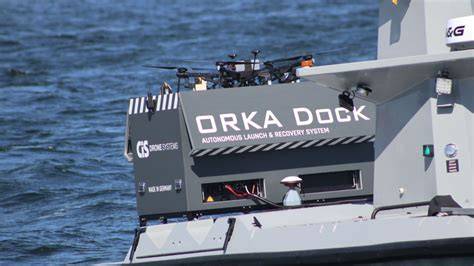
How ORKA Dock Enables Precision Drone Recovery
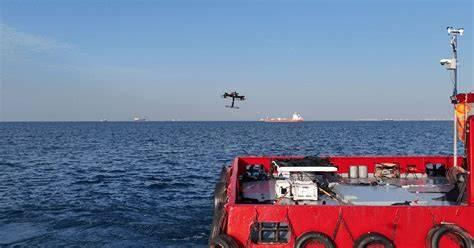
The ORKA Dock is essentially a sealed launch and recovery container installed on the stern of an autonomous boat. When activated, the enclosed system opens in approximately 30 seconds, allowing reconnaissance drones to take flight directly from the vessel. After completing their mission, the drones can automatically return and land inside the dock without requiring manual control.
This capability represents a major advancement because landing on a moving boat is far more complex than launching from one. The drone must calculate the vessel’s speed, direction, movement, and changing position while adjusting its flight path in real time. By automating this process, the ORKA Dock reduces operator workload and expands the operational range of naval drone systems.
The technology is designed specifically for reconnaissance drones, rather than one-way attack systems. This focus allows navies to use the platform for surveillance missions, maritime security, and battlefield awareness while keeping human operators away from dangerous environments.
Expanding Maritime ISR Capabilities With Drone Platforms
Uncrewed boats already provide valuable capabilities for intelligence, surveillance, and reconnaissance (ISR) missions. However, their effectiveness is limited by their onboard sensors and communication range. Adding autonomous drone operations transforms these vessels into mobile aerial reconnaissance platforms.
The ORKA drone reportedly offers around 75 minutes of endurance and a range of approximately 62 miles, allowing a USV to monitor a significantly larger area. After returning to the dock, the drone can be reused, creating a continuous surveillance cycle without requiring frequent recovery by a crewed vessel.
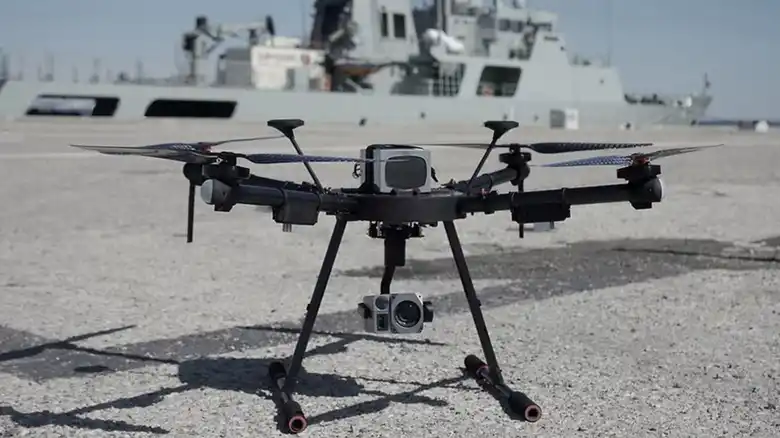
The drone system can carry advanced payloads, including cameras with 250x optical zoom, AI-powered tracking technology, thermal imaging equipment, laser scanners, and loudspeakers. These features make it suitable for identifying distant objects, monitoring maritime activity, and supporting naval decision-making.
A tethered operating mode also expands mission possibilities by allowing the drone to remain airborne for extended periods while receiving continuous power through a connection system. This could provide persistent observation over important areas such as ports, coastal zones, and strategic waterways.
Successful Sea Trials Demonstrate Autonomous Naval Potential
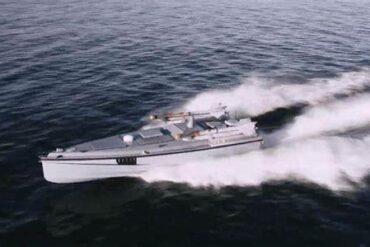
The ORKA Dock was demonstrated during SeaSEC 2026, where the system operated aboard the FLANQ-Q Recon 24 uncrewed surface vessel. During testing in the Baltic Sea, the drone successfully completed repeated automatic launch and recovery cycles while the boat traveled at approximately 17.3 mph through open water.
These demonstrations highlight how autonomous maritime platforms are becoming increasingly sophisticated. Instead of relying on large ships carrying helicopters or crewed aircraft, future naval forces may deploy networks of smaller autonomous vessels supported by intelligent drone systems.
As demand for unmanned technologies continues to grow, the ORKA Dock shows how precise automation can overcome one of the biggest barriers in maritime drone operations. By combining autonomous boats, reusable reconnaissance drones, and AI-assisted navigation, this technology could significantly reshape naval surveillance strategies in the coming years.