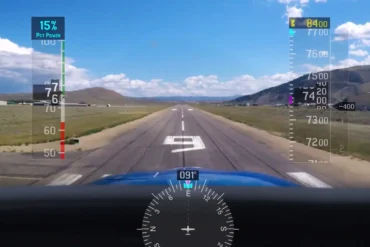
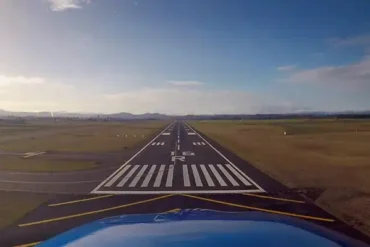
Precision Approach Radar (PAR) represents the pinnacle of radar-guided landing assistance, providing both vertical and lateral guidance to pilots during instrument approaches. Unlike standard non-precision radar methods, PAR closely mirrors the capabilities of an Instrument Landing System (ILS), albeit controlled entirely through real-time verbal cues from air traffic control (ATC). This form of approach is primarily utilized at military and joint-use airports, where such precision systems are installed and maintained for high-stakes operations.
The approach procedure hinges on continuous communication. Pilots receive real-time instructions regarding heading and descent, enabling them to adjust their flight path with surgical accuracy. While this demands elevated workload and situational awareness, the result is a landing process that can rival instrument-guided landings in even the most technologically equipped cockpits.
Understanding the Mechanics of a Precision Approach Radar (PAR)
At its core, PAR is a ground-controlled approach that uses high-frequency radar to track the aircraft’s horizontal and vertical movement. The system provides 3D situational awareness to the controller, who in turn relays this to the pilot. The final approach course is aligned precisely with the runway centerline, and the glideslope falls between 2.5 and 3 degrees, optimized for both obstacle clearance and smooth descent rates.
Unlike approaches where a cockpit display gives precise visual cues, pilots flying a PAR must depend exclusively on the controller’s voice commands. These include phrases like “slightly left of course” or “begin descent,” delivered continuously until the aircraft reaches decision height (DH)—the altitude at which the pilot must have the runway in sight or initiate a missed approach.
The absence of onboard navigation aids during a PAR forces the pilot to interpret ATC instructions quickly and translate them into immediate control inputs. It’s a test of both trust and skill, making PAR training a valuable asset for flight proficiency.
Where to Find PAR Approaches and Required Minimums
While not every airport is equipped for radar approaches, PAR procedures can be located in several official sources:
- FAA Terminal Procedures Publication (TPP) — Look under the “Radar Mins” section for specific minima.
- Jeppesen EFB — These offer graphical radar approach charts.
- ForeFlight EFB — Access both graphical and textual formats within the app’s “Approaches” tab.
Each source outlines essential details such as decision height (DH), minimum descent altitude (MDA), required visibility, and height above airport (HAA)/height above touchdown (HAT). It’s imperative to review these values ahead of time and match them against the aircraft’s capabilities and prevailing weather conditions.
PAR Requires Minimal Onboard Equipment
One of the standout features of a PAR approach is its accessibility. Unlike ILS or RNAV, a PAR does not require GPS receivers, VOR receivers, or glide slope antennas. Instead, all you need is:
- Two-way radio communication with ATC
- Basic flight instruments (attitude indicator, heading indicator, altimeter, vertical speed indicator)
This simplicity makes PAR particularly valuable in emergency situations or for aircraft with inoperative gyroscopic systems. In fact, no-gyro procedures are available for PAR approaches, allowing controllers to guide pilots using time-based turns and standard-rate descent profiles—a practice especially vital during instrument failures.
Before beginning a radar approach, pilots should always brief lost communications procedures with ATC. This ensures that if radio contact is lost mid-approach, the pilot can transition smoothly to a missed approach or alternate landing option.
Flying a PAR: What to Expect Over the Airwaves
From the moment a PAR approach is initiated, controllers take over all navigational responsibilities. Expect to hear a series of rapid, precise instructions such as:
- “Precision radar approach to Runway 36”
- “Begin descent. You are on glidepath, on course”
- “Slightly below glidepath and correcting”
- “At decision height”
- “Over landing threshold”
The controller’s updates arrive every few seconds, often in tandem with your descent. You’ll be given continuous adjustments on both heading and pitch, with real-time information about whether you’re above or below glidepath, and how far off centerline you may be.
Pilots should maintain a stable approach profile, mirroring that of an ILS in terms of descent rate and speed. Upon reaching DH, if the runway or required visual references are not in sight, an immediate go-around must be executed.
Inside the Controller’s Scope: How PAR Technology Works
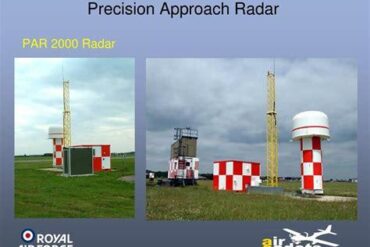
The ATC radar used in a PAR approach isn’t your standard en route surveillance radar. It employs high-frequency, narrow-beam radar sweeps, delivering updates every few seconds with incredible fidelity. The radar is tuned for short range (typically around 20 degrees in azimuth) but ultra-fast response, allowing the controller to see a detailed representation of aircraft trajectory.
This includes:
- Horizontal deviation from runway centerline
- Vertical displacement from glideslope
- Range from threshold
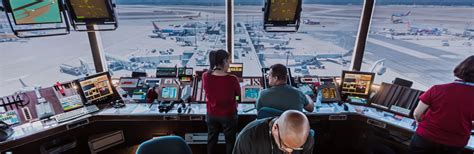
The visual output is displayed on dual scopes—one showing vertical glidepath, the other lateral tracking. Controllers assess both in real time to issue course corrections and vertical guidance to pilots. The emphasis on precision and clarity in these instructions is what enables safe landings even in zero-visibility conditions.
Landing Without a Tower Frequency Switch
In a conventional approach, pilots are handed off from approach to tower frequencies as they near the airport. Not so in a PAR. The same approach controller stays with you all the way to touchdown. This is necessary, as ATC must guide the aircraft through every nuance of final approach, from the glidepath intercept to the runway threshold.
Upon receiving landing clearance (relayed by the approach controller), the pilot continues under their guidance until touchdown. Only after landing will the pilot be switched directly to ground control. This seamless process not only reduces pilot workload but minimizes communication delays during critical phases of flight.
Best Practices for PAR Training and Execution
Flying a PAR approach is a challenging but invaluable skill. While these procedures are less common in civilian aviation, they offer unparalleled opportunities to refine flight precision and situational awareness. For pilots looking to practice, consider these key strategies:
- Request PAR approaches during low-traffic windows to avoid overburdening controllers.
- Fly simulated PARs with a safety pilot or instructor, even if no controller is available.
- Use a standard callout cadence to maintain situational awareness during descent.
- Log every PAR experience, noting weather, approach profile, and communication clarity.
Engaging in regular PAR training can greatly enhance your confidence during non-standard approaches or emergency scenarios, especially when onboard navigation systems are compromised.
Final Thoughts: The Strategic Value of PAR in Modern Aviation
While technology has brought us RNAV, satellite-based augmentation, and HUD-guided landings, PAR remains an indispensable fallback in the world of aviation. It is a reminder of how human expertise and voice control can seamlessly guide a complex machine to earth, even when instruments fail.
From its military roots to its occasional civilian use, PAR bridges the gap between instrument dependency and human-led precision. Every pilot who trains with this system is better prepared for the unexpected—ready to land with nothing more than a headset, a pair of eyes, and a well-trained ear.
When flown correctly, a PAR approach is not only a safe method of landing in adverse conditions—it is a testament to the profound coordination between air and ground, machine and mind.