Off-field landings may appear catastrophic, but with skill, preparation, and the right mindset, they become calculated maneuvers that prioritize human life over hardware. We do not control every variable in flight, but we do control how we respond when the aircraft no longer sustains level flight. This article dives deep into the psychology, technique, and tactical discipline required to manage emergency landings in terrain far from the runway.
What Defines a Good Landing Off-Airport?
In aviation lore, it’s said that a good landing is one you walk away from; a great one is when the aircraft flies again. But legends like Captain Chesley “Sully” Sullenberger remind us that greatness in crisis isn’t about airframes—it’s about survival. His controlled ditching in the Hudson River, though fatal to the aircraft, saved every soul aboard. That is the gold standard of emergency response: calculated loss to preserve life.
Aircraft systems fail for various reasons—mechanical, environmental, or pilot-induced. Once failure becomes inevitable, the pilot in command must pivot immediately. The objective shifts: not to preserve the airplane, but to preserve human life. This mindset shift, executed swiftly, marks the difference between tragedy and survival.
Types of Off-Field Landings: Precautionary, Forced, and Ditching
Emergency landings fall into three categories, each with its own dynamics and strategic options:
Precautionary Landings
Precautionary landings are deliberate decisions made before an actual emergency occurs. These usually stem from deteriorating weather, fuel concerns, or mechanical irregularities that haven’t yet led to total failure. With time and power available, pilots can select suitable terrain and conduct a controlled approach. This is the ideal scenario when off-airport landings become a possibility.
Forced Landings
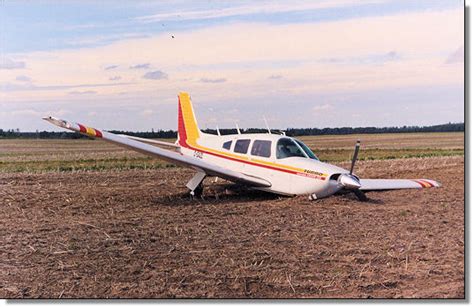
Unlike precautionary landings, forced landings arise from immediate, non-negotiable system failure. There is no time to consider alternates or weigh consequences. The engine quits, the propeller fails, or control surfaces become unresponsive. Psychological inertia—denial, or the misguided hope that a failing system will recover—often delays decision-making, reducing options drastically.
Ditching
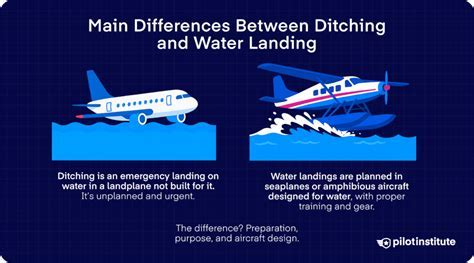
Water landings introduce their own risks but often offer smoother deceleration forces. A ditching can be either forced or precautionary, depending on the nature of the emergency. Pilots should consult the Aircraft Flight Manual (AFM) and the Aeronautical Information Manual (AIM) to understand swell direction, wind effects, and descent angles for water entries.
Mind Over Mechanics: Decisive Action in Emergencies
Time in the air is measured in altitude—and altitude equals opportunity. One of the most dangerous threats in emergency landings is not mechanical—it’s analysis paralysis. Overanalyzing consumes precious seconds, narrowing your landing options.
The FAA’s Airplane Flying Handbook highlights three primary psychological obstacles:
- Denial: Refusal to accept the situation, wasting crucial time.
- Aircraft Attachment: Unwillingness to sacrifice the aircraft leads to poor site selection.
- Fear-Based Delay: Emotional reactions inhibit swift execution.
According to the 2018 NTSB data, only 18% of 1,275 accidents resulted in fatalities. When narrowed to powerplant failures, fatality rates dropped below 10%. These numbers emphasize that controlled crashes—when well-managed—are overwhelmingly survivable.
Emergency Flows: The Value of Repetition and Instinct
High-stress situations leave little room for checklist fumbling. That’s why we endorse the do-verify method, integrating intuitive flows with tactile cockpit ergonomics. These flows must be rehearsed until muscle memory takes over.
Consult your POH or AFM, especially the emergency procedures section. Identify items you won’t have time to read mid-crisis, then break them into action flows:
- Develop flows specific to aircraft layout
- Practice them at least 10 times
- Rehearse from memory at low altitude simulations
Whether it’s an engine failure at 400 feet AGL or a fire warning at takeoff, trained flows convert confusion into clarity.
Landing Site Selection: Where and How You Touch Down Matters
Minimize Ground Risk
When you leave the runway, you inherit risk. But that doesn’t extend to those on the ground. It’s every pilot’s duty to avoid endangering others. Highways might seem tempting but bring unacceptable risk to drivers. Farmland, golf courses, and open fields typically present better, safer alternatives.
Kinetic Management: Reduce and Dissipate Energy
In off-field landings, injury risk stems from two things: speed and impact angle. The formula is simple:
- Reduce Airspeed: Approach stall speed safely.
- Maximize Deceleration Distance: More distance = less force.
At 9G, a deceleration from 50 mph needs 9.4 feet. At 100 mph, it’s 37.6 feet. Speed kills—but only if you let it.
Use the aircraft’s components—wings, gear, fuselage bottom—to scrape off energy. Dense crops or tree canopies can act like aircraft arrestor systems (EMAS), slowing without violent impact. Just as crumple zones in vehicles absorb impact, head-on landings with dissipative surfaces spread out force more evenly than side impacts.
Landing in Trees
Tree landings are unpredictable. But the principle remains: distribute impact forces evenly. Avoid wingtip-first collisions and aim to keep the fuselage aligned through the approach. Read specific guidelines and studies—because training opportunities are rare.
Water Entry Strategy
Ditching offers gentle deceleration—if executed correctly. Your AFM will provide aircraft-specific water procedures. The AIM outlines swell alignment, approach headings relative to wind, and flotation techniques. Fixed-gear aircraft face higher flip risk, so slow speeds and low descent rates are vital.
Stay Found: Communications and Rescue Preparedness
The perfect emergency landing means little if no one knows your location. Always plan to be found:
- Flight Plans: File one, especially in remote regions. Cancel upon arrival.
- Flight Following: ATC provides radar monitoring and quick response if you declare.
- ELT Awareness: Know your aircraft’s ELT status. Many older models fail to activate in 75% of crashes. Include ELT checks in your preflight flow.
Securing and Evacuating: The Final Stage of Survival
Surviving the landing doesn’t end the emergency. Fire risks and structural deformation can still threaten occupants. Practice post-landing checklists just as rigorously as emergency flows:
- Mixture to Cut-off
- Mags Off
- Battery and Alternator Off
These actions eliminate heat and fuel sources. If you have time, perform them before impact. If not, do them immediately after stopping.
Evacuation drills are essential, especially for passengers. Ensure they understand door operations and seat manipulation. Encourage families to rehearse exits post-flight. Avoid the propeller arc at all costs. Even if there’s no visible fire, do not linger inside the cabin.
Conclusion: Survivability is the Standard, Not the Exception
An off-field landing is not a death sentence—it’s a test of preparation. From developing ergonomic emergency flows to choosing terrain that slows impact safely, every decision determines survivability. Flying the airplane into the crash, as Bob Hoover taught, is not reckless—it is strategic.
Every phase—from mindset and planning to landing and evacuation—demands discipline. And every flight is an opportunity to sharpen those survival instincts. The wreckage may be totaled, but if every soul walks away, the mission is accomplished.
The airplane may have let you down. But your training never should.