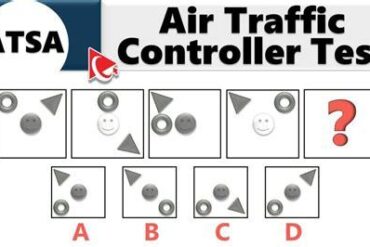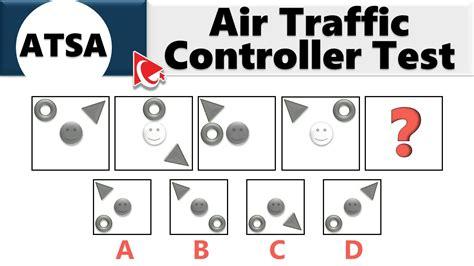
The journey toward becoming an Air Traffic Controller is one of focus, skill, and unwavering determination. For aspiring controllers, the first major milestone is the Air Traffic Skills Assessment (ATSA) — a rigorous practice test designed to evaluate whether candidates possess the key competencies required in the high-pressure world of airspace management.
Understanding the air traffic control practice test is crucial to not only passing but excelling, as higher scores directly correlate to better hiring opportunities. The stakes are high, and preparation is everything.
What Is the ATSA Exam and Why It Matters
The Federal Aviation Administration (FAA) administers the ATSA, a pass/fail aptitude test that replaced the older AT-SAT exam. Unlike traditional academic tests, the ATSA measures real-world cognitive skills and personality traits that predict success in air traffic control roles.
Performance is ranked into specific bands, and although a basic pass gets you through the initial gate, higher band scores significantly enhance your candidacy for a Tentative Offer Letter (TOL). The average salary for Air Traffic Controllers, according to FAA reports, stands at an impressive $123,676 annually, plus a comprehensive benefits package. Therefore, every point scored on the ATSA potentially translates into a more lucrative career trajectory.
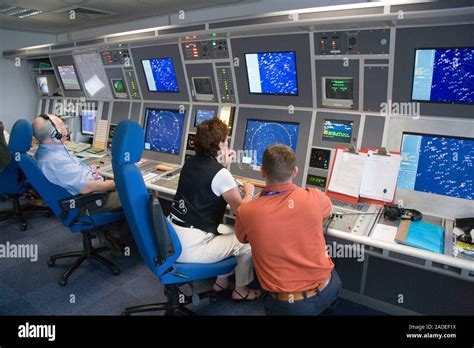
The Structure and Duration of the ATSA
The air traffic control practice test spans approximately 2 hours and 49 minutes, with candidates given the option of either a single 30-minute break or six shorter 5-minute breaks. It is critical to manage your stamina and focus across the nearly three-hour session, as lapses in attention can drastically affect results, especially during the more cognitively intensive segments.
The ATSA consists of seven distinct sub-tests, strategically sequenced to first measure raw cognitive abilities and later evaluate situational judgment and personality alignment with air traffic control duties.
Breaking Down the Seven ATSA Sub-Tests
Memory Game
In this rapid-fire challenge, candidates encounter eight two-minute rounds where digits from 1 to 9 flash briefly. The task: calculate and input the positive difference between successive numbers. Once an answer is entered, it is final.
Success in this section depends on mastering rapid pattern recognition and memory visualization strategies. Candidates are encouraged to explore techniques like whispering numbers under their breath, tapping fingers in rhythm, or mentally ‘seeing’ the number sequences.
Memory/Variables
This section unfolds in three escalating tiers of difficulty:
- Values Only: Given a set of assigned values to letters (e.g., A=1, B=4, C=3), candidates must deduce the correct numerical equivalents.
- One Equation: A simple equation interconnects variables, requiring logical resolution.
- Two Equations: Dual constraints must be navigated to deduce correct variable values.
Mathematical precision under time pressure is paramount here, as these puzzles simulate the multitasking calculations Air Traffic Controllers must perform daily.
Spatial/Visual Relationship
Spatial orientation skills are non-negotiable for any Air Traffic Controller. This sub-test features two sections:
- Part one involves determining the correct directional relationship between aircraft icons based on “RIGHT” or “LEFT” prompts.
- Part two adds complexity with an “EYE” symbol, shifting the candidate’s frame of reference.
Correct answers score points, while incorrect responses earn none, placing a premium on both accuracy and decisiveness.
ATC Simulation
This simulation is arguably the most dynamic and stress-testing portion of the ATSA. It unfolds in two interconnected parts:
- Collision Avoidance: As two to seven aircraft icons move across a digital radar display, candidates must quickly eliminate planes that risk collision by pressing corresponding identifiers.
- Rapid Math Estimation: Intermittent quick math challenges (estimating sums and differences) pop up, requiring snap decisions while monitoring the radar.
Tip: Prioritize preventing collisions over obsessing about mathematical perfection; top scorers often bypass the math to maintain situational awareness.
Word Problems
Candidates face roughly 15 questions within 20 minutes. Problems often incorporate charts or graphs, demanding quick interpretation and logical deduction.
Unlike many standardized tests, unanswered questions are penalized, so it is strategically smarter to guess rather than leave an item blank.
Personality Test
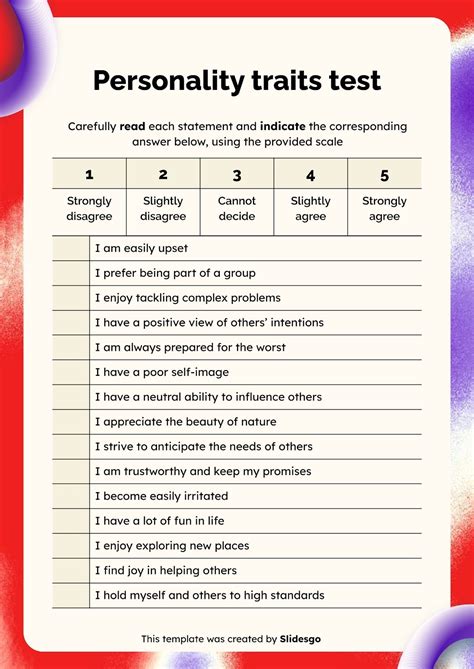
Candidates must respond to 108 paired statements, selecting which one best and least describes them. Statements measure traits such as adaptability, teamwork, integrity, and stress tolerance—all critical to a successful ATC career.
Authenticity is key here. Attempting to “game” the system is detectable and can lead to disqualification.
Reading Comprehension
The final sub-test involves reading six short passages and answering 18 questions about main ideas, inferences, and deductive reasoning.
Candidates have just 15 minutes to complete this section, requiring rapid absorption and synthesis of information.
Preparation Tips for the ATSA
Success in the ATSA exam hinges on more than raw intelligence or intuition. A solid preparation strategy, built around understanding each of the test’s sections and practicing key skills, is essential. Below are several proven strategies for improving your performance:
- Practice the ATSA Simulations: Familiarity with the ATC simulation test is paramount. Simulated scenarios mirror real-world air traffic control situations, requiring quick, accurate decisions to avoid collisions. Repeated exposure to these simulations helps develop both speed and accuracy in prioritizing tasks.
- Master Mental Math: The ability to make quick mathematical estimations is a key skill in the ATC Simulation sub-test. While exact calculations are not required, high-scoring candidates often estimate the answers and move quickly.
- Work on Memory Exercises: Enhance your short-term memory and pattern recognition. Memory games and exercises that involve recalling sequences of numbers or variables are excellent practice. Train your brain by trying various mnemonic techniques to retain complex information for short durations.
- Take Practice Tests: Access as many ATSA practice tests as possible. These simulate the actual testing environment and give you a realistic sense of timing and pressure. Practice tests not only reveal areas of strength but also pinpoint areas needing improvement.
- Study Time Management: The ATSA is a timed exam, and poor time management can result in incomplete sections or rushed answers. Practice pacing yourself during mock tests to ensure you allocate enough time to each sub-test.
- Review Sample Questions: Familiarize yourself with sample questions for each sub-test. Knowing the format and types of questions will help you prepare for what to expect.
- Refine Your Test-Taking Strategy: Develop a strategy for handling the Word Problems section. This sub-test includes charts and graphs, so understanding how to quickly interpret this information is crucial. Get comfortable with quick analysis and decision-making under time constraints.
- Stay Calm and Focused: The Personality Test assesses how you handle stress and pressure. Practice staying calm and collected during all stages of the test to avoid making impulsive decisions.
What to Expect After the ATSA
Once you complete the ATSA, the waiting begins. Typically, it takes about three weeks for results to be available, and candidates can check their status via the USAJOBS website.
The FAA uses a tiered scoring system to categorize candidates. The categories are:
- Best Qualified: Candidates in this group are highly likely to be selected for further consideration.
- Well Qualified: Candidates who perform above average but slightly below the best-qualified group.
- Qualified: Those who pass the exam but rank lower in comparison to others.
- Not Referred: Candidates who do not meet the minimum criteria.
The highest-scoring candidates will receive a Tentative Offer Letter (TOL). From here, the recruitment process continues with further evaluations, including a drug screen, medical examination, and background check.
If you receive a TOL, you will be invited to enroll in the FAA Academy, a crucial step that may take up to two years to complete. The academy provides extensive training in air traffic control procedures and equips candidates with the technical skills necessary for this demanding career.
Eligibility Requirements for the ATSA
To be eligible for the ATSA exam, candidates must meet certain criteria set by the FAA. These requirements include:
- U.S. citizenship is mandatory.
- Applicants must be 30 years old or younger (or up to 31 years old with at least one year of ATC experience).
- A medical exam must be passed, as air traffic controllers must meet stringent health standards.
- Applicants must clear a security investigation.
- Clear spoken English is required for communication in real-time ATC operations.
- Applicants must either have three years of work experience or a bachelor’s degree (or equivalent qualifications).
- Willingness to relocate to different workstations is essential.

Understanding the Pool System: Pool 1 vs. Pool 2
The FAA employs a two-pool system when hiring for air traffic control positions. Candidates are ranked and assigned to Pool 1 or Pool 2 based on specific qualifications.
Pool 1: Priority Candidates
- CTI Graduates: Individuals who have graduated from a College Training Initiative (CTI) program are given priority.
- Eligible Veterans: Veterans with aviation experience or who qualify for the Veterans Recruitment Appointment (VRA) also fall into this category.
Pool 2: General Candidates
- All other U.S. citizens who meet the basic eligibility requirements are considered in Pool 2.
It’s important to note that Pool 1 candidates are prioritized over Pool 2 candidates regardless of the scores on the ATSA exam, meaning that even if you achieve a high score in Pool 2, it does not guarantee an immediate offer if Pool 1 candidates are available.
Retaking the ATSA Exam
For those who do not meet the passing criteria or wish to improve their scores, the ATSA exam can be retaken. Scores are valid for three years, allowing candidates a chance to apply for future openings.
However, if your ATSA scores are expired, you must register for a new test. The process for re-registering is handled via Pearson Vue, the company that administers the testing on behalf of the FAA.
Cost and What to Bring on Test Day
The ATSA exam itself is free of charge, with the FAA covering the cost of the test. However, candidates must cover the costs associated with travel and parking to the testing center.
On the day of the exam, you are required to bring a photo ID that matches the name on your testing registration. This is a standard requirement to prevent identity discrepancies.
Test Locations and Scheduling
The ATSA exam is conducted at FAA-approved testing centers across the United States. The FAA provides a state-by-state list of testing centers, and applicants can choose the location most convenient for them.
It is important to schedule your exam well in advance, as certain testing centers may have limited availability. Make sure to reschedule or cancel your appointment at least 48 hours in advance if necessary.
How to Track Your ATSA Results
Once you’ve completed the ATSA exam, you can track your results via the USAJOBS portal. The AKTR (Air Traffic Knowledge Test Results) will be made available through your PSI account within three weeks.
It’s important to keep an eye on your application status and monitor the AVIATOR category, which shows the Best Qualified, Well Qualified, Qualified, and Not Referred status. If you fall into the Best Qualified group, you will move forward with the recruitment process.
Conclusion: A Step Toward an Exciting Career
Taking the ATSA exam is the first step in what could be an exciting and rewarding career as an Air Traffic Controller. By understanding the test format, preparing effectively, and following the tips provided in this guide, candidates can enhance their chances of success.
The road to becoming an air traffic controller requires not only academic and technical knowledge but also the ability to thrive in high-pressure environments. The ATSA practice test is a vital tool in ensuring candidates are ready to meet the challenges ahead, and with diligent preparation, the skies are the limit for those who pass.