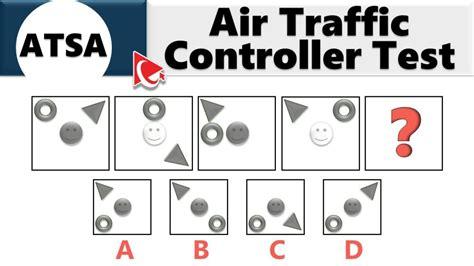
The Air Traffic Skills Assessment (ATSA) is the official aptitude exam conducted by the Federal Aviation Administration (FAA) to evaluate candidates for careers as Air Traffic Controllers (ATCs). Replacing the previous AT-SAT, the ATSA is designed to simulate the complex mental and multitasking challenges faced in real-life air traffic scenarios. In this comprehensive guide, we delve deep into the structure, content, preparation strategies, eligibility requirements, and post-test process to equip candidates with every advantage.
What Is the ATSA Test? Understanding Its Purpose and Format
The ATSA test is a pass/fail cognitive aptitude test that plays a crucial role in the FAA hiring pipeline. Scoring high on this assessment determines your placement into merit bands such as Best Qualified, Well Qualified, or Qualified—directly influencing your selection priority.
Spanning 2 hours and 49 minutes, with optional breaks totaling up to 30 minutes, the test is divided into seven unique sections. Candidates must complete the first four segments before being allowed to move on to the final three by informing the proctor.

Each section assesses a distinct skill required in air traffic control, such as memory retention, spatial awareness, mental math, reading comprehension, and personality alignment with FAA expectations.
Detailed Breakdown of ATSA Test Sections
1. Memory Game
This timed challenge presents a sequence of single-digit numbers (1–9) flashed on the screen for 2 seconds each. The candidate must detect and report positive changes between successive values.
- Approx. 8 questions
- 2 minutes per question
- No going back to change answers
This section is less about rote memory and more about pattern recognition under pressure, a vital skill in identifying dynamic airspace situations.
2. Memory with Variables
Split into three increasingly difficult sub-sections, this part examines short-term memory and basic algebraic logic:
- Fixed Letter Values (e.g., C = 3, A = 1)
- Single Equation Derivation (e.g., B = C + 3)
- Dual Equation Manipulation (e.g., A = B – 1, B = C / 2)
Each sub-part contains 10 questions, and incorrect deductions can cascade, making accuracy more important than speed.
3. Spatial/Visual Relationship
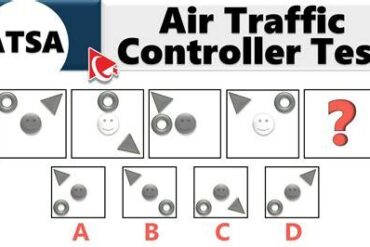
Candidates are shown aircraft on a map, some small and some large, and asked to assess their relative left-right orientation. The second part introduces a rotating viewpoint via an eye icon, requiring mental rotation and perspective shifts.
This section tests spatial reasoning—a core skill in avoiding midair collisions and managing crowded airspace.
4. ATC Simulation
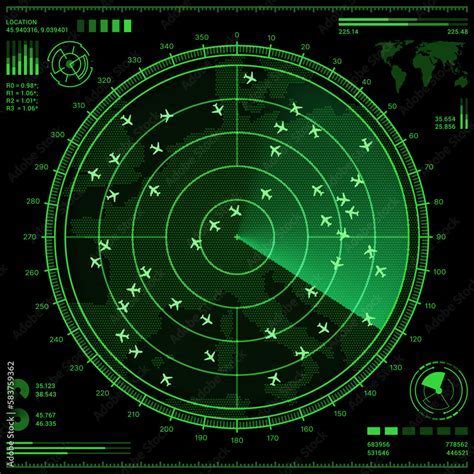
Arguably the most intense segment, this module mirrors real ATC work:
- Collision Avoidance: Monitor and eliminate aircraft on converging paths
- Multitasking Challenge: Solve math problems mid-simulation while keeping air traffic safe
INSIDER TIP: Focus on avoiding collisions; the math is secondary. High performers often answer only a handful of math questions but maintain flawless air safety records.
5. Word Problems
This segment consists of ~15 analytical questions incorporating basic arithmetic, logic, and graph interpretation. Candidates are advised to never leave a question blank, as omissions carry a heavier penalty than incorrect answers.
Time pressure is high, so estimate when needed and move on quickly.
6. Personality Inventory
Comprising 108 statements, this psychological evaluation forces choices between pairs of statements by asking which is Most Like You and Least Like You. There’s no “right” answer here, but consistency and alignment with the FAA’s ideal candidate profile (e.g., calm, adaptable, alert, and ethical) matter.
7. Reading Comprehension
Featuring six passages followed by three questions each, this section measures the ability to infer, deduce, and grasp main ideas quickly.
This is essential, as controllers must process flight instructions and operational updates rapidly, often based on short, dense transmissions.
Eligibility Requirements: Who Can Take the ATSA?
To be considered for the ATSA, candidates must meet the following criteria:
- Be a U.S. citizen
- Be 30 years old or younger (exceptions for veterans)
- Demonstrate fluent English communication skills
- Possess either:
- 3 years of general work experience, or
- A bachelor’s degree, or
- A combination of both
- Pass a medical examination and security clearance
- Be willing to relocate anywhere in the U.S.
Pool 1 vs. Pool 2: Candidate Categorization
Candidates are grouped into two pools based on prior experience or training:
- Pool 1:
- Graduates from FAA-accredited CTI programs with official recommendations
- Eligible VRA veterans
- Veterans or professionals with aviation backgrounds
- Pool 2:
- All other applicants
Important: Pool 1 candidates are always invited to test before Pool 2, regardless of previous test performance.
Test Administration and Logistics
The ATSA is administered at state-based PearsonVue centers. Testing windows typically open around December, with the 2024 session held between Dec 5–25.
On Test Day, Bring:
- A valid government-issued ID
- Make sure your ID name matches exactly with the FAA test system records
Test Costs and Cancellations
- The FAA covers the cost of the exam
- Candidates are responsible for travel and parking
- If rescheduling, you must cancel at least 48 hours in advance
Scoring and Results Timeline
Results are typically available three weeks after the testing window closes. Candidates are placed into one of four categories:
- Best Qualified
- Well Qualified
- Qualified
- Not Referred
Exact scores are never disclosed. Instead, candidates track their status via USAJOBS or AVIATOR, with possible updates arriving one month post-test.
What Happens After the ATSA?
Top scorers may receive a Tentative Offer Letter (TOL) within three months. Upon accepting, the following steps unfold:
- MMPI psychological exam
- Drug screening
- Medical clearance
- Security background investigation
If cleared on all fronts, the FAA will issue a Final Offer Letter to attend training at the FAA Academy in Oklahoma City.
This process, from application to academy, can take up to two years.
Retesting and Score Validity
- ATSA scores remain valid for three years
- Retests are only possible by reapplying through USAJOBS
- Prior results automatically carry over via PearsonVue’s database unless expired
Strategies for Success: How to Prepare for the ATSA Exam
To excel at the ATSA, applicants should blend cognitive training, stress management, and exam simulation. Effective study regimens may include:
- Practicing with timed memory and spatial tasks
- Using apps that simulate multitasking under pressure
- Familiarizing with algebraic logic puzzles
- Reading aviation-specific texts to improve comprehension speed
- Taking online ATSA practice tests from reputable sources
Ultimately, success hinges not on academic intelligence but on rapid decision-making, pattern recognition, and emotional resilience under time constraints.
Final Thoughts
The ATSA exam stands as a formidable gateway to one of the most mentally demanding and rewarding professions in aviation. With proper preparation, strategic test-taking, and a clear understanding of what’s at stake, candidates can confidently approach the exam, secure a top-tier result, and move one step closer to the control tower.