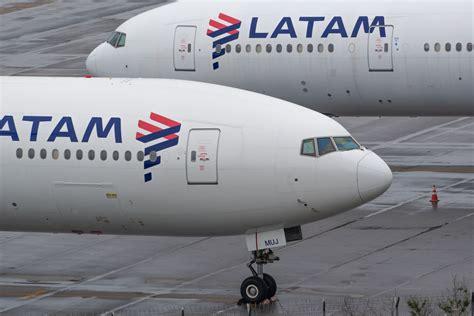
Latin American airlines have historically been viewed as financially fragile players in the global aviation industry, often challenged by economic instability, currency volatility, political uncertainty, and intense competition. Yet the latest industry data presents a surprising picture: Latin American carriers are now among the most profitable airlines in the world, outperforming many major airlines in North America and Europe when measured by operating efficiency and profitability margins.
In 2025, airlines worldwide achieved an estimated average operating profit margin of 7.2%, according to the International Air Transport Association (IATA). However, Latin American airlines significantly exceeded this benchmark, achieving an estimated 14.0% operating margin. While the region’s overall net margin remained lower at 3.8%, several leading airlines achieved results that placed them among the strongest performers globally.
The transformation is particularly notable because just a few years earlier, the outlook for Latin American aviation appeared extremely uncertain. Since 2020, five major airlines — Aeromexico, Avianca, LATAM Airlines Group, GOL Linhas Aéreas Inteligentes, and Azul Linhas Aéreas Brasileiras — entered Chapter 11 bankruptcy protection. Instead of disappearing, these airlines used restructuring, consolidation, and cost reforms to emerge as leaner and more competitive companies.

The question now is whether Latin American airlines are truly outperforming their US and European counterparts, or whether the recent results are simply the result of temporary market conditions. The answer is more complex. Latin American carriers have benefited from a unique combination of structural advantages, financial restructuring, disciplined capacity growth, and geography-driven demand.
Why Latin American Airlines Historically Struggled With Profitability
For decades, operating an airline in Latin America has been extremely challenging. Unlike many aviation markets in North America and Europe, airlines in the region have had to deal with unpredictable economic conditions, weaker currencies, high operating costs, and inconsistent regulatory environments.
One of the biggest challenges has been currency exposure. Airlines operate in local currencies but pay many of their largest expenses in US dollars. Aircraft leases, maintenance agreements, spare parts, fuel contracts, and aircraft purchases are generally priced in dollars. When currencies such as the Brazilian real, Mexican peso, or Colombian peso weaken, airline costs can rise sharply even if local ticket prices remain unchanged.
Inflation creates another layer of pressure. Rising consumer prices reduce purchasing power, making passengers more sensitive to airfares. Airlines must balance affordability for travelers while covering expenses that continue increasing.
Competition has also historically been intense. International carriers such as American Airlines, Iberia, Air France-KLM, and other global operators have competed aggressively on long-haul routes connecting Latin America with North America and Europe. Meanwhile, domestic markets such as Brazil, Colombia, and Mexico experienced periods of excessive capacity expansion, leading to fare wars that damaged profitability.
Infrastructure limitations have further complicated growth. Major airports across the region have struggled to keep pace with increasing demand. Airports such as El Dorado International Airport and Mexico City International Airport have faced capacity constraints, creating operational challenges for airlines attempting to expand networks.
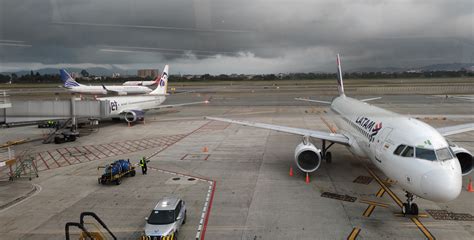
Despite these difficulties, the challenges also forced airlines to become more efficient. Unlike some competitors in wealthier aviation markets, Latin American airlines often had fewer opportunities for government support, meaning survival depended heavily on restructuring and operational improvements.
How Latin America’s Geography Creates Aviation Opportunities
Latin America’s geography is both an obstacle and a major advantage for airlines operating in the region. South America contains some of the world’s most challenging terrain, including the Andes Mountains, the Amazon rainforest, and vast distances between population centers.
Many major airports operate under difficult conditions. El Dorado International Airport sits approximately 8,360 feet (2,548 meters) above sea level, while Mexico City International Airport is located at around 7,316 feet (2,230 meters). High-altitude airports create performance challenges for aircraft because thinner air reduces engine efficiency and aircraft lift, especially during hot weather.
However, the same geography that creates operational difficulties also protects airlines from alternative forms of transportation. Building highways and railways across mountains, forests, and remote regions is extremely expensive and often impractical.
As a result, aviation becomes essential rather than optional. Cities separated by enormous distances often rely on aircraft as the fastest and most practical transportation method.
The Brazilian city of Manaus is a clear example. Located deep inside the Amazon rainforest, the city has more than two million residents but limited ground transportation connections with other major population centers. Air travel provides the primary connection between Manaus and the rest of Brazil.
This geographic reality creates strong demand for air transportation. In many parts of Latin America, passengers who previously spent 20 to 30 hours traveling by bus are increasingly choosing short flights as low-cost carriers make air travel more affordable.
Unlike mature aviation markets where airlines often compete mainly for existing passengers, Latin American airlines can create new demand by converting travelers from slower transportation options.
How Chapter 11 Restructuring Changed Latin American Airlines
The financial crisis caused by the COVID-19 pandemic forced many Latin American airlines into bankruptcy protection. However, these restructurings became a turning point rather than the end of the industry.
During Chapter 11 processes, airlines were able to renegotiate aircraft leases, reduce debt burdens, return inefficient aircraft, and restructure supplier agreements. These changes significantly lowered fixed costs and created healthier financial foundations.
LATAM Airlines Group emerged from restructuring with a more balanced business model. The airline maintained its full-service identity while strengthening important revenue sources, including cargo operations, loyalty programs, premium travel, and extensive domestic networks.
Avianca took a different approach by moving closer to a low-cost carrier model. The airline increased seat density on Airbus A320 family aircraft, simplified onboard services, reduced expenses, and expanded ancillary revenue opportunities.
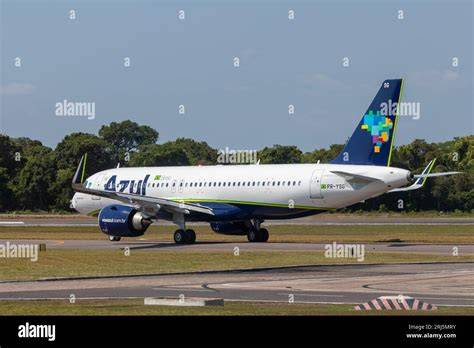
Azul’s restructuring represents another important example. The Brazilian carrier completed its Chapter 11 process in February 2026 after reducing approximately $2.5 billion in debt and lease obligations. Lower financial commitments mean airlines need less revenue simply to cover interest payments and fixed costs.
Restructuring alone does not guarantee profitability. Airlines in many regions have gone through similar processes without achieving exceptional results. The difference in Latin America was timing. Financial restructuring happened at the same time as travel demand recovered, competitors disappeared, and airlines became more disciplined with capacity.
Latin American Airlines vs US and European Competitors
The latest profitability figures show that Latin American airlines have achieved impressive operational results.
According to IATA estimates for 2025:
| Region | Operating Margin | Net Margin |
|---|---|---|
| Latin America | 14.0% | 3.8% |
| Europe | 6.7% | 4.5% |
| North America | 6.4% | 3.5% |
| Global Industry | 7.2% | 4.2% |
At the operating level, Latin America clearly outperformed both Europe and North America. The region generated more than double the operating margin achieved by major markets such as the United States and Europe.
However, net profitability tells a slightly different story. Higher financing costs, currency movements, and financial expenses reduce Latin American airlines’ final profits. Europe achieved a slightly higher net margin, while North America remained close behind.
This difference highlights an important point: Latin American airlines are extremely efficient operationally, but they still face structural financial challenges.
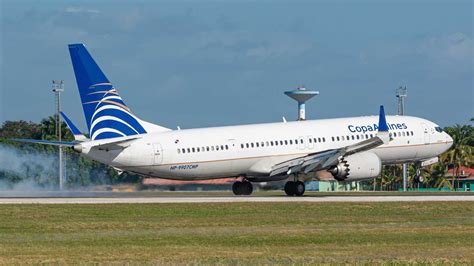
The strongest examples come from the region’s largest airlines. LATAM Airlines Group achieved an adjusted net margin of approximately 11.2%, while Copa Holdings produced an extraordinary 18.6% net margin.
Copa’s performance is particularly impressive because its business model differs from many competitors. The airline uses Panama as a strategic connecting hub, linking North and South America through efficient short- and medium-haul operations.
Compared with major US carriers, the difference is clear. Delta Air Lines and United Airlines generated significantly higher absolute profits because of their enormous scale, larger domestic markets, premium corporate contracts, and powerful loyalty programs. However, their profit margins were lower.
Why Bigger Does Not Always Mean More Profitable
The aviation industry often rewards scale, but scale alone does not guarantee superior efficiency.
Large US airlines benefit from advantages that Latin American airlines cannot easily replicate. Their domestic markets are enormous, their corporate travel networks are highly developed, and their loyalty programs generate billions of dollars in additional revenue.
Delta Air Lines, for example, generated more than $5 billion in net income in 2025, far exceeding Copa’s profit. However, Copa achieved a much higher percentage return on revenue.
European airlines present a more mixed picture. International Airlines Group achieved strong profitability, supported by brands such as British Airways and Iberia. Meanwhile, Ryanair continued to demonstrate the power of an ultra-low-cost model.
Therefore, Latin American airlines are not outperforming every airline worldwide. Instead, they are outperforming many major network carriers in terms of operational efficiency and margin performance.
The Future of Latin American Aviation
The recent success of Latin American airlines represents a major shift in the global aviation landscape. After years of financial struggles, the region’s largest carriers have become more disciplined, financially stronger, and better positioned for future growth.
However, challenges remain. Airport infrastructure needs continued investment, currency volatility remains a risk, and economic instability can quickly affect passenger demand.
The biggest question is whether airlines can maintain their current profitability once competitors return and capacity expands. Aviation is historically cyclical, and high margins often attract new competition.
For now, however, the evidence suggests that leading Latin American carriers have entered a stronger era. Their success is not simply a temporary recovery story. It is the result of fundamental changes in cost structures, market discipline, and strategic positioning.
Latin American airlines may not be the largest carriers in the world, but companies like LATAM and Copa have demonstrated that smaller scale, when combined with efficiency and smart strategy, can produce world-class profitability.