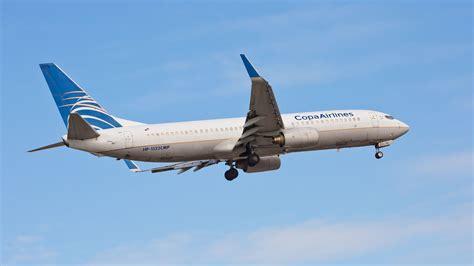
Copa Airlines has built one of the most strategic and expansive aviation footprints in the Western Hemisphere, forging seamless air bridges between the United States and Latin America through its Panama City hub. Operating as a carrier with decades of evolution behind it, Copa’s presence today reflects deliberate growth, route optimization, and sustained demand fueled by tourism, business mobility, and VFR (visiting friends and relatives) travel. The airline flies more than 300 weekly departures into 18 US destinations, generating as many as 45 flights per day, a figure that places it firmly among the most active Latin American operators in the country.
The expansion story is rooted in historical development. Founded in 1947, Copa began humbly with Douglas DC-3 aircraft serving three Panamanian cities before venturing into international markets in the 1960s. When domestic operations were eventually phased out in the 1980s, an entirely new trajectory formed—one centered on connecting continents instead of regions. The move proved transformative. Today, Copa is respected not only as Panama’s flag carrier but as a regional connector with far-reaching operational muscle.
From Panama’s Tocumen International Airport, the airline executes an efficient hub-and-spoke system that channels traffic between North and South America with remarkable precision. Miami remains Copa’s largest US market, a route continuously served since 1989 and now responsible for moving more than 800,000 passengers per year. Multiple daily departures also target Orlando, New York, Los Angeles, Chicago, San Juan, and Boston, strengthening both leisure and commercial travel pipelines.
The foundation of Copa’s performance in the United States is variety—variety of gateways, variety of departure times, variety of traveler needs served through high-frequency scheduling. Florida stands as the anchor of this network, led by Miami’s seven to eight daily departures and Orlando’s six to seven, highlighting the carrier’s dominance in the Southeast corridor. New York JFK and Los Angeles each support up to five flights per day, allowing Copa to provide broad transcontinental access with competitive connection times onward to Latin America.
To the west, Copa extends into California with Los Angeles, San Francisco, and its newest route addition, San Diego. On the East Coast, Boston, Baltimore, Fort Lauderdale, Tampa, and Washington Dulles strengthen the distributing lattice. Chicago O’Hare and Denver reinforce the Midwest and Mountain regions, while six-weekly operations into Atlanta, Las Vegas, and Austin offer constant connection opportunities with capacity scaled efficiently to demand. The model is balanced, intentionally structured, and continuously assessed to match seasonal volume and emerging traffic trends.
Strengthening The Florida Corridor: Fort Lauderdale Becomes Daily
Among the most notable strategic upgrades this year is Fort Lauderdale’s jump to daily service, beginning December 8. What was previously a five-times-weekly operation now reflects surging demand from leisure travelers and the steady growth of the Latin American community in South Florida. With departures at 17:09 and arrivals into PTY at 20:13, the route aligns with evening bank connectivity at Tocumen, opening convenient onward access into Central America, South America, and the Caribbean.
More than 23,600 passengers traveled between the two cities from August 2023 to July 2024—figures that make Copa’s frequency boost not merely logical but inevitable. Panama-bound travel to and from the United States exceeded 4.3 million passengers between mid-2024 and mid-2025, and Copa’s expansion into Fort Lauderdale is positioned perfectly within this upward curve. The decision reflects confidence in ongoing market performance and reaffirms Copa’s role as a mobility gateway for the region.
New Growth Markets: San Diego And Raleigh–Durham
Copa’s most recent expansions show a willingness to invest in cities with rising travel potential rather than relying solely on long-established hubs. In June, the airline inaugurated flights to San Diego, marking its third California destination and injecting fresh connectivity into the US West Coast. Four weekly departures (Monday, Wednesday, Friday, Sunday) move late afternoon traffic to Panama, returning overnight for arrival just past sunrise.
Similarly, Raleigh–Durham entered the network last year and already performs strongly enough to merit consistent weekly operations. Both San Diego and Raleigh receive additional holiday-season frequencies beginning mid-December, demonstrating how flexible Copa remains in scaling capacity when demand peaks. Tampa, another expanding market, jumped from six weekly flights to daily operations as volumes continued to rise—evidence of the airline’s attentiveness to route maturity and profitability.
These developments are not isolated. They form threads of a broader strategic fabric: place Copa in cities where cultural connection, regional business, and cross-border family ties create year-round movement. Where that movement grows, Copa grows with it.
Strategic Positioning Through The Hub Of The Americas
Tocumen International Airport is more than a home base—it is a power multiplier. Positioned geographically between hemispheres, it acts as a live hinge, swinging travelers seamlessly between US points and over 30 Latin American destinations with single-stop efficiency. The Hub of the Americas model shortens flight times, encourages transit tourism, and supports Copa’s Stopover Panama program, which invites passengers to extend their journey and explore the Panama Canal, Casco Viejo, or rainforest reserves before continuing onward.
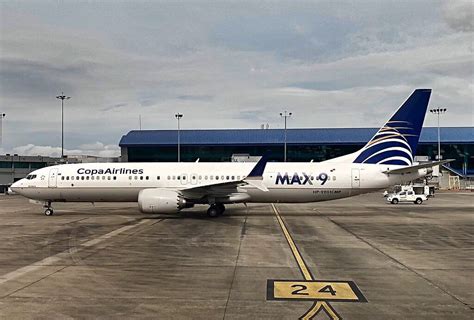
Copa’s operational philosophy relies on punctuality, fleet consistency, and route scaling aligned to real-time demand. With growing 737-MAX operations and a network structure that values connectivity density over scattered market reach, the airline continues to shape itself into an essential trans-hemispheric carrier.
The Outlook: Growth, Connectivity, And A Strong US Future
Copa Airlines’ US presence does not represent saturation—it represents foundation. With 18 active destinations and capacity for up to 45 daily flights, room still exists for additional growth into emerging metropolitan corridors. As long as North-South travel remains one of the most dynamic passenger flows in the Western Hemisphere, Copa will stand at the center of its motion, routing travelers efficiently, reliably, and at scale.
The story is far from finished. The network is alive, expanding, and responsive to a market that continues to evolve. Copa Airlines today is not just connecting cities—it is strengthening the spine of inter-American mobility, flight by flight, day by day, week by week.