Hawaiian Airlines’ Expansive Role in the U.S. Aviation Market
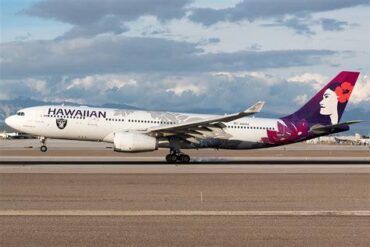
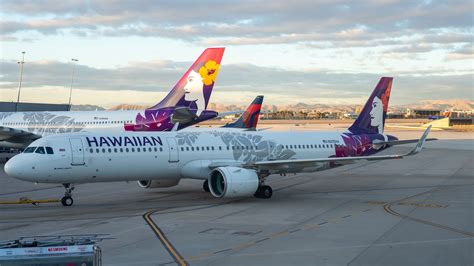
Hawaiian Airlines, the 12th-largest U.S. carrier by flights, continues to play a crucial role in connecting the Hawaiian Islands with each other and with the U.S. mainland. Operating a versatile fleet that includes the Airbus A321neo, Airbus A330-200, Boeing 717, and the modern Boeing 787-9, the airline ranks tenth nationwide for seats offered and ninth for available seat miles (ASMs). This strong position underscores Hawaiian Airlines’ dual strategy of sustaining short-haul, high-frequency inter-island travel while also maintaining competitive long-haul links to key mainland cities.
In October, Hawaiian Airlines filed a schedule featuring 3,520 departures, representing a modest 2% increase year-on-year. However, the total number remains 15% below pre-pandemic levels of October 2019. The dip is largely attributed to reductions in its domestic U.S. network and structural adjustments linked to Alaska Air Group’s acquisition of Hawaiian Airlines. Despite fewer overall flights, average seats per flight are now 13% higher, driven by up-gauging and greater reliance on widebody aircraft for efficiency.
Inter-Island Routes: The Lifeblood of Hawaiian Travel
Hawaiian Airlines’ strength lies in its intra-Hawaiian network, which accounts for 2,170 of its 3,520 monthly flights. This means nearly 70 of its 114 daily departures are short hops between the islands. For residents, these routes function as vital transportation corridors — often compared to bus services — allowing easy mobility across islands where ferries and bridges are not practical options.
At the heart of this network is the Honolulu–Kahului route, which not only tops Hawaiian’s schedule but also stands as one of the most intensively served domestic city pairs in the U.S. With up to 22 daily flights each way, the airline transforms this 87-nautical-mile journey into a shuttle-like service, providing departures every 20 minutes at peak times. The dominance of this route demonstrates Hawaiian’s role as the backbone of inter-island air transport, sustaining both tourism flows and essential resident travel.
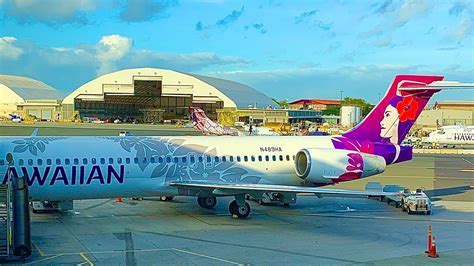
Hawaiian Airlines’ Top 10 Routes in October
The top 10 routes reveal the strategic balance between short inter-island flights and high-value mainland U.S. services. Four of these routes connect Hawaii to major cities on the West Coast and Las Vegas, while the majority remain intrastate.
- Honolulu–Kahului (19–22 daily flights): Operated by Boeing 717, accounting for 72% of the market share.
- Honolulu–Lihue (15–18 daily flights): 717 operations, holding a 76% market share.
- Honolulu–Kona (13–16 daily flights): Primarily 717s, with occasional A321neos, at 74% market share.
- Honolulu–Hilo (11–12 daily flights): Exclusively 717, capturing 70% of the market.
- Honolulu–Las Vegas (4 daily flights): Operated mostly by A330-200s, with Hawaiian holding 67% share.
- Honolulu–Seattle (4 daily flights): Served with a mix of A321neo, A330-200, and 787-9 aircraft, securing 50% share.
- Kahului–Kona (3 daily flights): Exclusively 717s, with 75% market share.
- Kahului–Lihue (3 daily flights): Operated by 717s, maintaining 75% share.
- Honolulu–Los Angeles (2–3 daily flights): A330-200s and 787-9s dominate, with Hawaiian’s share at 23% due to intense competition.
- Honolulu–San Diego (2–3 daily flights): A321neo and A330-200 fleets ensure a 58% market share.
The only near-miss from this ranking was the Honolulu–Portland route, which recorded 75 departures in October, falling just short of the cutoff.
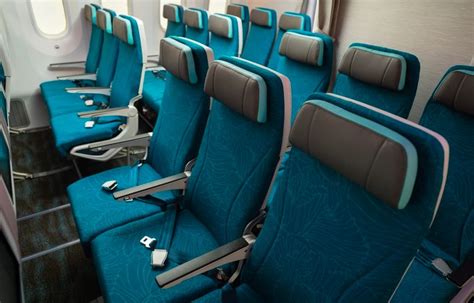
Honolulu–Kahului: The Shuttle of the Pacific
The Honolulu–Kahului route exemplifies the scale and importance of Hawaiian’s short-haul dominance. On October 10, 2025, the airline’s schedule packed 22 round-trip flights, beginning at 5:36 a.m. and stretching late into the evening with the last departure at 9:23 p.m. Flights run at intervals as short as 20 minutes, underscoring its role as a true air bridge between Oahu and Maui.
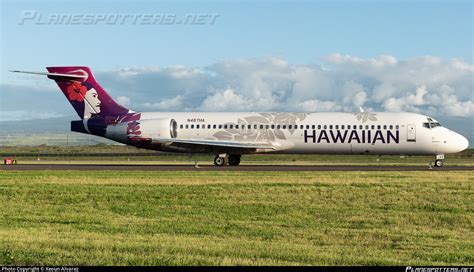
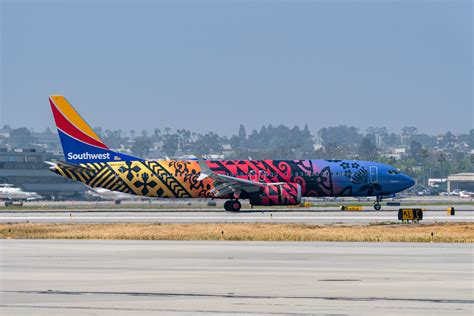
Hawaiian operates this market with its 128-seat Boeing 717s, chosen for their efficiency in short sectors and high cycle durability. In contrast, Southwest Airlines competes with the larger 175-seat Boeing 737 MAX 8. This fleet difference has a direct impact on seat market share: while Hawaiian maintains 72% of total departures, its seat share drops slightly to 66%.
Historically, the Honolulu–Kahului market saw even more frenetic schedules. Cirium data shows that Hawaiian operated up to 32 daily flights on this city pair in the past, with one extraordinary day on December 1, 2019, seeing five flights depart within just two hours. Post-pandemic restructuring and more rationalized capacity have tempered this pace, but the service remains among the busiest domestic air corridors in the United States.
Passenger Demand: A Two-Million Strong Market
The Honolulu–Kahului corridor ranks as the 15th most popular U.S. city pair, with the U.S. Department of Transportation reporting over 2 million annual round-trip passengers between July 2024 and June 2025. This massive demand highlights how integral the route is to both tourism and local connectivity.
However, load factors tell a story of oversupply. Combined, Hawaiian and Southwest Airlines filled just 63% of available seats. Hawaiian achieved a healthy 76% load factor, while Southwest lagged with just 46%, a figure that has risen from an even weaker 39% in early 2025 following capacity reductions. This underscores how Hawaiian’s fleet alignment and frequency strategy allow it to sustain stronger yields, even in competitive short-haul markets.
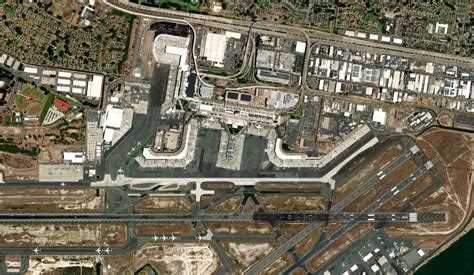
Mainland U.S. Routes: High Value and Competitive
While inter-island services define Hawaiian’s operational identity, mainland routes provide the financial backbone. The Honolulu–Las Vegas route remains a standout, with four daily departures operated mainly by A330-200s, offering larger capacity and widebody comfort. This route is significant not only for leisure travelers but also for the strong Hawaiian expatriate community in Nevada, making it both a tourism and VFR (visiting friends and relatives) market.
The Honolulu–Los Angeles corridor, one of the most competitive U.S.–Hawaii markets, sees Hawaiian operate alongside carriers like American, Delta, and United. Despite operating with widebody aircraft including the 787-9, Hawaiian captures just 23% market share in this crowded space. Conversely, the Honolulu–San Diego and Honolulu–Seattle routes highlight how secondary West Coast cities provide Hawaiian with stronger relative dominance, enabling market shares of 58% and 50% respectively.
Fleet Deployment and Strategic Efficiency
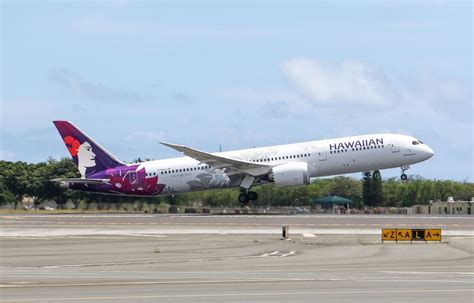
Hawaiian’s fleet strategy reflects a dual priority: frequency for inter-island routes and efficiency for long-haul markets. The Boeing 717 is indispensable for high-frequency, short-haul flights, offering rapid turnaround and suitability for Hawaii’s unique aviation needs. Its average of 128 seats allows Hawaiian to maintain dominance in frequency-sensitive corridors without overfilling capacity.
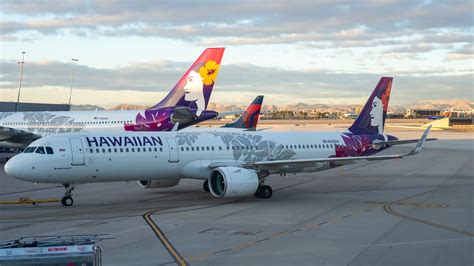
For longer routes, the A321neo provides cost efficiency on thinner mainland markets, while the A330-200 and 787-9 support trunk routes where demand justifies widebody deployment. This balance explains why Hawaiian, despite operating fewer flights overall, can sustain its position among the top 10 U.S. carriers by seat supply and ASMs.
Looking Ahead: Challenges and Opportunities
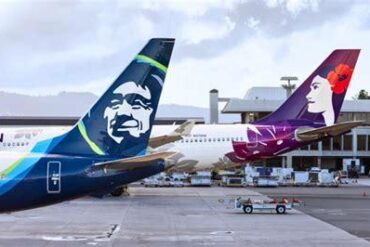
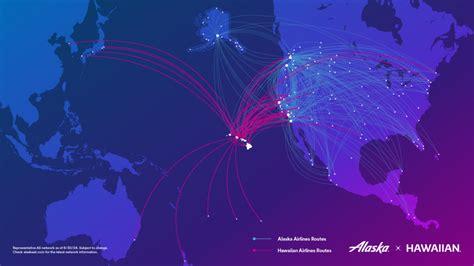
The integration with Alaska Air Group is expected to reshape Hawaiian’s network strategy in the years ahead. Increased fleet harmonization, code-sharing, and expanded West Coast connectivity could strengthen Hawaiian’s mainland presence. At the same time, inter-island dominance remains irreplaceable, with Hawaiian’s role as a “lifeline carrier” ensuring its relevance regardless of industry consolidation.
Yet, the challenges remain. Competition from Southwest will continue to pressure yields, particularly in the inter-island market. Rising operational costs, especially in short-haul sectors with high cycle counts, also threaten margins. Nevertheless, Hawaiian’s strategic fleet utilization and strong local loyalty ensure it will remain a cornerstone of both Hawaiian life and the broader U.S. aviation system.
Conclusion
Hawaiian Airlines’ top 10 routes reveal a finely tuned network strategy balancing ultra-high-frequency inter-island services with carefully structured mainland U.S. connections. From the shuttle-like Honolulu–Kahului corridor with up to 22 daily departures to long-haul widebody flights linking Honolulu with major U.S. cities, the airline demonstrates adaptability in both fleet and scheduling.
With over two million passengers annually on its busiest route, Hawaiian remains more than just an airline — it is an essential public utility for residents and a critical link for tourism. While competition and cost challenges loom, Hawaiian’s unique position ensures it will remain central to air travel in and out of the Pacific islands.