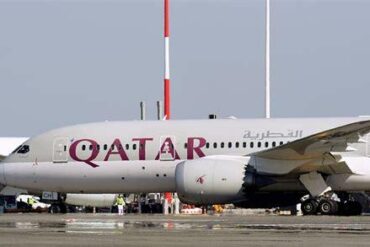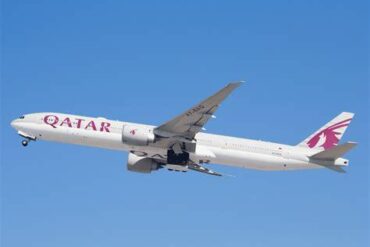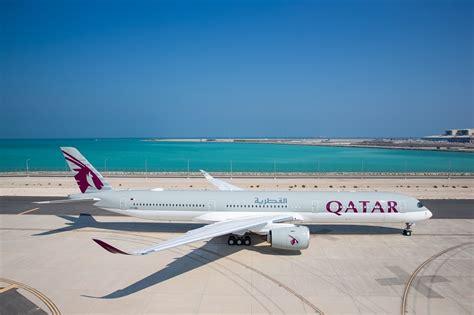
Qatar Airways is officially returning to Philadelphia, restoring a key transatlantic and Middle Eastern gateway that has become increasingly important within its partnership with American Airlines. Beginning August 1, the Doha-based carrier will resume daily nonstop service between Hamad International Airport in Doha and Philadelphia International Airport, reintroducing one of the airline industry’s most acclaimed premium products, Qsuite, alongside high-speed Starlink inflight WiFi.
The announcement marks far more than the return of a single route. It signals the conclusion of an unusual chapter in aviation history, one that saw Qatar Airways temporarily hand over a successful long-haul operation to its American alliance partner, only to reclaim the market after changing circumstances and strategic realities reshaped the competitive landscape.
Qatar Airways Restores Daily Philadelphia–Doha Service
Starting August 1, Qatar Airways will once again connect Philadelphia directly with Doha through a daily year-round operation. Flight QR727 will depart Doha at 8:00 AM and arrive in Philadelphia at 3:05 PM local time. The return service, QR728, will leave Philadelphia at 9:30 PM and land in Doha at 5:00 PM the following day.
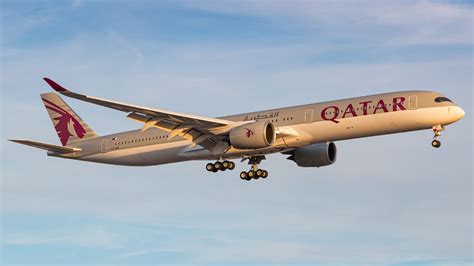
The route will be operated using the airline’s modern Airbus A350-900 fleet, an aircraft type widely regarded for its passenger comfort, fuel efficiency, and long-range capabilities. For travelers in the Philadelphia region, the return of Qatar Airways means renewed access to one of the world’s most extensive international networks through Doha’s award-winning Hamad International Airport.
Philadelphia passengers will once again gain seamless one-stop access to destinations across South Asia, Southeast Asia, East Africa, the Middle East, and beyond, while travelers from those regions will enjoy direct access to one of the largest metropolitan areas in the United States.
Qsuite and Starlink Elevate the Passenger Experience
One of the most significant aspects of the route’s return is the introduction of two highly sought-after passenger amenities. Qatar Airways has confirmed that its Philadelphia flights will feature Qsuite business class, a product that has consistently ranked among the world’s finest premium cabin experiences.
Qsuite transformed international business-class travel by introducing privacy doors, customizable seating arrangements, and a level of personal space previously associated with first-class cabins. The innovative design allows travelers to create private suites, while families and colleagues can convert select seats into shared social spaces, making the product uniquely versatile.
Alongside Qsuite, passengers will also benefit from Starlink connectivity, providing internet speeds that dramatically exceed traditional inflight WiFi systems. As airlines increasingly compete on digital connectivity, Qatar Airways has positioned itself at the forefront of the industry by rapidly deploying Starlink across its fleet.
With more than 140 aircraft already equipped with the technology, the airline now operates the world’s largest Starlink-enabled widebody fleet. For business travelers, remote workers, and leisure passengers alike, the ability to stream content, participate in video calls, and maintain reliable internet access throughout long-haul journeys has become a major differentiator.
Why Philadelphia Remains Strategically Important
Philadelphia occupies a unique position within Qatar Airways’ North American network. The airport serves as one of American Airlines’ most important hubs, providing extensive domestic connections across the northeastern United States, the Midwest, and numerous secondary markets that lack direct international service.
The restored route will become Qatar Airways’ 14th destination in North America, reinforcing the carrier’s commitment to the region despite ongoing geopolitical and economic challenges affecting global aviation.
For years, Philadelphia has functioned as an ideal gateway for connecting traffic. Travelers from smaller American cities can easily connect through Philadelphia before continuing to Doha and onward to destinations throughout Asia, Africa, and the Middle East.
This network synergy has become increasingly valuable as international travel demand continues to recover and airlines seek efficient ways to expand their reach without launching entirely new routes.
The Route That Changed Hands
The Philadelphia–Doha route has experienced one of the most fascinating transformations in modern commercial aviation. Qatar Airways originally launched the service in 2014 during a period of rapid expansion throughout the United States.
The route quickly established itself as a strong performer, benefiting from Philadelphia’s status as a major American Airlines hub and an important oneworld alliance gateway. Even during periods when relations between U.S. airlines and Gulf carriers became strained, Philadelphia remained strategically significant due to its extensive connecting opportunities.
The landscape shifted dramatically after the pandemic. American Airlines and Qatar Airways rebuilt their relationship, strengthening codeshare agreements and deepening cooperation across international markets.
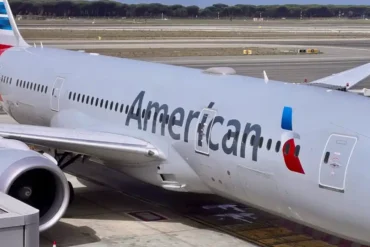
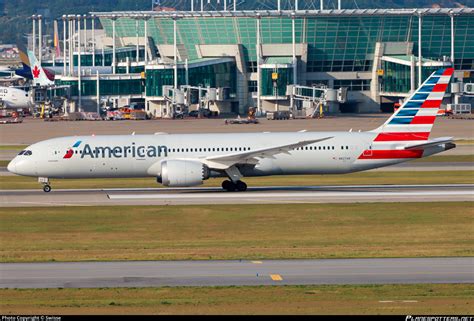
In 2023, the partnership reached an unprecedented stage. Rather than competing on the Philadelphia–Doha route, Qatar Airways exited the market while American Airlines moved its own Doha operation from New York JFK to Philadelphia. The move effectively transferred responsibility for the route from the Gulf carrier to its U.S. partner.
American Airlines’ Ambitious Doha Strategy
American Airlines viewed Doha as more than a destination. The carrier saw Qatar Airways’ hub as a gateway to regions where operating its own aircraft would be economically challenging.
Through Doha, American could extend its network into India, Pakistan, Bangladesh, Nepal, Sri Lanka, East Africa, and numerous Middle Eastern destinations. The strategy allowed the airline to capture a larger share of international revenue while leveraging Qatar Airways’ established network.
Initially, the concept appeared promising. Philadelphia provided substantial passenger feed, while Doha offered unparalleled connectivity across emerging and underserved markets.
However, long-haul operations remain vulnerable to external disruptions. Regional instability and geopolitical tensions increasingly complicated the economics and operational reliability of the route. American Airlines suspended Philadelphia–Doha service in March and repeatedly delayed plans to restore flights before ultimately deciding to permanently discontinue the route.
Qatar Airways Steps Back Into a Proven Market
The withdrawal of American Airlines created an immediate opportunity for Qatar Airways. Importantly, the underlying passenger demand never disappeared. Travelers throughout the northeastern United States continue to generate strong demand for one-stop connections to South Asia, the Gulf region, and East Africa.
Rather than waiting for market conditions to evolve, Qatar Airways has chosen to reassert control over a route it originally developed and successfully operated for nearly a decade.
The decision reflects confidence in both Philadelphia’s long-term value and Doha’s position as one of the world’s leading global hubs. It also restores a business model that historically worked well: American Airlines supplies domestic connecting traffic, while Qatar Airways operates the long-haul segment and provides onward global connectivity.
For travelers, the immediate benefits are clear. Nonstop flights return, Qsuite arrives in Philadelphia once again, and Starlink connectivity enhances the onboard experience. For the airlines, however, the significance runs deeper. One of aviation’s most unusual route handovers has effectively come full circle, ending where it began and reaffirming the enduring importance of the Philadelphia–Doha corridor in the global airline network.