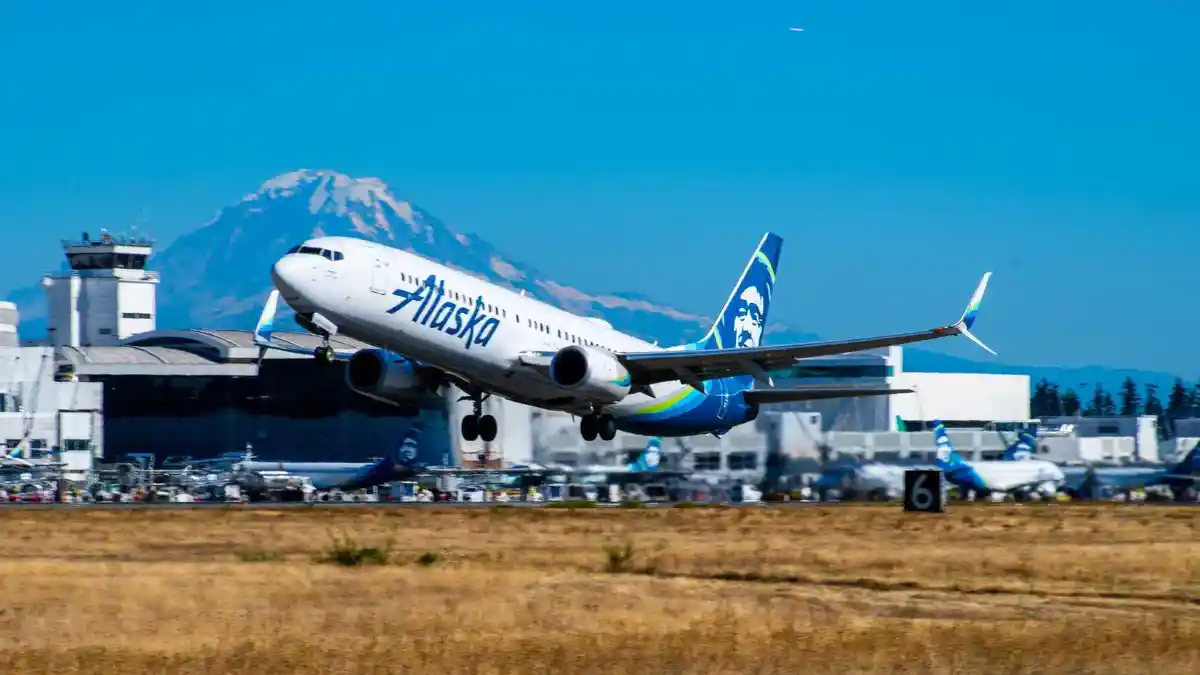
The Boeing 737-900ER exists because Boeing needed to answer a question that its own product line had made awkward. The Boeing 757 was winding down, and no aircraft in the manufacturer’s catalog could carry a comparable passenger load while preserving the fleet commonality that had made the 737 family the most commercially successful airliner program in history. Airlines did not want a new type rating, a new maintenance program, a new set of spares, and a new pilot group. They wanted a 737 that behaved like a much larger airplane. Boeing delivered one, and in doing so pushed the Next Generation 737 airframe to the outer edge of what a design conceived in the 1960s could reasonably tolerate. The most public symptom of that strain appears on the runway, every single day, at airports from Anchorage to Mexico City, where the aircraft rolls farther, accelerates more sluggishly, and consumes more pavement than almost any other narrowbody in its class.
Understanding that behavior requires abandoning the idea that the 737-900ER is simply a longer 737-800. It is a different aerodynamic proposition entirely. The maximum takeoff weight of the type reaches approximately 85,130 kilograms (188,000 pounds), yet the two CFM56 engines hanging beneath its wings each deliver only about 28,400 pounds of thrust. That combination produces a thrust-to-weight ratio of roughly 0.30 — a figure that would be unremarkable in a regional jet and is distinctly modest for an aircraft expected to move more than 200 passengers on sectors of several hours. Every characteristic that makes the 737-900ER commercially attractive — its seat count, its range, its ability to slot into existing 737 gates and systems — flows directly from a stretch that added mass without adding equivalent lift or power.
The Limits of Stretching a 1960s Narrowbody Fuselage
The 737’s original design brief called for a short-haul aircraft carrying roughly a hundred passengers on routes that rarely exceeded an hour. Boeing stretched the type repeatedly across five decades, moving from the 737-100 through the Classic generation and into the Next Generation family, each iteration adding fuselage sections, seats, and weight. By the time the 737-900ER arrived as the final and most extreme expression of the NG line, the aircraft had grown substantially beyond anything the original engineering assumptions contemplated, and the wing had not grown with it.
That mismatch is the single most important fact about the aircraft’s takeoff performance. Because Boeing enlarged the fuselage without meaningfully increasing wing area, the 737-900ER carries one of the highest wing loadings in Boeing’s narrowbody fleet, meaning each square meter of wing must generate lift for more mass than on a 737-700 or 737-800. Wing loading and stall speed are bound together by physics that no amount of airline scheduling can negotiate away: as weight rises without a proportional increase in lifting surface, the wing must move through the air faster before it produces enough lift to fly. Pilots therefore accelerate to higher speeds before the aircraft is ready to leave the ground at all.
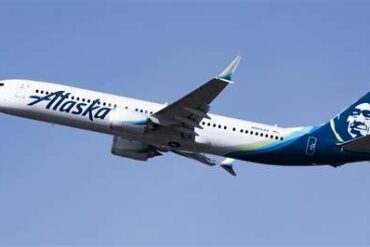
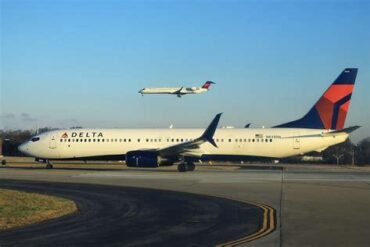
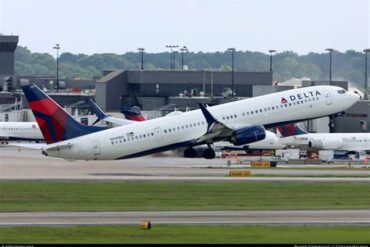
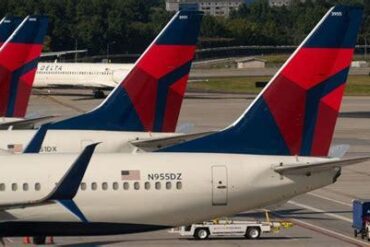
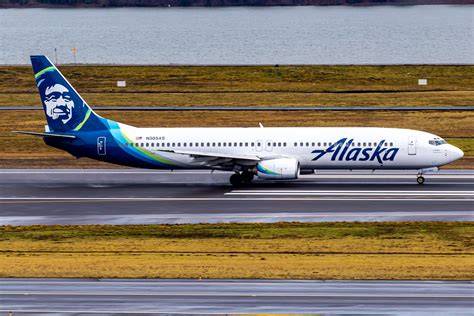
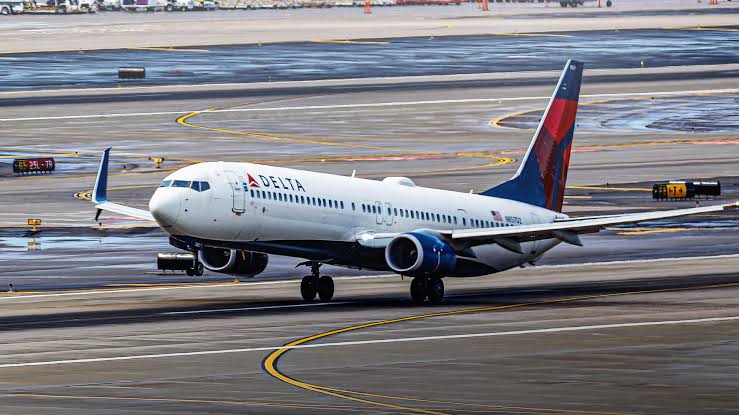
Airlines learned to live with the consequences rather than escape them. Alaska Airlines, Delta Air Lines, and United Airlines all built substantial operations around the type, valuing its capacity on dense domestic routes where the alternative would have been a larger, less efficient aircraft. The 737-900ER became a workhorse precisely because it filled a gap — but it filled that gap while operating closer to the aerodynamic limits of its wing than any of its siblings, and the runway is where that proximity becomes visible to anyone watching.
Why the 737-900ER Accelerates More Slowly Than Smaller 737s
Acceleration during a takeoff roll is governed by the balance between thrust and drag acting on a given mass, and the 737-900ER is disadvantaged on two of those three terms. The airframe is heavy, and the engines are essentially the same powerplants used on considerably lighter variants. Boeing deliberately preserved fleet commonality across the NG family, which meant the largest member inherited engines that were already approaching their practical ceiling rather than receiving a dedicated power increase proportional to its added weight.
The result is an aircraft that feels unmistakably less energetic during departure than a 737-800. It can carry more passengers and more fuel, but its available thrust does not scale with that additional mass, so acceleration builds more gradually and the aircraft takes longer to reach any given speed. The effect is most pronounced when departing near maximum takeoff weight on longer sectors, where fuel load compounds the penalty from a full cabin. Pilots describe the difference not as a handling quirk but as a straightforward matter of patience: the airplane simply takes more runway to reach the speeds it needs.
This has consequences that extend well past the runway threshold. When runway performance becomes the limiting factor, airlines must calculate payload restrictions with unusual care, and on hot days they may need to remove cargo or leave seats unsold to preserve required safety margins. Those compromises are expensive precisely because the 737-900ER was conceived as a high-capacity narrowbody optimized for dense, revenue-rich routes. An aircraft designed to sell 200 seats that must depart with 180 undermines its own business case, and dispatchers must weigh ambient temperature, runway condition, airport elevation, and obstacle clearance requirements with a precision that smaller 737 operators rarely need at the same level of intensity.
The Tail Strike Problem That Limits Rotation Technique
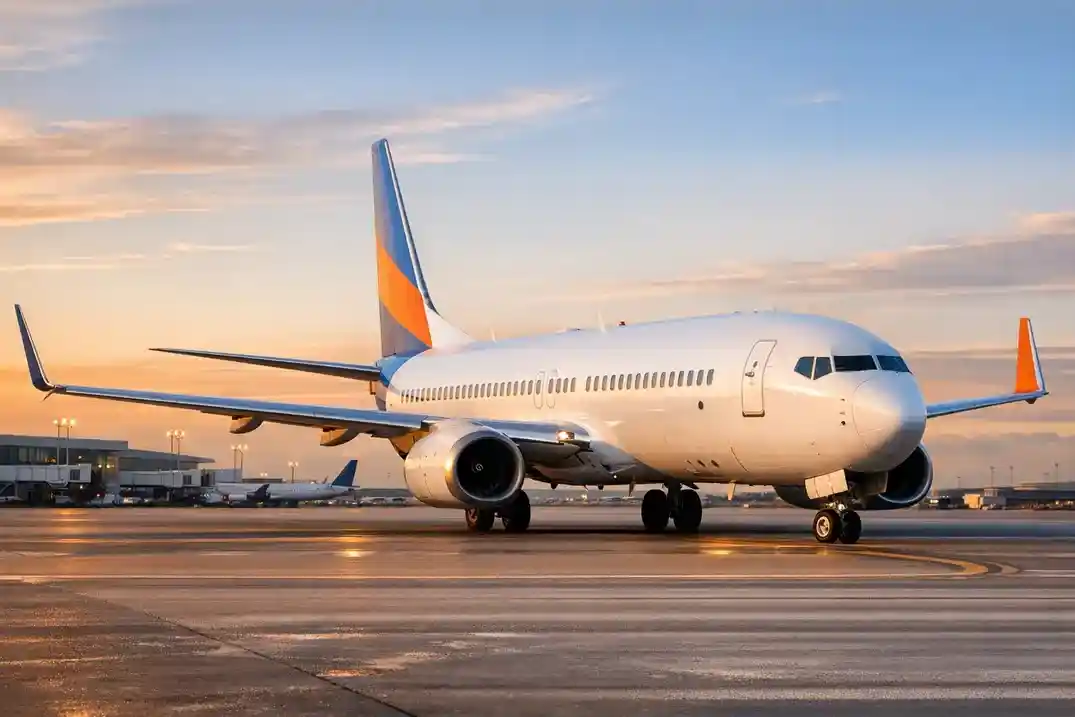
Stretching a fuselage changes more than weight and balance; it changes geometry. The longer the aircraft, the smaller the angle through which it can pitch before the rear fuselage contacts the runway, and the 737-900ER’s tail sits close enough to the ground that tail strikes became a genuine operational concern rather than a theoretical one. During rotation, pilots must raise the nose decisively enough to generate lift while keeping the pitch attitude within strict limits, and those two demands pull in opposite directions when the aircraft is already heavy and slow to accelerate.
Boeing’s effort to extract more capacity from the airframe compounded the difficulty. Flattening the aft pressure bulkhead allowed the manufacturer to install an additional row of seats, improving the aircraft’s economics and sharpening its competition against the Airbus A321. But the modification also shifted the center of gravity farther aft and introduced new loading sensitivities. An aft center of gravity reduces pitch stability and can diminish elevator authority during rotation, which means the aircraft may respond less crisply to control input at precisely the moment when responsiveness matters most.
Airlines manage this through cargo distribution discipline that would surprise passengers who assume weight and balance is a formality. In some cases, operators deliberately leave sections of the rear cargo hold partially empty to remain within approved balance limits, sacrificing revenue-generating volume to keep handling predictable. Combined with higher rotation speeds and a longer, gentler rotation technique demanded by the stretched fuselage, the aircraft becomes a study in trade-offs: every additional seat row purchased a matching constraint somewhere else in the operational envelope.
How Rotation Speed Extends the Takeoff Roll
Rotation speed, or Vr, sits at the center of why the 737-900ER consumes so much pavement. The aircraft does not lift off when the pilot chooses to pull back on the control column; it lifts off when it has accelerated to a predetermined speed that guarantees sufficient airflow over the wings and control surfaces for safe flight. Because the type operates at high wing loading and often at high gross weight, its Vr is meaningfully higher than that of smaller 737 variants, and the aircraft must therefore spend more time accelerating before rotation can even begin.
Physics makes that additional time costly. Kinetic energy rises with the square of velocity, so even a modest increase in rotation speed adds a disproportionate amount of distance to the takeoff roll — and that penalty stacks on top of the slower acceleration produced by the aircraft’s modest thrust-to-weight ratio. The two effects compound rather than offset one another. A heavier airplane accelerates more slowly and must reach a higher speed, which lengthens the roll twice over from a single cause.
The long fuselage adds a third layer. Pilots cannot rotate aggressively without risking a tail strike, so the maneuver itself is performed more smoothly and gradually than in a shorter 737, and the aircraft may travel a further stretch of runway before it is fully airborne. Boeing and operators compensate with carefully calculated rotation speeds that preserve handling margins and reduce the risk of unstable departures, but those speeds are minimums for safety, not optimizations for runway length. The 737-900ER’s takeoff roll is long because it is heavy, underpowered relative to that weight, and geometrically constrained in how quickly it can be persuaded to fly.
Why Hot-and-High Airports Punish the 737-900ER
Few environments expose the type’s limitations more bluntly than hot-and-high airports such as Mexico City International Airport (MEX). High temperatures reduce air density, weakening aerodynamic lift and engine output simultaneously, while high elevation thins the air further and forces the wing to move even faster to generate the same lifting force. For an aircraft already operating near the edge of acceptable wing and thrust loading, these conditions narrow the margin between a legal departure and a payload penalty to almost nothing.
The CFM56 engines must work harder to produce takeoff thrust in thin, hot air while remaining within exhaust gas temperature limits designed to protect turbine components, so the available thrust is capped by certification requirements rather than pilot discretion. Airlines respond with operational adaptations that ripple through the schedule. Early morning departures become standard practice in hot climates because cooler air improves both engine efficiency and aerodynamic performance, and the same aircraft that departs comfortably before sunrise may face significant restrictions by mid-afternoon. Scheduling an aircraft to fly at the wrong hour of the day is, in effect, choosing to leave revenue on the ground.
Crews can also employ procedural techniques to reduce runway usage. Applying takeoff thrust while holding the brakes allows the engines to stabilize at maximum power before the aircraft begins rolling, recovering a useful amount of runway distance — at the cost of increased brake wear and, at some airports, conflict with noise-abatement procedures that dictate reduced thrust on departure. When none of these measures is sufficient, the answer is payload penalties: seats left unsold, cargo left behind, or a fuel stop inserted into a route that should not have needed one.
Boeing’s Short-Field Package and the GOL Requirement
Boeing understood the 737-900ER’s performance limitations from the outset, which is why the manufacturer made the short-field performance package standard equipment rather than an option. The package combined aerodynamic and structural changes intended to shrink runway requirements. Sealed leading-edge slats improved low-speed lift generation during takeoff and landing, allowing the aircraft to become airborne slightly earlier. Increased flight spoiler deflection improved braking effectiveness after touchdown, shortening the stopping distance that governs the balanced field length calculation. A two-position tail skid provided additional protection during aggressive rotations, letting crews use lower approach speeds without incurring unacceptable tail strike risk.
Much of this development was driven by a specific customer requirement. GOL, the Brazilian carrier, needed genuine short-field capability for operations at Rio de Janeiro Santos Dumont Airport (SDU), where the runway measures only about 4,300 feet. Without meaningful performance enhancements, an aircraft of the 737-900ER’s size could not operate from that runway carrying a payload worth selling. The package made such operations possible and, by extension, made the aircraft viable for other constrained airports around the world.
Yet the short-field package addressed symptoms rather than causes. The 737-900ER remained a very heavy narrowbody built on a wing and engine combination that was already approaching the practical limits of the original 737 architecture, and no slat modification could change the fundamental relationship between mass, lift, and thrust. In ideal sea-level conditions the aircraft typically requires around 2,000 meters (6,560 feet) of runway to depart safely — a figure that would be unremarkable for a widebody and is striking for a single-aisle jet. Under hot conditions or at high-elevation airports, that requirement can approach 3,000 meters (9,840 feet), which exceeds the primary runway at a number of airports the aircraft is otherwise well suited to serve.
The 737-900ER was never a flawed airplane so much as an honest one. It delivered exactly the capacity Boeing promised, and it charged for that capacity in runway length, payload flexibility, and operational complexity. Airlines accepted the bargain because the alternative — buying and supporting an entirely different fleet — was more expensive. But the next time a 737-900ER seems to take forever to leave the ground, the explanation is not pilot technique or weather alone. It is a 1960s wing, asked to lift a 21st-century passenger load, on an airfield that was never designed around the answer.