KLM Royal Dutch Airlines has confirmed a sweeping restructuring and consolidation program designed to lift annual earnings by €1 billion, a figure that would take its operating result to roughly €1.4 billion. The Dutch flag carrier and SkyTeam member framed the move as essential rather than optional, warning that postponement would narrow its strategic room to manoeuvre as global instability, elevated fuel costs and mounting industry pressure reshape the economics of European aviation. The plan reaches into nearly every corner of the business, from the size of the workforce to the shape of the short-haul network and the way passengers move through Amsterdam Schiphol.
Why KLM Says the €1 Billion Earnings Gap Must Close Now
In a statement released by the airline, KLM acknowledged that its recent financial trajectory has been positive. Existing efficiency work has already delivered structural improvements of more than €750 million, including resolving pilot and maintenance staffing shortages, outsourcing catering and maintenance operations, and trimming administrative overhead. Those gains, however, have been outpaced by external forces. Airspace closures and fuel price hikes linked to geopolitical instability in the Middle East have compounded cost pressure across the industry, and KLM concluded that incremental savings alone can no longer secure long-term financial health. The airline argued that delaying action would further limit its strategic options, a pointed warning that the window for self-directed reform is closing.
Marjan Rintel Confronts ‘Far-reaching, Sometimes Painful Measures’
President and CEO Marjan Rintel did not soften the language. She described the operating environment as increasingly complex, citing global instability, high fuel prices and growing pressure on the industry, and said the moment demanded decisions that are far-reaching and sometimes painful. Rintel positioned the overhaul as a protective act: doing nothing, she argued, would ultimately produce even more painful consequences, both for jobs and for the Netherlands’ connections to the rest of the world. The framing is deliberate. KLM is presenting itself not merely as a company cutting costs but as a national connector whose viability underpins Dutch trade, tourism and accessibility.
A 5,000-Position Cut That Reduces the Workforce by 15%
The workforce element is the most sensitive. KLM plans to reorganise 5,000 positions, shrinking total headcount by approximately 15%. Of those, 1,000 roles will disappear through structural productivity improvements, while the remainder in catering, ground services and customer contact have been or will be outsourced or transferred to other providers. The airline hopes to soften the blow through natural attrition, voluntary arrangements and transfers to other positions, mechanisms that in practice determine whether the headline number translates into compulsory redundancies. Union consultations and Dutch labour agreements will shape how quickly and cleanly that reduction lands.
European Network Consolidation and a Bigger Role for KLM Cityhopper
Consolidation extends to the route map, with European short-haul flying the clearest target. KLM intends to concentrate capacity on routes that contribute most to passenger connectivity and the nonstop network from Schiphol, abandoning the scattergun approach that has left thinner regional services loss-making. KLM Cityhopper will assume greater importance in that recalibration, its smaller Embraer jets allowing capacity to be matched more precisely to demand on lower-density city pairs. The logic is straightforward: preserve feeder traffic into the intercontinental hub while removing seats that fly half empty.
Digital Passenger Services and Outsourced Ground Handling
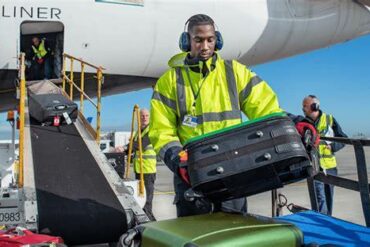
On the ground, KLM has identified three efficiency pillars. Passenger services will lean harder on digital technology, giving travellers more control over bookings and releasing staff to concentrate on hospitality. Apron and baggage services will move closer to external partners, which the airline says can invest more, invest faster and deliver services more efficiently at lower cost. Technology and collaboration will also streamline the Hub Control Center at Amsterdam Schiphol, the operational nerve centre coordinating turnarounds, connections and disruption recovery.
The programme now hinges on execution. The €1 billion target represents a structural shift in KLM’s cost base, not a one-off saving, and every element carries trade-offs between financial discipline, service quality and the loyalty of a workforce asked to absorb the hardest part of the burden.