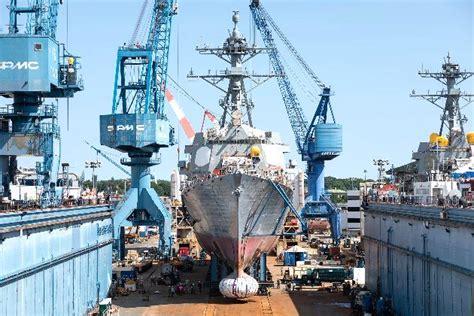
The United States Navy commands one of the world’s most formidable maritime forces, yet the industrial workforce responsible for sustaining that power is eroding. The struggle to recruit and retain qualified shipyard employees has become a structural threat to America’s ability to build, modernize, and maintain warships at a pace that keeps up with rapidly expanding global rivals—most notably China.
The warning from Navy Secretary John Phelan has elevated a long-simmering industrial crisis into a national security alarm. The service cannot produce the ships it needs if the nation cannot staff the shipyards that build them. The issue is rooted in wages, working conditions, and a shrinking pipeline of skilled tradespeople.
A Navy With Global Demands and a Workforce Losing Ground
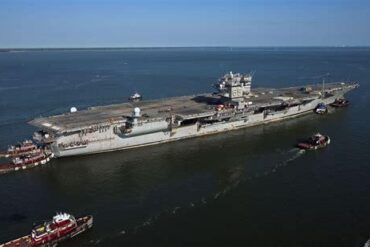
The United States Navy has historically relied on superior technology, sophisticated warfighting systems, and global reach to offset numerical disadvantages. American destroyers, cruisers, and aircraft carriers—such as the USS Gerald R. Ford, the most advanced carrier ever built—remain among the world’s most capable vessels.
Yet capability does not erase the significance of raw fleet size. A recent US Naval Institute study found that fleets with the greater number of ships won 25 out of 28 historic naval wars. China’s ship count now eclipses America’s, and its industrial machine continues accelerating. For Washington, that means every lost worker represents a strategic setback.
Why US Shipyards Can’t Compete for Labor
Phelan’s assessment cuts through the complexity: the wages simply do not compete. A shipyard welder in the United States can earn $19–$29 per hour depending on location, with Florida at the low end and Washington state at the high end. These are skilled, physically demanding, hazardous jobs requiring technical training and certification.
Meanwhile, consumer giants like Buc-ee’s and Amazon offer similar or higher starting pay for roles that are safer, cleaner, and require far less training. Buc-ee’s pays $18–$24 per hour for its entry-level and team-lead staff, while Amazon recently raised average wages for fulfillment workers to $23 per hour, with total compensation exceeding $30 per hour when benefits are included.
In effect, America is asking skilled tradespeople to choose between welding inside a hot, confined steel compartment—or stocking shelves and packing boxes for roughly the same pay. The decision is not difficult for most workers, and shipyards are losing that competition.
The Harsh Realities of Modern Shipyard Work
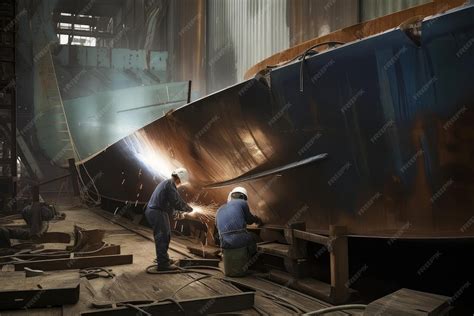
The work environment itself further widens the recruiting gap. Shipbuilding requires long hours, tight spaces, industrial noise, heavy steel fabrication, and adherence to strict safety protocols. Training is lengthy, apprenticeships take years, and injuries are not uncommon.
Retail and logistics roles, by comparison, offer predictable shifts, climate control, and lower risk. Until the wage gap meaningfully favors the shipyard, the labor pipeline remains at a structural disadvantage.
China’s Crushing Industrial Advantage
China’s navy is not only larger; it is newer. Nearly 70% of the People’s Liberation Army Navy’s major surface combatants were built after 2010. In the United States, that number falls to 25%.
According to the Center for Strategic and International Studies (CSIS), China’s shipbuilding sector can outbuild the US by a staggering ratio of 230 to 1. The China State Shipbuilding Corporation now produces more tonnage in a single year than the entire US shipbuilding output since the end of World War II.
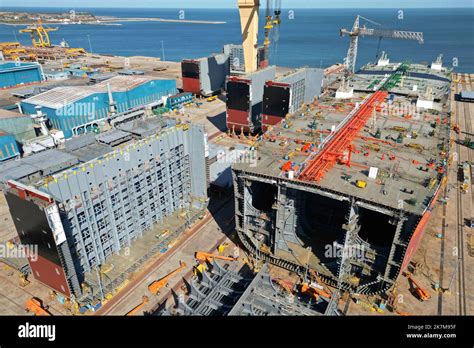
Even if much of that production is commercial, the industrial capacity, workforce strength, and supply chain dominance give Beijing a generational advantage. The United States cannot reverse that trend without rebuilding its own workforce from the ground up.
The Path to Reversing America’s Shipbuilding Decline
Reversing the talent shortage will require comprehensive change. Wage increases are essential but insufficient on their own. A long-term reset must include:
- Competitive pay that exceeds warehouse and retail compensation
- Strong apprenticeship pipelines and technical-trade education investments
- Improved working conditions and safety upgrades
- Incentives such as housing assistance, healthcare improvements, and retention bonuses
These measures are not optional—they are prerequisites for sustaining the fleet America needs.
A Strategic Imperative, Not Just an Economic Debate
America cannot field a modern navy without American workers. This is not a question of policy preferences but of national defense. The fleet’s future strength will depend on whether the nation chooses to invest in the men and women who bend the steel and weld the seams of its warships.
The United States has faced industrial challenges before and overcome them through investment and innovation. Reinvigorating the shipbuilding workforce will require similar resolve. Without it, the Navy’s global maritime advantage may slip further away, not because of insufficient strategy—but because the workers who build that strategy into steel are no longer there.