The Boeing 787 Dreamliner has quietly become the backbone of modern long-haul flying. Since it entered commercial service in 2011, this twin-engine widebody family has reshaped how airlines match aircraft to routes, because the 787-8, 787-9, and 787-10 let carriers fine-tune capacity and range without buying an entirely different type. That flexibility explains why the type now anchors networks across Asia, Europe, the Middle East, and North America.
This ranking measures seven carriers by their reported active Boeing 787 fleets in late 2026. It counts aircraft in service, not orders or scheduled flight volumes, and fleet registers can shift with reporting dates and aircraft status. The numbers below are therefore snapshots, not permanent totals, which matters whenever a carrier is close to overtaking a rival.
The Dreamliner’s appeal rests on three airframes engineered around one blueprint. The 787-8 seats the fewest passengers but flies exceptionally far relative to its size, the 787-9 stretches the fuselage for added capacity with minimal range penalty, and the 787-10 pushes passenger numbers highest while trading some range. Airlines that operate more than one variant effectively hold several tools in a single toolbox, and the seven carriers below have built their long-haul ambitions around exactly that logic.
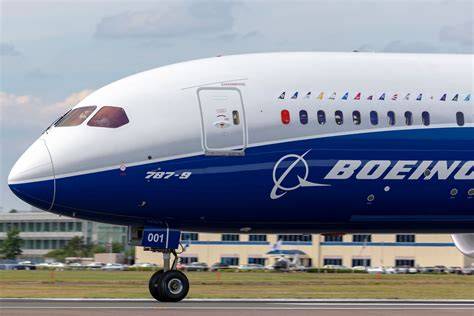
7. Japan Airlines: A Two-Variant Fleet of 42 Dreamliners
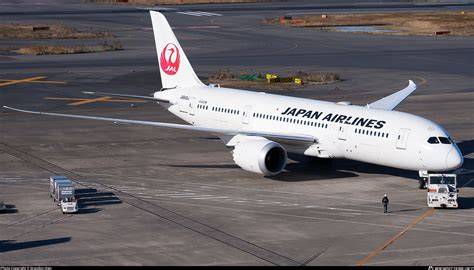
Japan Airlines operates roughly 42 active Dreamliners, split between the 787-8 and 787-9. That pairing gives the Tokyo-based carrier two distinct capacity options inside a single aircraft family, so it can serve thinner regional widebody routes and heavier intercontinental services with the same pilot pool, simulator infrastructure, and maintenance philosophy.
The 787-8 acts as the smaller-capacity member of the pair, while the 787-9 adds room for passengers and cargo. In practice, aircraft assignment still hinges on sector length, scheduling rotations, and operational constraints, but the shared family delivers commonality without erasing meaningful differences in cabin size. Japan Airlines sits seventh here purely because its reported total trails the other six operators, not because the Dreamliner is marginal to its widebody strategy.
6. British Airways: 43 Aircraft Across All Three Variants
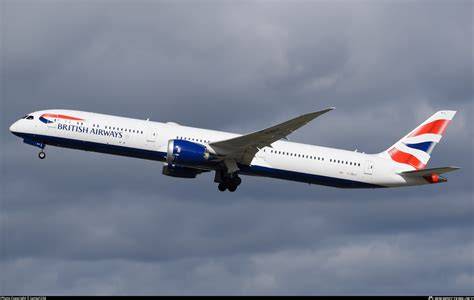
British Airways fields 43 active Dreamliners, placing it sixth, and it is one of the few carriers in this group to operate every main production variant: the 787-8, 787-9, and 787-10. The type sits alongside Boeing 777s and Airbus A350s in a long-haul fleet built around redundancy and route-specific sizing.
The 787-8 handles the lightest demand, the 787-9 sits in the middle with added capacity, and the 787-10 carries the most passengers of the trio. For a carrier juggling high-yield transatlantic corridors, leisure-heavy long-haul markets, and thinner point-to-point links, three Dreamliner configurations mean three levers for matching gauge to demand. Its fleet edges past Japan Airlines but trails Etihad, Qatar, American, ANA, and United.
5. Etihad Airways: 47 Dreamliners Built Around the 787-9
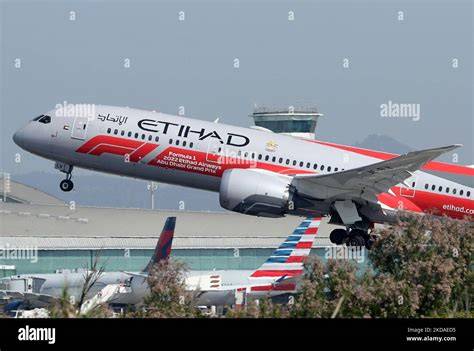
Etihad Airways operates 47 active Dreamliners from its Abu Dhabi base, using the 787-9 and 787-10 across an international network that spans Europe, Asia, Africa, and North America. The composition is strikingly lopsided: 37 of the 47 are 787-9s, with just ten 787-10s supplementing them.
That preference tells a story. The 787-9 blends long range with a capacity that suits a wide spread of international routes, making it the workhorse of Etihad’s widebody plan, while the 787-10 steps in where higher seating density is needed. The arrangement also reveals how a mid-sized Gulf carrier can standardize on one variant and use the larger model selectively, rather than spreading risk across the entire family.
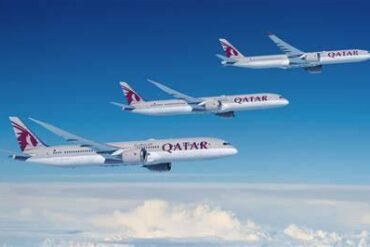
4. Qatar Airways: 61 Active Dreamliners and a Record Order Book
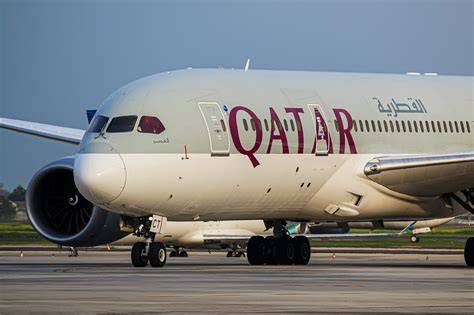
Qatar Airways flies 61 active Dreamliners, split between 32 787-8s and 29 787-9s, with one further 787-9 listed as on order in the available register. Those aircraft work alongside Boeing 777s and Airbus A350s, giving the Doha-based carrier a deep bench of widebody options for varying route demand.
The future is where Qatar’s ambition becomes clearest. In May 2025, the airline announced an agreement covering up to 210 widebody aircraft, including 130 Boeing 787s, which Boeing described as the largest Dreamliner order in its history. None of those jets count toward the active total until they are delivered and enter service, so Qatar’s fourth-place position reflects today’s fleet, not the eventual picture.
3. American Airlines: 67 Dreamliners Across Two Variants
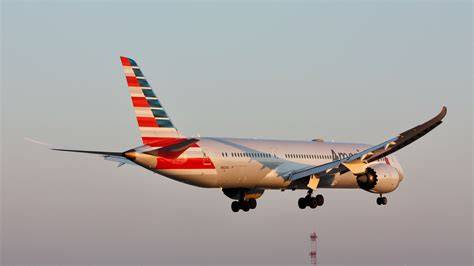
American Airlines operates 67 active Dreamliners, composed of the 787-8 and 787-9, forming a core part of its long-haul fleet. The Fort Worth-based carrier deliberately skips the 787-10, meaning its Dreamliner strategy rests on two models rather than three.
The 787-8 provides a lower-capacity widebody for thinner or seasonal markets, while the 787-9 delivers the extra passenger and cargo room needed on busier intercontinental routes. Cirium schedule data for 2026 listed 33,192 scheduled Dreamliner round trips for American, equivalent to 66,384 one-way sectors — a measure of planned flying rather than aircraft ownership, and a reminder that fleet size and utilization are separate stories.
2. All Nippon Airways: The Launch Customer’s 92 Aircraft
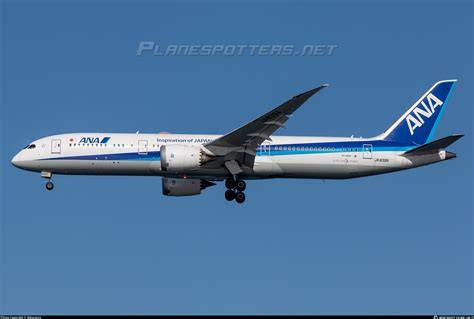
All Nippon Airways is the Dreamliner’s launch customer, ordering 50 aircraft in April 2004 and receiving its first jet in 2011 as the type entered commercial service. That early bet made ANA synonymous with the program, and it remains one of the most prominent operators worldwide.
ANA’s fleet of 92 aircraft spans the 787-8, 787-9, and 787-10, with the 787-9 forming a substantial share and the other two variants covering different capacity requirements. ANA long held the title of world’s largest Dreamliner operator, but reporting in October 2026 put it behind United’s 96. The Boeing 787 Register’s general operator table shows a lower figure for ANA, a reminder that reported totals vary by source and update date — a discrepancy worth flagging rather than hiding.
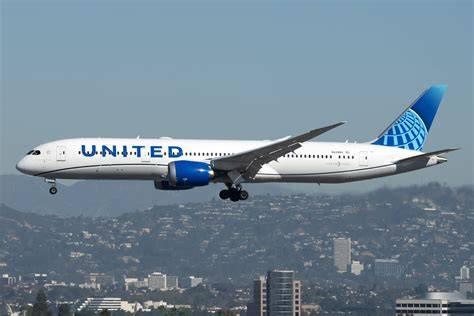
1. United Airlines: 96 Active Dreamliners and a New World Title
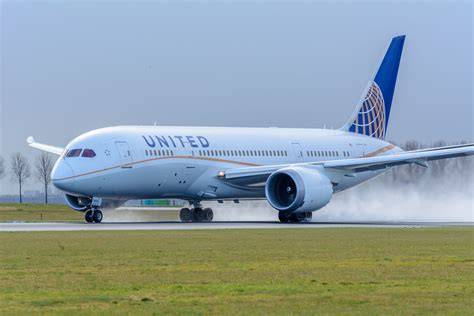
United Airlines leads this ranking with 96 active Dreamliners, per its individual fleet listing in the Boeing 787 Register. The aircraft carry widebody capacity across domestic trunk routes and international services, and United holds further Dreamliners on order that are excluded from this active count.
United operates all three main variants, and the mix is telling: 63 787-9s form the largest block, joined by 12 787-8s and 21 787-10s. That spread lets the Chicago-based carrier dial in passenger capacity across a common family while sharing crew training and spares. Its lead over ANA, American, Qatar, Etihad, British Airways, and Japan Airlines reflects aircraft currently listed as active — and as rivals take deliveries, the order at the top could still change.