The world’s largest military transport aircraft are scattered across military airbases, commercial cargo hubs, and strategic locations on several continents. From the Antonov An-124 Ruslan, which remains the largest military transport aircraft in service, to the American Lockheed C-5M Super Galaxy, Chinese Xi’an Y-20 Kunpeng, and widely deployed Boeing C-17 Globemaster III, these enormous aircraft perform missions that smaller transports cannot handle alone. They carry main battle tanks, helicopters, heavy engineering equipment, satellites, and humanitarian supplies over thousands of miles.
However, finding these aircraft is not as simple as checking a live flight map. Some operate commercially and broadcast their positions through standard aircraft-tracking systems, while others fly military missions that are only partially visible to the public. Their locations also reflect international politics, sanctions, and the different ways national air forces organize their strategic airlift fleets. In 2026, the question of where the world’s largest military transports are becomes a story about much more than aircraft specifications.
The destruction of the Antonov An-225 Mriya at Hostomel Airport in February 2022 changed the landscape of heavy air transport. The six-engine aircraft had been the largest aircraft ever constructed, but its loss left the four-engine An-124 as the largest military transport type still operating. Meanwhile, the United States continues to maintain its enormous C-5M fleet, China is expanding its Y-20 force, and the C-17 remains a familiar sight on international logistics missions.
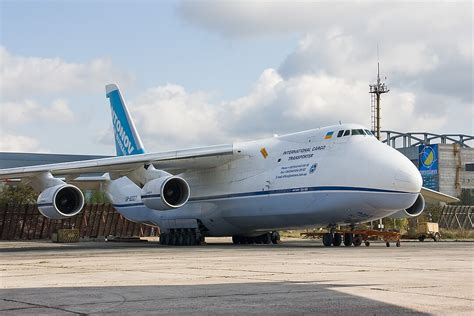
Antonov An-124 Ruslan: The World’s Largest Military Transport Aircraft
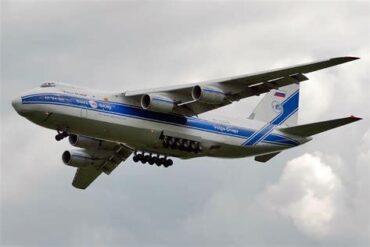
The Antonov An-124 Ruslan was developed during the Soviet era to transport exceptionally heavy military equipment across vast distances. Although the aircraft was designed for military service, its enormous cargo capacity has also made it indispensable to commercial operators specializing in oversized freight. With the An-225 destroyed, the An-124 occupies a unique position at the top of the world’s military transport fleet.
Of the 55 An-124 aircraft originally built, just over 30 remain active according to the supplied fleet figures. Their operational status varies considerably, with some serving military customers, others flying commercial cargo missions, and several unavailable because of storage or political restrictions. The aircraft’s ability to accommodate large helicopters, industrial machinery, generators, and other outsized cargo makes it difficult to replace with conventional transport aircraft.
Where Are Antonov An-124 Aircraft Based?
Antonov Airlines, the Ukrainian cargo operator, is among the most important remaining An-124 operators. Its fleet includes seven aircraft: three An-124-100s and four An-124-100Ms. Because these aircraft perform commercial missions, their movements are often visible through public flight-tracking services when their transponders are transmitting and their flights are covered by tracking networks.
Antonov Airlines aircraft do not remain at one airport permanently. They travel according to customer requirements, moving between cargo terminals, industrial sites, military installations, and airports capable of accommodating their size. Consequently, their current positions can change significantly from one day to the next. Public flight trackers provide the most practical way to establish where a particular aircraft is operating at a given moment.
The Russian operator Volga-Dnepr has a separate An-124 fleet. It lists nine An-124-100s, with an average age of approximately 33.3 years in the supplied figures, although only three are identified as active. Two stored aircraft have been reported at Dubai World Central in the United Arab Emirates and Ulyanovsk Airport in Russia. These locations illustrate how the fleet’s remaining aircraft are divided between operational use and long-term storage.
The most striking case involves RA-82078, a Volga-Dnepr An-124 that arrived at Toronto Pearson International Airport on February 27, 2022. It had delivered COVID-19 testing kits ordered by the Canadian government. Canada closed its airspace to Russian-registered aircraft the following day, and the aircraft subsequently remained in Toronto. The supplied reference reports that a court rejected Volga-Dnepr’s attempt to recover the aircraft in August 2026, leaving it stranded after approximately four and a half years.
Three additional Volga-Dnepr An-124s are reported to remain in Germany. Sanctions and legal restrictions have therefore affected not only where these aircraft can fly but also whether they can return to service. The Russian Aerospace Forces operate their own An-124s, but those military aircraft are not generally visible on ordinary civilian flight-tracking platforms.
Lockheed C-5M Super Galaxy: America’s Largest Military Transport
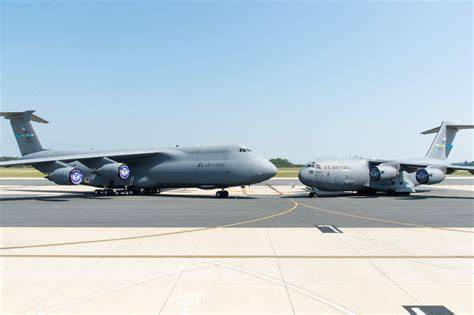
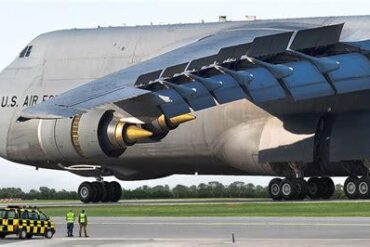
The Lockheed C-5M Super Galaxy is the largest transport aircraft in the United States Air Force inventory. It is smaller than the An-124 in overall length but remains one of the world’s most capable military cargo aircraft. The Air Force operates 52 C-5Ms, upgraded from earlier C-5B and C-5C airframes through the Reliability Enhancement and Re-engining Program.
The aircraft measures 247 feet 10 inches (75.3 meters) in length and has a wingspan of 222 feet 9 inches (67.89 meters). Its maximum payload reaches 281,001 pounds (127,460 kilograms), allowing it to transport heavy armored vehicles, large engineering systems, and other equipment required for major military deployments. Four General Electric F138 engines provide 51,250 pounds of thrust each.
Its operating range is equally important. A loaded C-5M can fly approximately 2,150 nautical miles (3,981 kilometers), unload its cargo, and continue another 500 nautical miles (926 kilometers) to a second base without aerial refueling. That capability allows the Air Force to move substantial quantities of equipment between strategic hubs while retaining flexibility over where cargo is delivered.
Where Are the C-5M Super Galaxy Fleets Stationed?
The US Air Force concentrates its C-5M operations at four principal installations. Dover Air Force Base in Delaware hosts the 436th Airlift Wing and the Air Force Reserve’s 512th Airlift Wing. The base is a major strategic airlift center and one of the most useful locations for aircraft enthusiasts hoping to see a Super Galaxy on the ground.
Travis Air Force Base in California is home to the 60th Air Mobility Wing, providing a major West Coast concentration. The fleet is also based at Joint Base San Antonio-Lackland in Texas and Westover Air Reserve Base in Massachusetts. Westover’s 439th Airlift Wing has operated the C-5M since 2017, extending the aircraft’s presence across the northeastern United States.
These bases support training, maintenance, strategic transportation, and deployment operations. Nevertheless, a home base does not indicate where an aircraft will be on any particular day. C-5Ms routinely travel between domestic military installations and international destinations, and a single aircraft can appear far from its assigned base during an extended logistics mission.
Can You Track a C-5M Live?
Sometimes. Air Mobility Command aircraft frequently broadcast Automatic Dependent Surveillance–Broadcast, or ADS-B, position data during routine logistics flights, exercises, and training sorties. On civilian tracking platforms, C-5Ms may appear under callsigns such as REACH followed by a flight number.
Visibility is inconsistent because military crews may stop broadcasting publicly when operational requirements make an aircraft’s position sensitive. A C-5M that appears on a flight tracker during one mission may be absent during another. Its disappearance from a public map does not establish that the aircraft has landed or stopped flying.
The fleet’s workload demonstrates why the aircraft remains important. During fiscal year 2020, C-5Ms collectively recorded more than 32,000 flying hours across over 7,000 sorties, according to the supplied reference. The Air Force expects to operate the type through 2040, meaning the Super Galaxy will remain a central part of American strategic airlift for years to come.
Boeing C-17 Globemaster III: The Most Widely Encountered Heavy Transport
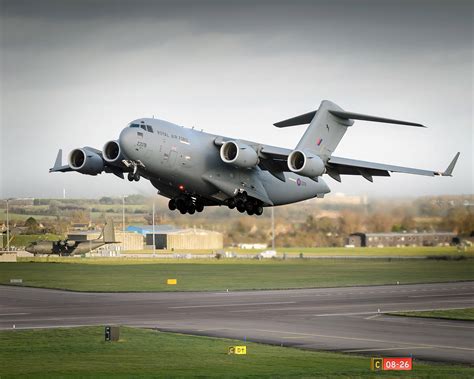
The Boeing C-17 Globemaster III is smaller than both the An-124 and the C-5M, but its combination of payload, range, and runway flexibility makes it one of the most widely used heavy military transports. Boeing built 279 aircraft between 1991 and 2015. The supplied reference estimates that approximately 272 remain in service across eight operators.
The United States operates 223 C-17s, giving it by far the largest national fleet. The aircraft can carry a maximum payload of 170,900 pounds (77,519 kilograms), including an M1 Abrams main battle tank. Unlike many large strategic transports, it can also operate from relatively short, unpaved airstrips. Under suitable conditions, it can land on a runway approximately 3,500 feet (1,064 meters) long.
This flexibility explains why the C-17 performs so many missions. It can transport heavy equipment between continents and then deliver it closer to the destination using airfields that may be unsuitable for larger aircraft. Its cargo capacity is lower than that of the C-5M, but its ability to reach less-developed airfields gives military planners more options.
Where Are C-17 Globemaster III Aircraft Operating?
The C-17 fleet is distributed across North America, Europe, Asia, and the Middle East. In the United States, Joint Base Charleston in South Carolina is a major C-17 operating location, while Dover Air Force Base operates the type alongside its C-5M Super Galaxy fleet.
The Royal Air Force operates eight C-17ER aircraft through No. 99 Squadron. India has 11, while Australia and Canada maintain smaller fleets. Qatar, the United Arab Emirates, and Kuwait also operate the aircraft, providing additional strategic airlift capacity in the Middle East.
A particularly distinctive arrangement is the multinational Strategic Airlift Capability, which operates three C-17s from Pápa Air Base in Hungary. The aircraft carry Hungarian national markings and support participating countries through a shared operational structure involving personnel from 12 member nations. This arrangement allows countries with relatively small air forces to access heavy strategic airlift without maintaining independent fleets of their own.
Because C-17s are constantly involved in routine transport, training, humanitarian assistance, and military exercises, they are often easier to spot on public tracking networks than the larger C-5M. Aircraft operating under REACH callsigns may appear over the continental United States, the North Atlantic, or other international air routes.
As with the C-5M, however, tracking coverage is never guaranteed. Operationally sensitive missions may not remain publicly visible, and a missing aircraft symbol should not be treated as proof of an unusual event.
Xi’an Y-20 Kunpeng: China’s Expanding Strategic Airlift Fleet
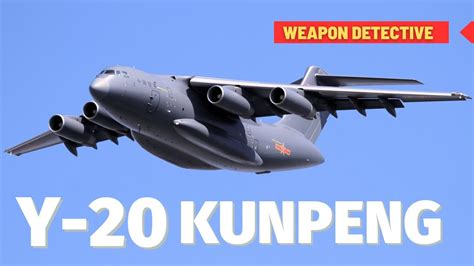
The Xi’an Y-20 Kunpeng represents China’s growing ability to transport heavy military equipment over long distances. Developed for the People’s Liberation Army Air Force (PLAAF), it fills a strategic airlift role previously served largely by the older Ilyushin Il-76. The Y-20 entered operational service in 2016 and has since expanded into a family of transport and tanker aircraft.
The supplied 2026 figures estimate approximately 95 to 100 airframes across the Y-20 family. The International Institute for Strategic Studies is cited as listing roughly 55 transport versions, 30 YY-20A tanker-transports, and 10 YY-20B tanker-transports in PLAAF service. The figures are estimates, and exact totals can vary according to the date and the classification of individual variants.
The aircraft can carry up to 66 metric tonnes of cargo in a hold approximately four meters tall. That capacity is sufficient for one Type 99A main battle tank or two lighter Type 15 tanks, depending on configuration and loading requirements. Its stated range is approximately 4,847 miles (7,800 kilometers), placing its payload capacity between those of the C-17 and C-5M.
Where Are China’s Y-20 Aircraft Based?
Y-20 aircraft are operated by the PLAAF’s 4th and 13th Transport Divisions. Their movements are associated with military airfields across China, but a complete, continuously updated public list of operational aircraft locations is not available. Unlike commercial cargo aircraft, they do not routinely broadcast position data on civilian flight-tracking networks in a way that provides reliable live coverage.
As a result, identifying the location of an individual Y-20 depends on indirect evidence. Satellite imagery can reveal aircraft at airbases, while official Chinese media releases and aviation photography can document deployments, exercises, and other activities. These sources can establish that an aircraft was present at a particular location at a particular time, but they do not necessarily show where it is flying now.
The Y-20 family has participated in humanitarian and military transportation missions. In February 2020, six transport aircraft were involved in a medical airlift to Wuhan during the early COVID-19 response. The tanker variants also expand the PLAAF’s ability to support aircraft operating farther from their home bases, including missions associated with activity in the Taiwan Strait.
Engine development has been another important part of the program. Early Y-20s used Russian Soloviev D-30KP-2 engines, while later aircraft adopted China’s domestically developed Shenyang WS-20 high-bypass turbofan. Re-engined aircraft were photographed at PLAAF facilities in December 2024, and Chinese state media confirmed the Y-20B’s operational service in September 2025, according to the supplied reference.
China’s overseas military presence remains more limited than its domestic network. Djibouti has hosted a Chinese military support base since 2017, while the supplied reference identifies Ream in Cambodia as another overseas location from 2025. Such facilities are relevant to understanding the potential reach of Chinese airlift, although their existence does not establish that a Y-20 is currently deployed at either site.
Airbus A400M Atlas: Europe’s Multirole Military Transport
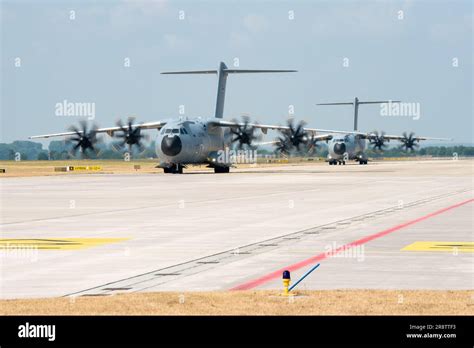
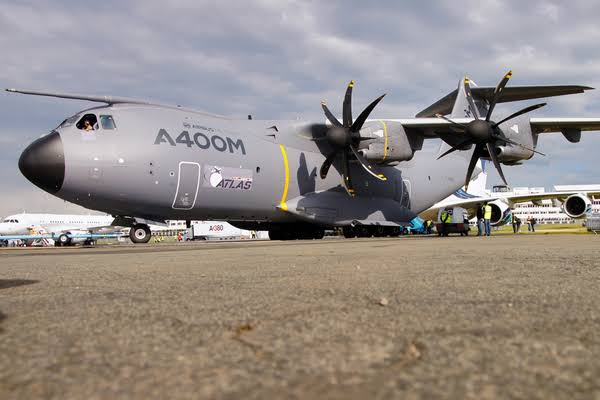
The Airbus A400M Atlas is smaller than the four aircraft discussed above, with a maximum payload of approximately 37 tonnes. It belongs on this list because of its importance to modern military transportation, especially in Europe, rather than because it matches the payload capacity of the C-5M or An-124.
Airbus designed the A400M to bridge the gap between the Lockheed C-130 Hercules and larger strategic transports such as the C-17. Its four Europrop TP400-D6 turboprop engines support operations from suitable unpaved airstrips, while its range allows it to undertake long-distance transport missions. The aircraft can also serve as an aerial refueling tanker and medical evacuation platform.
Germany is the largest operator. Airbus delivered the Luftwaffe’s 53rd and final A400M in April 2026, completing an 11-year procurement program. The entire German fleet is stationed at Wunstorf Air Base, where Air Transport Wing 62 operates the aircraft. Concentrating all 53 airframes at one base makes Wunstorf an especially useful reference point for understanding Germany’s tactical and strategic transport activity.
France operates 24 A400Ms, with 25 additional aircraft on order in the supplied figures. The Royal Air Force operates 22 Atlas C.1s, while Spain has 14 aircraft with 13 outstanding. Turkey, Belgium, Luxembourg, Malaysia, and Kazakhstan also operate the type, spreading its presence across Europe and beyond.
Airbus had delivered 139 of 178 ordered aircraft by March 2026, leaving 39 in the backlog. The future of the Seville assembly line after those deliveries remains an important question for the program’s industrial outlook.
For aviation enthusiasts, the A400M is often easier to observe than China’s Y-20 because it operates regularly from identifiable bases in countries with extensive public aviation activity. German aircraft at Wunstorf and British aircraft at RAF Brize Norton are particularly useful reference points, although schedules and aircraft positions still change with operational requirements.
How to Find the World’s Largest Military Transport Aircraft
The best method for locating these aircraft depends on their operator and mission. Commercial An-124 flights are generally the easiest to follow because operators file flight plans and may transmit ADS-B position data. Public flight-tracking platforms can therefore show an aircraft’s route, altitude, and progress when coverage is available.
American C-5M and C-17 aircraft are also frequently visible, particularly during routine logistics missions. Searching for REACH callsigns can help identify Air Mobility Command flights, but not every military sortie will appear on a public map. Flight-tracking services differ in coverage, and some aircraft or data may be filtered.
The Y-20 presents a different challenge. Since reliable civil tracking data is generally unavailable, satellite imagery, dated photographs, official announcements, and specialist aviation reporting provide the main public evidence of its movements. These sources are valuable for understanding deployments, but they cannot offer the same continuous position updates as a conventional commercial flight tracker.
For aircraft spotting on the ground, established operating bases provide better starting points than attempting to predict a specific flight. Dover and Travis are major C-5M locations, Charleston is an important C-17 base, and Wunstorf is central to Germany’s A400M operations. An-124s are less predictable because commercial charter work can take them between continents on short notice.
Why the Locations of Heavy Military Transports Matter
These aircraft are more than oversized cargo planes. Their locations reflect the ability of governments to move combat equipment, sustain overseas deployments, respond to disasters, and support allies without relying entirely on sea transportation. The An-124 and C-5M provide exceptionally high payload capacity, the C-17 combines strategic range with access to smaller airfields, the Y-20 expands China’s military logistics options, and the A400M gives European operators a flexible platform for tactical and longer-distance missions.
Political restrictions can be just as influential as aircraft performance. The An-124 stranded in Toronto demonstrates how sanctions and legal disputes can remove a valuable transport aircraft from service without physically damaging it. Meanwhile, the expansion of the Y-20 family and continued investment in American airlift fleets show that major powers regard heavy transport capacity as a long-term strategic requirement.
Ultimately, there is no single map that reveals the real-time position of every large military transport in the world. Commercial An-124s and routine American military flights can often be followed through public tracking services, while Chinese Y-20 movements require indirect observation. The most accurate picture comes from combining known home bases, fleet information, public flight data, and reliable reporting while distinguishing confirmed current positions from historical sightings.
In 2026, the world’s largest military transport aircraft are operating from bases across North America, Europe, Asia, and the Middle East, with some flying around the globe and others grounded by storage, maintenance, or legal restrictions. Their locations may change by the hour, but their strategic purpose remains constant: moving the equipment, personnel, and supplies that modern armed forces cannot function without.