The question of which nation commands the most formidable armada of uncrewed combat aircraft has moved from the margins of defense analysis to the center of strategic debate. The proliferation of remote-piloted vehicles and autonomous weapon systems has accelerated at an unprecedented rate, driven by conflicts that repeatedly demonstrated how inexpensive drones can inflict disproportionate damage on far more expensive conventional aircraft, helicopters, and fortified positions. Those results have forced every major power to re-examine what constitutes air power in the first place. The most widely circulated tally of known combat drones places the United States at the top of the global ladder with 444 airframes, followed by Türkiye at 443, Iran at 328, Saudi Arabia at 306, and China at 160. Yet those figures come with a serious caveat: in May, the US Air Force informed senators that its active drone fleet had shrunk by at least 135 airframes, proof that static inventories are a deceptive measure of capability.
How Combat Drone Fleets Are Counted And Why Definitions Reshape The Rankings
Any credible discussion of the world’s largest air forces by number of known combat drones must begin with the counting problem, because there is no universal standard for what qualifies as an airframe. Public fleet counts generally tabulate everything the owning service classifies as an uncrewed aircraft, which sweeps in heavy reusable Medium-Altitude Long-Endurance MALE platforms, uncrewed combat aerial vehicles known as UCAVs, and one-way loitering munitions in a single arithmetic total. Analysis published by organizations such as the Institute for Defence Studies and Analyses argues that a meaningful count must weigh tactical capability and payload alongside raw airframe numbers, since a nation fielding a thousand grenade-carrying quadcopters cannot reasonably be described as possessing greater strike reach than one operating a few dozen jet-powered stealth drones.
The distinction matters because doctrinal choices differ sharply between militaries. The US treats compact loitering munitions such as the AeroVironment Switchblade and the Anduril Bolt-M as crew-served weapons rather than members of the aviation fleet, because each carries an integrated warhead and is destroyed on impact. Apply a looser definition and the ranking changes overnight: Ukraine and Russia surge to the top of the table by an enormous margin. That outcome reveals as much about terminological arbitrariness as about actual power projection, because an entry-level reusable UAV with electronic warfare countermeasures and multi-spectral sensors can cost anywhere from $1 million to over $15 million, with American platforms such as the RQ-4 Global Hawk and the MQ-4C Triton exceeding $100 million each, while an infantry FPV drone costs a few thousand dollars. Lumping the two categories together is the analytical equivalent of combining a nation’s fighter jet inventory with its stock of shoulder-fired rockets.
The Top Ten Combat Drone Fleets Ranked By Estimated Airframes
The ArmedForces.eu ranking remains the most frequently cited reference point, and its top tier tells a story of concentrated investment among a surprisingly small group of nations.
| Rank | Country | Estimated Fleet | Key Platforms |
|---|---|---|---|
| 1 | United States | 444 | MQ-9A Reaper, MQ-1C Gray Eagle, RQ-4 Global Hawk |
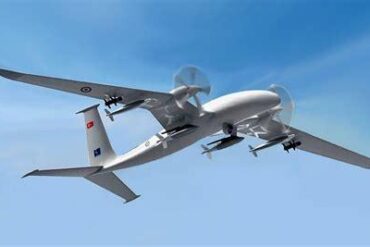
| 2 | Türkiye | 443 | Bayraktar TB2 / TB3, Akıncı, Anka, Aksungur |
| 3 | Iran | 328 | Shahed-129, Mohajer-6, Ababil series |
| 4 | Saudi Arabia | 306 | CH-4 / CH-5, Wing Loong II |
| 5 | China | 160 | Wing Loong II, GJ-11 Sharp Sword, CH-4 / CH-5 |
| 6 | Russia | 105 | Orion, Mohajer-6, S-70 Okhotnik-B, licensed Shahed variants |
| 7 | Pakistan | 95 | Wing Loong II, CH-4, Shahpar-II |
| 8 | Poland | 34 | Bayraktar TB2, FlyEye, Warmate loitering systems |
| 9 | Egypt | 32 | Wing Loong I/II, CH-4 |
| 10 | France | 16 | MQ-9A/B Reaper, Safran Patroller |
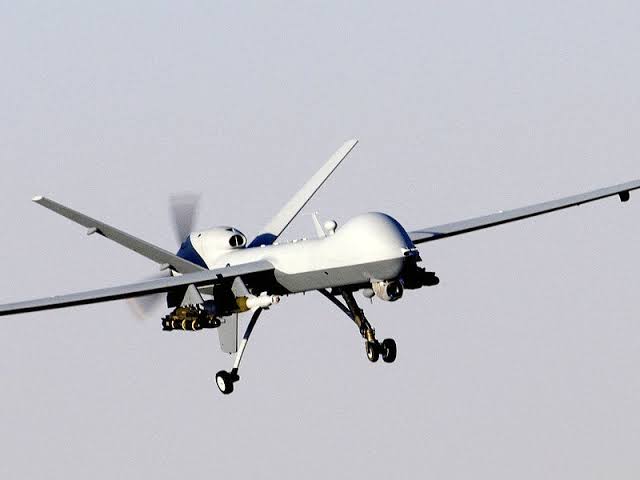
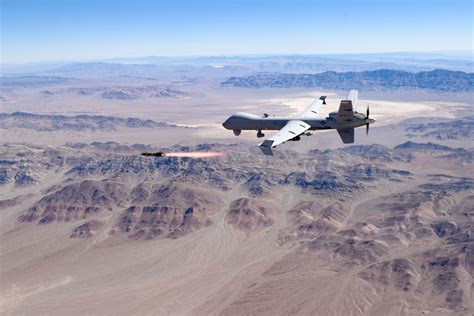
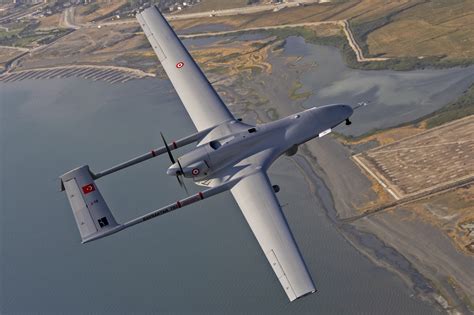
The numbers themselves are less revealing than their composition. The United States holds the crown almost entirely through high-end reusable systems, including the General Atomics MQ-9A Reaper, the MQ-1C Gray Eagle, and the RQ-4 Global Hawk, each capable of carrying synthetic aperture radar, signals intelligence payloads, and laser-guided munitions worth millions of dollars. Türkiye’s near-parity at 443 airframes is a more recent achievement and reflects an industrial philosophy of affordable mass production of combat-proven platforms, demonstrated by the Bayraktar TB2 and its carrier-capable successor, the TB3, alongside the jet-powered Akıncı, the TAI Anka, and the long-endurance Aksungur. Iran’s 328 airframes rest on domestic families including the Shahed-129, the Mohajer-6, and the Ababil series, sustained by sanctions-resistant supply chains. Saudi Arabia’s 306 airframes are overwhelmingly Chinese-sourced, dominated by the CH-4 and CH-5 families and the CAIG Wing Loong II, a procurement pattern that reflects both availability and the absence of stricter American export constraints.
China’s position at 160 is the most misleading figure on the list. The world’s second-largest economy and the third-largest exporter of combat drones operates the Wing Loong II, the CH-4 and CH-5, and the stealthy GJ-11 Sharp Sword, yet its ranking is depressed by the fact that published estimates capture export deliveries and confirmed active units far more readily than classified domestic fleets. A count that omits systems Beijing has no interest in disclosing should be read as a floor. Russia’s 105 airframes similarly understate its actual activity on the battlefield, where licensed Shahed variants and indigenous Orion and S-70 Okhotnik-B platforms are consumed at rates that render peacetime counts meaningless.
What Drone Fleets Actually Deliver To Commanders In The Field
A drone count functions as a primary indicator of theater-level intelligence, surveillance, and reconnaissance persistence and of a nation’s stand-off strike capability. Platforms like the MQ-9 Reaper, the Wing Loong II, and the Bayraktar TB2 are valued because they sustain round-the-clock patrols across strategic distances without placing human aircrew in contested airspace, generating continuous sensor coverage that battlefield commanders otherwise could only obtain with large, expensive aircraft fleets. Increasing numbers of these systems now carry weapons payloads that eliminate the need for separate crewed strike sorties altogether, collapsing the historical separation between observation and attack.
That persistence is measured in missions rather than minutes. A MALE drone orbiting at altitude for twenty-plus hours can observe a target’s pattern of life across several days, hand real-time targeting data to a ground commander, and strike within the same sortie. This is why the US and Türkiye both sit near the top despite radically different cost profiles: their fleets are built for sustained presence. Fleet analysis that ignores this capability dimension, and counts only airframes, produces rankings that reward volume of affordable hardware over the depth of operational effect.
The US Drone Fleet Shrinks Even As The Global Push Intensifies
The most consequential development in the rankings is that the leader’s margin is narrowing from within. When the US Air Force told Congress in May that its active drone inventory had fallen by at least 135 airframes, it confirmed what attrition data from multiple theaters had already suggested: legacy MALE fleets are being worn down or expended faster than they are replaced. The loss still leaves Washington at the summit, but the 444 figure is increasingly a historical high-water mark.
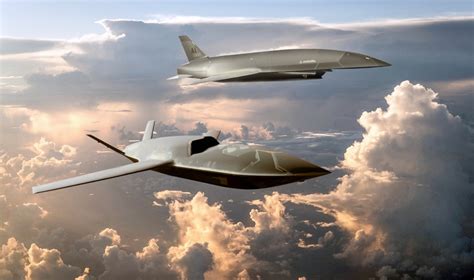
The Pentagon’s answer is not to buy more Reapers but to change the architectural logic of combat aviation. The Air Force’s Collaborative Combat Aircraft program, better known as loyal wingman drones, is designed to fly alongside crewed stealth fighters, carrying extra missiles, acting as forward sensor scouts, and jamming enemy radars ahead of expensive crewed assets. These systems replace vulnerable standalone platforms with low-cost, AI-driven autonomous stealth wingmen engineered to project affordable mass, the idea that mission survivability comes from deploying many cheap attritable aircraft rather than a few irreplaceable ones. Companion doctrinal work, including the service’s Drone Dominance Plan, makes explicit that the future fighter fleet will be measured by how many autonomous escorts it can field per crewed airframe.
Türkiye, China, And Europe Chase Autonomous Combat Drone Production
Competitors are pursuing the same prize with varying degrees of urgency. Türkiye’s Baykar Defense has moved its jet-powered, stealthy Kızılelma into mass production, one of the fastest transitions from prototype to production line in the sector, while Turkish Aerospace Industries fielded the Anka-3 flying-wing stealth UCAV. Both are designed from the outset to execute kinetic strikes or electronic warfare missions autonomously while retaining human command at the tactical level — a command architecture that acknowledges autonomy while preserving accountability. Australia has deployed the Boeing MQ-28 Ghost Bat as a functioning loyal wingman demonstrator, and China’s GJ-11 Sharp Sword continues development along a similar flying-wing path.
Europe, meanwhile, has fragmented into several parallel efforts. Germany’s Airbus has partnered with Kratos to build the XQ-58A Valkyrie airframe, targeting an initial operating capability in the German Air Force by 2029, a speed that reflects frustration with slower multinational programs. That frustration is visible in the uncertain trajectory of the Future Combat Air System, the Franco-German-Spanish program slowed by industrial and political friction, whereas the French Air Force launched Project Hypairion with a target of flying CCA drones by 2028. The United Kingdom’s BAE Systems is designing the Brontanax as the nation’s first homegrown autonomous CCA, intended to expand frontline airpower mass and integrate with the multinational Global Combat Air Programme developed with Italy and Japan, which Canada has joined as its first observer. Germany’s Cobra 600 concept pushes the idea further, reframing jet drones as high-speed missile taxis able to hunt hostile swarms before they reach regional bases.
Iran’s Attrition Strategy And Ukraine’s Industrial Drone Warfare
At the opposite end of the technological spectrum sits the approach that has most alarmed Western planners. Iran’s dominance in uncrewed warfare rests on an “aircraft as ammunition” philosophy, epitomized by the Shahed-136, a delta-wing one-way attack drone powered by a conspicuously noisy piston engine. At roughly $35,000 per unit, the Shahed is cheap enough to launch in radar-saturating swarms, and each interception forces the defender to expend an interceptor missile costing millions. Tehran has optimized this low-technology architecture using global commercial supply chains, and the resulting economics have been effective against coalition bases across the Middle East and against strategic inventories that now require industrial mobilization to replenish. The Shahed is fundamentally a pre-programmed guided artillery shell flying fixed GPS coordinates to a static target with no meaningful real-time situational awareness, and it is therefore an entirely different discipline from building an autonomous stealth wingman.
Ukraine demonstrates the scale problem more starkly still. Its decentralized domestic industry has scaled to produce roughly 7 million FPV drones a year, matched by a Russian production base that observers suspect may now exceed Ukraine’s, transforming drones into basic infantry equipment rather than aviation assets. These systems are handed directly to front-line squads, are never recorded on central air force registries, and frequently survive a single sortie; their combat life expectancy is measured in single-digit minutes, and attrition has climbed as both sides deploy dense electronic warfare jamming networks. Ukraine countered by pioneering fiber-optic-controlled drones immune to radio interference, Russia produced equivalents, and Kyiv invented an entirely new class of interceptor drones engineered to ram enemy UAVs, a category that appeared in combat destruction records of 33,000 Russian drones in a single month.
What these campaigns ultimately reveal is that military strength is no longer defined by stable, static inventories. The decisive variable has become industrial agility — the capacity to manufacture replacements faster than a battlefield consumes them while adapting to jamming, counter-drone tactics, and shifting supply chains. Rankings built on airframe counts will always lag reality; the air forces that dominate the next decade will be those that pair high-performance reusable combat drones with production lines fast enough to sustain them.