Boarding is one of the most important parts of an airline’s ground operation, even though passengers often think of it as little more than a queue between the airport gate and their seat. A flight cannot depart until hundreds of people have found their rows, stowed their belongings, and settled into the cabin. For airlines, however, every minute spent completing those tasks affects the aircraft’s utilization, schedule reliability, and ultimately the economics of the entire operation.
This is particularly important for carriers operating short-haul routes. An aircraft that completes several flights in a single day can generate significantly more productive flying time if its ground stops remain short. Fast boarding is therefore not simply about passenger convenience; it is a core part of airline efficiency. Low-cost carriers have become especially skilled at this because their business models depend on keeping aircraft moving between airports with remarkably short turnarounds.
Several different techniques can help. Airlines can divide passengers into groups, board through multiple doors, restrict cabin baggage, assign seats strategically, or organize passengers according to where they sit. Some carriers have even tested boarding methods developed through academic research and computer simulations. The results show that a carefully designed boarding procedure can make a surprisingly large difference, particularly when hundreds of passengers are entering a narrow aircraft cabin.
Ryanair: Boarding in Around 15 to 20 Minutes
Ireland-based Ryanair has built much of its operating model around rapid aircraft utilization, making it one of the most recognizable examples of fast airline boarding. The carrier targets turnarounds of roughly 25 minutes on many flights, allowing individual aircraft to operate multiple sectors throughout the day. In such an environment, a lengthy boarding process would quickly undermine the efficiency that makes the model work.
Ryanair’s history with boarding is particularly interesting. For almost four decades, passengers were not assigned specific seats and instead selected any available seat after entering the aircraft. That approach could eliminate the need to search for a particular row, but it also created a chaotic rush toward the cabin. Arguments and occasional injuries eventually made the system increasingly difficult to justify from a passenger-experience perspective.
The airline introduced allocated seating in 2014, creating a more orderly process but removing one of the advantages of its previous system. Ryanair subsequently developed an unusual practice sometimes described as “boarding not boarding.” The airline can begin preparing the next flight for boarding while passengers from the previous service are still leaving the aircraft. This overlapping process makes use of otherwise wasted time.
Baggage policy also plays an important role. Passengers on Ryanair’s basic fare can bring one small personal bag measuring up to 40 x 30 x 20 cm, provided it fits beneath the seat. Customers purchasing Priority can take an additional cabin bag weighing up to 10 kg and measuring 55 x 40 x 20 cm. Restricting the amount of baggage that needs to enter the cabin reduces the number of passengers competing for overhead-bin space.
On some services, these measures allow Ryanair to complete boarding in approximately 15 to 20 minutes. Actual performance naturally depends on the airport, aircraft, passenger load, gate arrangement, and operational conditions, but the figure illustrates how aggressively the airline manages its ground time.
easyJet: A 14-Minute Airbus A320 Boarding Test
UK-based easyJet has also spent years experimenting with ways to reduce the time its aircraft remain on the ground. Many of its short-haul flights are planned around ground times of approximately 25 to 30 minutes, although congestion and airport-specific procedures can make actual turnarounds considerably longer.
easyJet once used open seating, but it began testing allocated seating in 2012. The trial covered almost two million passengers across approximately 12,500 flights. The results indicated that assigned seats could be introduced without harming punctuality or creating additional operating costs, allowing the system to be implemented throughout the network later that year.
The change also created a commercial opportunity because passengers could pay to select particular seats, including seats with additional legroom and locations toward the front of the aircraft. More importantly for boarding efficiency, allocated seating provided the airline with greater control over how passengers entered the cabin.
One of the most striking experiments took place at London Gatwick in 2019. easyJet worked with the airport on a boarding sequence based on seat location, with passengers toward the rear and in window seats called first, followed by middle-seat and aisle-seat passengers. During the trial, 158 passengers boarded an Airbus A320 in just 14 minutes, approximately two to three minutes faster than the usual process.
The experiment was not adopted across the entire network, but it demonstrated how passenger movement can be influenced by the boarding sequence. Today, easyJet generally uses a priority-based system, with passengers requiring assistance and those with Speedy Boarding handled first, followed by families and general boarding. When airport facilities permit, passengers may also board through both the front and rear aircraft doors.
That second-door approach can be particularly valuable. Instead of sending every passenger through a single entrance at the front, the airline can distribute people across the aircraft, reducing congestion around the forward galley and aisle.
ANA and JAL: Fast Boarding for Domestic Widebody Flights
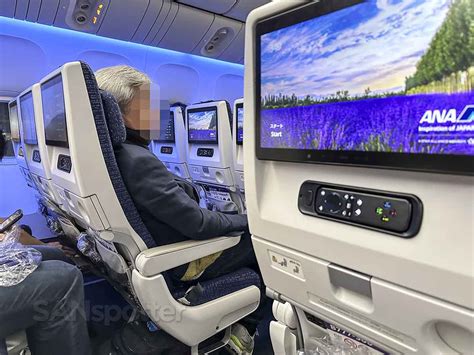
Japan’s two largest major carriers, All Nippon Airways and Japan Airlines, demonstrate that fast boarding is not limited to low-cost carriers. Both operate large widebody aircraft on Japan’s busy domestic network, including the Boeing 777, Boeing 787, and Airbus A350. Despite the size of these aircraft, domestic operations can often achieve boarding times of under 20 minutes.
One reason is the use of the Window-Middle-Aisle, or WILMA, boarding method. Rather than allowing passengers to enter in a largely unrestricted sequence, the process organizes people according to their seat position. Window passengers board first, followed by middle-seat passengers and then those seated in aisle positions.
The reasoning is straightforward. A passenger sitting by the window usually needs to pass fewer people while reaching the seat. If aisle passengers enter first, they can block the aisle while later passengers climb over them or wait for them to move. Organizing passengers by seat location reduces some of these conflicts.
ANA went further by working with the Nishinari Laboratory at the University of Tokyo to investigate boarding sequences scientifically. The research examined how different passenger movements affected congestion and found that a window-middle-aisle sequence could provide a smoother flow through the cabin. ANA subsequently incorporated the approach into its boarding procedures, dividing passengers into groups after priority boarding.
JAL has conducted similar research. In collaboration with the Tokyo Institute of Technology, the airline used a 360-degree camera inside an Airbus A350-900 to observe passenger movement. Researchers then ran approximately 1,000 simulations to evaluate different boarding strategies. The findings contributed to changes made to JAL’s domestic widebody boarding procedures in 2024.
United Airlines: Around 30 to 35 Minutes on Long-Haul Flights
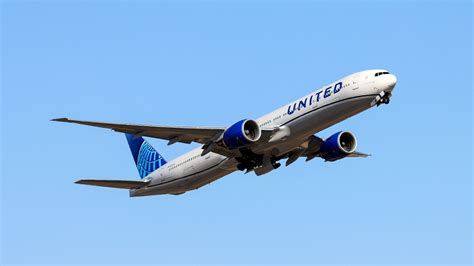
United Airlines provides a useful example of how the same principles can be applied to much larger and more complicated operations. A long-haul Boeing 777 or Airbus A350 can carry several hundred passengers, so even a highly efficient boarding system cannot normally match the 14-minute or 15-minute figures sometimes achieved by narrowbody aircraft.
For many long-haul operations, boarding can take 35 to 50 minutes, depending on passenger numbers, cabin configuration, airport procedures, and baggage. United has nevertheless worked to reduce the time required, including by reintroducing its WILMA approach across the network in October 2023.
The history of this decision is revealing. United had previously used a similar seat-location-based system but discontinued it around 2017 after changes associated with Basic Economy. The airline subsequently observed that average boarding times increased by approximately two minutes. Bringing back the window-middle-aisle concept represented an effort to recover some of the efficiency lost under the previous arrangement.
United’s experience highlights an important reality about boarding. There is no single procedure that works perfectly for every airline or every aircraft. A method that saves time in one operating environment can create complications elsewhere, particularly when airlines simultaneously need to manage premium cabins, elite passengers, families, special assistance, connecting passengers, and different fare products.
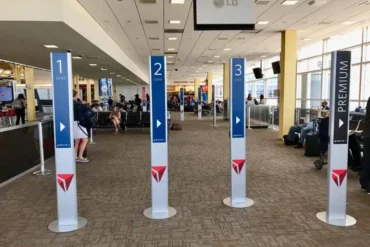
American Airlines and Delta Air Lines, for example, use multi-group or multi-zone systems that organize passengers around several criteria, including cabin, status, fare, and other benefits. Such systems can serve commercial and operational purposes simultaneously, even though their boarding dynamics differ from the simpler WILMA model.
Why Low-Cost Airlines Often Board Faster
The examples above reveal a broader pattern. Low-cost carriers frequently have an advantage when it comes to boarding speed because their entire operation is designed around rapid aircraft utilization. A carrier flying short routes with multiple daily rotations has a powerful financial incentive to avoid unnecessary minutes on the ground.
Ryanair and easyJet are particularly clear examples. Their fleets are dominated by aircraft designed for high-frequency short-haul operations, and their procedures are optimized around quick passenger movement, limited cabin baggage, and short turnarounds. Southwest Airlines historically followed a similar philosophy, although its boarding system has changed significantly.
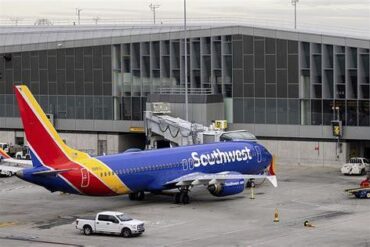
Southwest Airlines spent more than 50 years using open seating, an unusual model among major airlines. The approach was closely connected to its broader emphasis on rapid turnarounds. Southwest’s famous 10-minute turn dates back to 1972, when the airline had sold one of its four aircraft and needed to maintain its schedule with only three airplanes.
The carrier has since moved to assigned seating and adopted a WILMA-style boarding sequence. Testing indicated that the window-middle-aisle method could reduce boarding times by as much as two minutes. Yet the airline’s newer checked-bag policies introduce another variable. Southwest began charging many passengers for checked bags in May 2025 after years of allowing two free checked bags for many customers. If more travelers decide to bring luggage into the cabin instead, additional overhead-bin congestion could offset some of the time gained through a more efficient boarding sequence.
What Actually Makes Boarding Fast?
The fastest boarding operations tend to combine several small advantages rather than relying on one magical procedure. Seat assignments, baggage restrictions, multiple aircraft doors, passenger grouping, airport infrastructure, and disciplined turnaround management all influence the final result.
Cabin baggage is especially important because passengers can spend considerable time searching for overhead-bin space. A traveler who cannot find room near their seat may walk several rows backward or forward, blocking the aisle while trying to reposition a suitcase. Multiply that behavior across dozens of passengers and the cumulative delay can become substantial.
Aircraft configuration matters as well. A narrowbody aircraft with 150 to 180 passengers is fundamentally easier to board quickly than a widebody carrying 300 or 400 people. Airport design can also determine whether an airline can use both front and rear doors, while remote stands may permit different boarding arrangements from those available at a traditional terminal gate.
The five examples also demonstrate that speed does not necessarily come from making passengers move faster. In many cases, it comes from preventing passengers from interfering with one another. WILMA reduces aisle conflicts, multiple doors divide passenger flows, baggage restrictions reduce overhead-bin activity, and overlapping boarding procedures make better use of time that would otherwise be lost.
The Continuing Search for Faster Boarding Times
Airlines have spent decades experimenting with boarding, and the subject remains surprisingly complex. Passenger behavior is difficult to control, and a theoretical system that works perfectly in a simulation can encounter unexpected problems when hundreds of real travelers arrive with children, oversized bags, connecting-flight concerns, mobility requirements, or simply a preference for getting settled as soon as possible.
Still, the examples of Ryanair, easyJet, ANA, JAL, and United Airlines show how much attention modern carriers devote to this part of the journey. Their approaches differ according to fleet size, network structure, airport facilities, and passenger mix, but they share the same basic objective: move people through the aircraft efficiently without creating unnecessary congestion.
For travelers, a boarding process lasting only a few minutes less may seem like a small improvement. For an airline operating thousands of flights, however, those minutes accumulate across an entire schedule. That is why boarding remains far more than the final queue before takeoff. It is one of the clearest places where operational discipline, aircraft utilization, passenger behavior, and airline economics meet inside the airport gate.