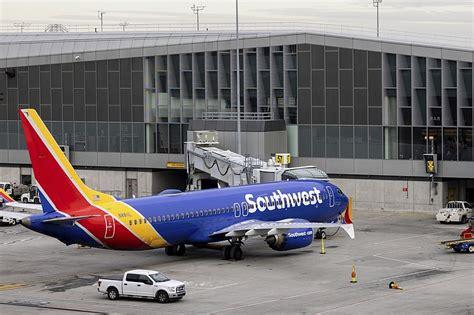
Southwest Airlines has spent more than five decades proving that simplicity can be one of the most powerful competitive advantages in commercial aviation. While many airlines have expanded into increasingly complex business models filled with multiple cabin classes, premium lounges, lie-flat seats, and intricate fare structures, Southwest built its success around a remarkably different philosophy. The airline focused on fast aircraft turnarounds, high utilization rates, a standardized fleet, and an uncomplicated onboard experience.
That strategy helped transform Southwest from a small regional carrier into one of the largest airlines in the United States. Even as rivals aggressively pursued premium travelers and invested billions into luxury products, Southwest consistently resisted introducing a dedicated first-class cabin. The decision has often puzzled industry observers, especially during an era when premium travel generates some of the highest margins in aviation.
The airline’s transition to assigned seating in January 2026 reignited that debate. By abandoning its famous open-seating model and introducing Extra Legroom seating zones alongside premium fare bundles, Southwest demonstrated a willingness to evolve. Yet despite embracing one of the most significant changes in its history, the carrier still stopped short of creating a true first-class product.
The reason becomes clear when examining the economics behind Southwest’s operation. The issue is not whether first-class passengers would pay higher fares. The issue is whether a premium cabin would undermine the operational efficiency that powers Southwest’s entire business model. Once aircraft utilization, boarding speed, seat density, and network flexibility are considered, a traditional first-class cabin begins to look less like an opportunity and more like a liability.
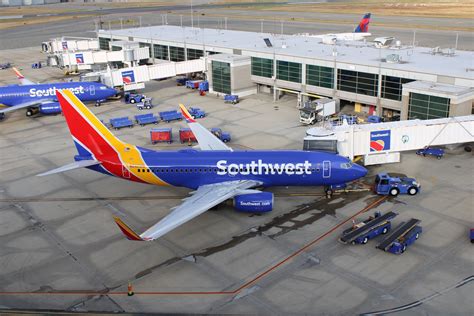
Southwest Airlines Built Its Success on Operational Simplicity
Unlike traditional network carriers, Southwest operates with a highly standardized structure. The airline relies almost exclusively on the Boeing 737 family, eliminating much of the complexity associated with operating multiple aircraft types.
This fleet commonality creates efficiencies throughout the organization. Pilots require fewer qualification variations. Flight attendants work within familiar cabin layouts. Mechanics specialize in similar systems. Spare parts inventories remain streamlined. Aircraft substitutions become easier during disruptions. Crew scheduling gains flexibility because operational differences between aircraft are minimized.
For decades, this simplicity created measurable cost advantages. Southwest became famous for reducing operational friction at nearly every stage of the passenger journey and aircraft lifecycle.
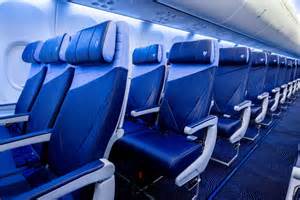
The introduction of assigned seating did not change that philosophy. Instead, the airline carefully redesigned its cabin while preserving the structural simplicity that has defined the brand for years. Standard seats continue to offer approximately 31 inches of pitch, while Extra Legroom seats provide between 34 and 38 inches depending on their location within the aircraft.
Most importantly, all seats maintain the same six-abreast 3-3 configuration.
That detail may appear minor, but it reveals how Southwest evaluates change. The airline sought additional revenue opportunities without fundamentally altering cabin architecture. Passengers can now pay for preferred seating positions and additional comfort, but the aircraft retains its operational efficiency.
A true first-class cabin would require a dramatically different approach.
Why Turn Time Is the Most Important Metric in Southwest’s Business Model
Few metrics matter more to an airline than aircraft utilization. Commercial aircraft are expensive assets that generate revenue only when they are flying. Every minute spent parked at a gate represents lost earning potential.
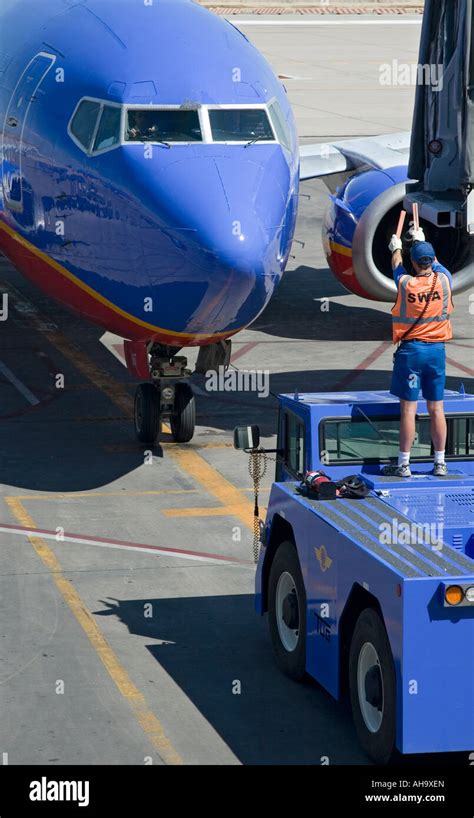
Southwest has historically treated rapid turnarounds as a core strategic weapon. While many airlines schedule ground times of 45 minutes or longer, Southwest routinely targets turn times below 30 minutes.
That speed allows aircraft to operate more flights per day.
Additional flights generate more revenue while spreading fixed ownership and operating costs across a greater number of departures. The result is improved productivity and lower unit costs.
Achieving a sub-30-minute turnaround requires extraordinary coordination.
Passengers must deplane quickly.
Cabin crews must complete inspections rapidly.
Cleaning teams need immediate access.
Fueling, baggage handling, and servicing operations occur simultaneously.
Boarding must begin almost immediately after cleaning concludes.
Every element is optimized for speed.
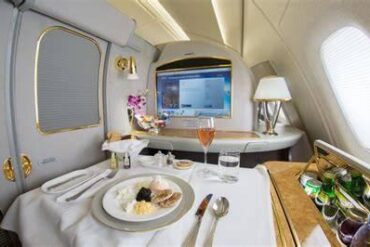
Introducing first class complicates this process in ways that extend far beyond seat design.
Premium cabins typically require enhanced catering, including fresh meals, specialty beverages, additional service items, and more extensive inventory management. These procedures increase loading times and create additional logistical requirements.
Cabin cleaning also becomes more demanding. Larger seats occupy more physical space and often include additional components requiring inspection and maintenance.
Service expectations become more elaborate.
Every extra task adds seconds or minutes to the turnaround process.
When multiplied across thousands of annual departures, even small delays can significantly reduce aircraft productivity.
The Hidden Cost of Slower Aircraft Turnarounds
Many observers evaluate first class by focusing solely on passenger revenue. That perspective overlooks the broader operational consequences.
Suppose a premium cabin increases average turn time by only five minutes. On paper, that may appear insignificant.
Across a network operating hundreds of daily flights, however, those minutes accumulate rapidly.
Aircraft complete fewer flight segments.
Gate utilization becomes less efficient.
Crew scheduling loses flexibility.
Recovery from operational disruptions becomes more difficult.
Network resilience declines.
The cumulative financial impact can be enormous.
For airlines such as Delta, United, and American, premium revenue often justifies these complexities because premium travelers generate exceptionally high yields.
Southwest operates under a different economic framework.
Its profitability depends heavily on maximizing aircraft productivity rather than maximizing revenue from a small subset of premium seats.
From that perspective, protecting fast turn times becomes more valuable than adding luxury seating.
Why Boeing 737 Cabin Geometry Works Against First Class
Beyond operational concerns, aircraft economics create another challenge.
Southwest’s Boeing 737-800 and 737 MAX 8 aircraft typically carry approximately 175 passengers. This relatively high seat count helps support the airline’s low-cost structure.
A domestic first-class cabin would dramatically reduce that density.
Most U.S. airlines configure domestic first class in a 2-2 arrangement rather than the standard 3-3 layout used throughout economy cabins. Wider seats and increased pitch consume substantially more cabin space.
Replacing several rows of economy seating with first-class seats often removes a dozen or more passenger positions.
Every removed seat represents lost revenue potential.
For a premium cabin to make economic sense, the additional revenue generated by premium passengers must exceed the value of the displaced seats.
That equation becomes difficult on many of Southwest’s routes.
Unlike international airlines operating long-haul services where premium fares can reach several thousand dollars, Southwest primarily serves domestic and short-haul international markets.
The pricing power available for first class is therefore significantly lower.
A premium cabin would need to generate exceptional yield premiums consistently to compensate for reduced seating capacity and increased operating complexity.
That is far from guaranteed.
Extra Legroom Seating Solves the Revenue Problem More Efficiently
Southwest’s introduction of Extra Legroom seating demonstrates a different strategy.
Rather than concentrating premium space into a dedicated cabin, the airline distributes enhanced seating throughout the aircraft.
Passengers seeking additional comfort can purchase seats offering up to five extra inches of pitch while preserving the aircraft’s overall density.
This approach generates incremental revenue without sacrificing large numbers of seats.
The airline effectively monetizes passenger preferences while maintaining the operational benefits of a uniform cabin layout.
It is a compromise that aligns closely with Southwest’s historical philosophy.
Travelers willing to spend more receive tangible benefits.
The airline earns additional revenue.
Operational complexity remains largely unchanged.
Seat counts stay relatively high.
Turn times remain fast.
Fleet flexibility remains intact.
In many ways, Extra Legroom seating delivers many of the financial advantages of premium travel without introducing the disadvantages associated with traditional first class.
Southwest and Legacy Airlines Are Playing Different Revenue Games
Comparisons between Southwest and major network carriers often miss a crucial point.
These airlines are pursuing fundamentally different objectives.
Delta Air Lines, United Airlines, and American Airlines increasingly rely on premium revenue as a primary profitability driver. Corporate travelers, affluent leisure passengers, and frequent flyers often pay substantial premiums for enhanced products.
These customers value features such as:
- Lounge access
- Priority services
- Dedicated check-in
- Premium catering
- Larger seats
- Enhanced loyalty benefits
- Lie-flat seating on longer routes
For legacy airlines, premium products often generate disproportionate profitability relative to the physical space they occupy.
Southwest historically serves a different customer demographic.
Its network attracts families, leisure travelers, small-business customers, and price-conscious passengers seeking convenience and value.
Although the airline certainly carries business travelers, its brand identity remains rooted in affordability, simplicity, and operational reliability.
Recognizing changing customer preferences, Southwest introduced higher-tier fare products such as Choice Extra rather than first class.
These fares bundle benefits including priority services, preferred seating access, and complimentary alcoholic beverages.
The strategy captures additional passenger spending without transforming the airline into a premium-focused carrier.
Brand Identity Matters More Than Many Analysts Realize
A first-class cabin is not simply a collection of larger seats.
It fundamentally changes customer expectations.
Once an airline introduces premium cabins, passengers begin expecting elevated service standards, enhanced catering, dedicated onboard attention, exclusive loyalty benefits, and continual product improvements.
Meeting those expectations requires ongoing investment.
The premium travel market is intensely competitive.
Airlines constantly upgrade seats, meals, entertainment systems, lounges, and service offerings to remain competitive.
Southwest has historically avoided this arms race.
Its value proposition centers on reliability, convenience, and straightforward pricing rather than luxury.
Although assigned seating represents a significant evolution, it does not alter the airline’s core identity.
A true first-class cabin would.
That distinction carries strategic importance because brand consistency often contributes significantly to long-term profitability.
Customers understand what Southwest offers.
Introducing sharply divided travel classes could blur that positioning.
Fleet Flexibility Provides a Competitive Advantage
One of Southwest’s least visible strengths is network flexibility.
Because cabin layouts remain largely standardized, almost any aircraft can operate almost any route within the system.
This flexibility simplifies scheduling and disruption management.
Aircraft substitutions occur more easily.
Operational recovery becomes faster during irregular operations.
Maintenance planning remains straightforward.
Introducing multiple cabin configurations would reduce these advantages.
Some routes might require premium-equipped aircraft while others would not.
Scheduling complexity would increase.
Fleet utilization could decline.
Operational planning would become more challenging.
Although these costs rarely appear in marketing materials, they affect profitability every day.
Maintaining uniformity across hundreds of aircraft creates efficiencies that compound over time.
Southwest has long recognized the value of those efficiencies.
The Economics of First Class Clash With Southwest’s Core Strengths
The airline’s recent seating transformation demonstrates that Southwest is not opposed to innovation.
The company clearly recognizes that passengers are willing to pay more for comfort, convenience, and preferred seating.
Its introduction of assigned seating, Extra Legroom sections, and premium fare bundles reflects a deliberate effort to capture that demand.
However, Southwest continues to evaluate every change through the lens of operational efficiency.
A traditional first-class cabin would require wider seats, reduced capacity, more complex service procedures, enhanced catering operations, additional equipment, and potentially slower turn times.
Each of those factors conflicts with the principles that have driven Southwest’s success for decades.
The airline’s sub-30-minute turnaround philosophy enables higher aircraft utilization, greater productivity, and lower operating costs. Those advantages extend throughout the network and contribute directly to profitability.
When viewed in isolation, premium seats may appear attractive.
When evaluated across an entire airline operation, the picture changes dramatically.
For Southwest Airlines, the revenue generated by first class would likely struggle to offset the efficiency losses created by slower turnarounds, reduced seating density, greater complexity, and diminished fleet flexibility.
That reality explains why the carrier continues to pursue premium revenue through enhanced seating options rather than traditional cabin segmentation.
Southwest is not rejecting premium travel because demand does not exist. It is rejecting a specific premium model because it conflicts with the operational system that made the airline successful in the first place. In a business built around speed, simplicity, and utilization, a first-class cabin is not merely unnecessary—it is often economically misaligned with the very foundations of the Southwest model.