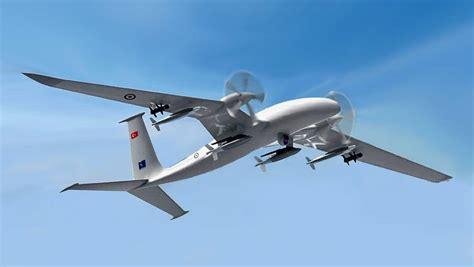
Baykar, Türkiye’s leading defense drone manufacturer, has set its sights on completing delivery of 120 Bayraktar Akinci combat drones by the end of 2026, signaling a powerful escalation in both production capacity and operational capability. This push marks a crucial inflection point not just for the company, but for the evolving doctrine of unmanned warfare, as the Akinci moves beyond traditional UAV roles into the realms of precision strike, multi-mission versatility, and electronic warfare supremacy.
Baykar’s Steady Climb: 110 Delivered, 10 to Go
From its base at the Flight Training and Test Center in Çorlu, western Türkiye, Baykar has already delivered 110 Akinci UCAVs, with the final 10 slated for rollout within the next year. This controlled, deliberate expansion reflects more than just industrial capacity—it reveals how training, sustainment, and systems integration are being synchronized in lockstep with delivery.
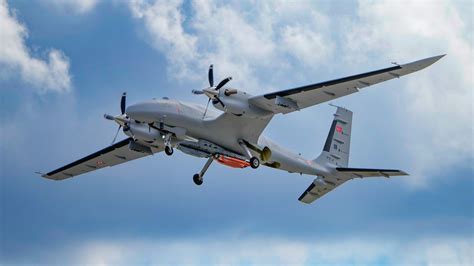
At the core of the Akinci program is a robust test and training ecosystem. Around 200 personnel coordinate flight testing, simulator training, and platform certification, ensuring each drone enters service fully integrated into operational doctrine. Trainee pilots undergo a five-month course, including 30 sorties, while technicians complete a four-month track. This structured pipeline ensures that each delivery strengthens the broader force, not merely adds to its inventory.
A Combat-Proven Design Evolving with Purpose
The Bayraktar Akinci is not just a high-endurance drone; it is a versatile combat aircraft capable of strike, surveillance, and electronic warfare. Its specifications include high-altitude flight, satellite-controlled operations, and multi-weapon payload integration, making it a formidable platform for modern battlefield demands.
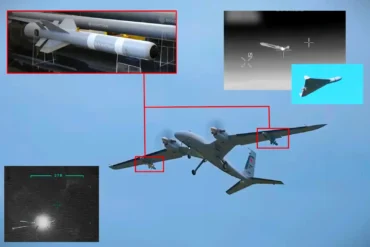
What’s especially significant is how the Akinci’s role has evolved over the past year. Far from being a niche asset, it is now showcased as a precision-effects carrier that can execute rapid, repeated strikes with indigenous miniature munitions. In December 2025, Baykar released a landmark video showing the Akinci PT-7 deploying two BOZOK laser-guided bombs and one KAYI-30 munition, all achieving direct hits. These tests validated the drone’s capacity to deliver scalable firepower in dense or fast-moving conflict zones.
Multi-Weapon Flexibility Unlocks Strategic Options
Another defining feature of the Akinci’s maturation is its growing compatibility with a spectrum of Turkish-made guided munitions. Recent test campaigns have included live firings of:
- MAM-T smart munition
- LAÇIN-82 guidance kit
- TEBER-82 Winged Guidance Kit
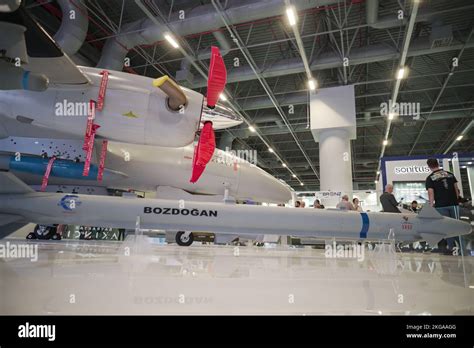
This expanding weapons portfolio underscores a deliberate strategy: make the Akinci modular and adaptable to various mission profiles. It can now carry lighter precision weapons for extended loitering and strike, or switch to heavier, standoff bombs when deeper penetration is needed. This adaptability ensures it remains relevant in both low-intensity operations and high-threat airspace.
Electronic Warfare: A New Domain for Akinci
Perhaps the most disruptive shift in the Akinci’s evolution is its emergence as an electronic warfare platform. In October 2025, it was confirmed that the drone had been successfully integrated with Aselsan’s ANTIDOT 2-U system, a dual-pod electronic support and electronic attack suite.
The system functions as follows:
- The ES (electronic support) pod detects, classifies, and geolocates hostile radar emissions.
- The EA (electronic attack) pod then applies jamming and deception techniques, undermining enemy air defenses.
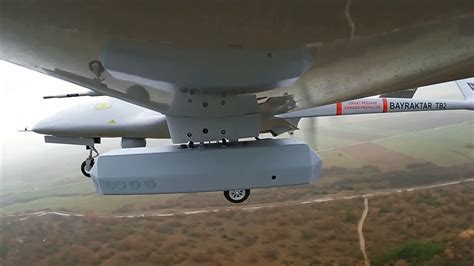
This capability moves the Akinci from ISR-strike support into a vital component of suppression-of-enemy-air-defense (SEAD) operations, long the domain of manned jets. As the fleet expands, each additional delivery enhances Türkiye’s ability to shape the electromagnetic battlespace, a critical need in radar-saturated conflict zones.
Export Momentum and Global Adoption
Baykar has confirmed that the Akinci is now in operational use in 13 countries, beyond its deployment with the Turkish Armed Forces. More than 2,000 personnel have undergone Akinci training programs since 2021, a figure that demonstrates growing international confidence in both the platform and the ecosystem surrounding it.
The significance here lies in sustainment and scalability. New operators are being onboarded without interrupting readiness for earlier customers—a feat that speaks to Baykar’s logistics discipline and aftermarket service capability. As nations look for combat-ready UCAVs with proven operational support, this factor becomes as persuasive as technical specifications.
Akinci as a Multi-Domain Combat Node
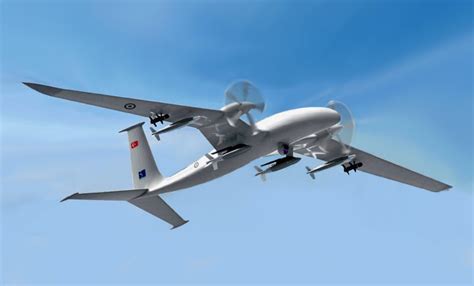
At the Paris Air Show in June 2025, Baykar and Italian partner Leonardo (via LBA Systems) unveiled the Akinci PT-10, presenting it with a full combat payload including air-to-air missiles, cruise missiles, and various precision-guided bombs. This was more than just a product showcase—it was a strategic signal that the Akinci line is being framed as a multi-domain, growth-oriented platform.
The narrative is clear: Akinci is no longer a niche UCAV. It’s an adaptive combat architecture, capable of integrating new sensors, weapons, and mission payloads as technologies and doctrines evolve.
Parallel Development with Kizilelma: Two Tracks, One Vision
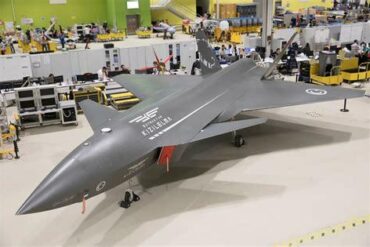
While Akinci solidifies its position as a battle-hardened workhorse, Baykar is also pushing forward with its Kizilelma program, a next-gen jet-powered UCAV. Ihlas News Agency reported that five prototypes and two serial Kizilelma aircraft have already been produced. Yet, even as this ambitious platform develops, Akinci continues to anchor Baykar’s operational strategy.
With its maturing mission set, expanding weapons suite, and battlefield-proven resilience, Akinci is the bridge between current combat drone utility and future aerial autonomy. It carries the weight of daily operational tempo, giving Baykar the breathing room to innovate with Kizilelma without sacrificing near-term battlefield needs.
Strategic Outlook: Precision, Persistence, and Electromagnetic Dominance
When viewed in totality, Baykar’s path to 120 Akinci deliveries by 2026 is not just a number—it’s a strategic marker. Each airframe added to the fleet represents not just an ISR-strike asset, but a scalable platform for:
- Persistent surveillance and strike
- Multi-mission munitions delivery
- Electronic support and attack roles
In an era where the cost of precision strike capabilities is rising and radar environments are becoming more contested, the Akinci offers a cost-effective yet potent alternative. It’s not just about quantity—it’s about delivering quality effects across multiple domains with every drone fielded.
As the global demand for unmanned systems accelerates, the Akinci program offers a clear blueprint: invest in training, expand operational roles, sustain export confidence, and always keep capability growth ahead of the curve.