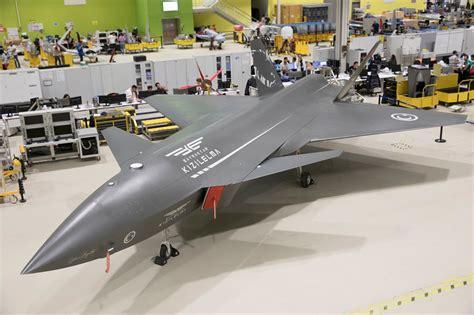
Baykar is poised to transform the defense aerospace sector with the upcoming delivery of its first serial-production Bayraktar Kizilelma unmanned fighter jet to the Turkish Armed Forces in the first quarter of 2026. This milestone marks a significant evolution in Türkiye’s air combat capabilities, with the Kizilelma representing the nation’s first low-observable unmanned jet-powered aircraft capable of radar-guided air-to-air combat and precision strike missions.
Unveiling a New Era of Autonomous Air Combat
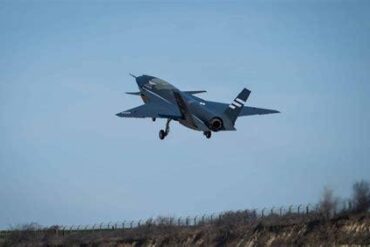
Following an intensive prototype testing campaign throughout 2025, Baykar has confirmed that two units built to serial-production standards are ready ahead of delivery. The Kizilelma program has demonstrated continuous progress since its maiden flight on December 14, 2022, with testing and integration conducted entirely at the Çorlu Flight Training and Test Center in Tekirdağ.
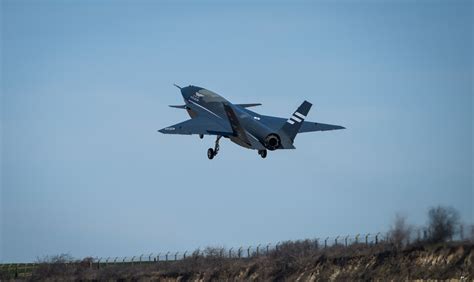
In 2025 alone, the platform achieved several critical milestones:
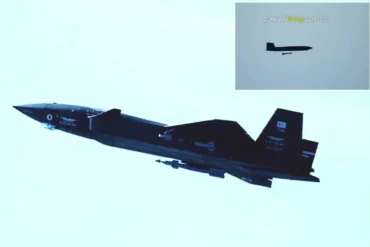
- October 2025: Successful live-fire tests using the Tolun small-diameter munition and the Teber-82 laser-guided bomb.
- Debut flight with the Murad 100-A AESA radar, developed to enable advanced target tracking.
- November 2025: Introduction of the Toygun 100 electro-optical targeting system, simulation of Gökdoğan beyond-visual-range (BVR) missile launches, and a confirmed BVR target hit.
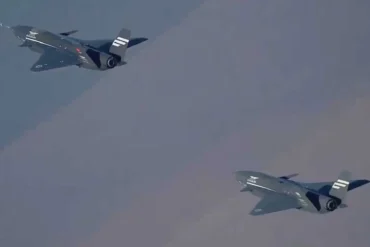
- Execution of a combat air patrol mission and autonomous close-formation flight by two prototypes using smart fleet algorithms.
- Validated air-to-air kill of a simulated aerial target using AESA radar and a Gökdoğan missile.
These events not only signaled technological maturity but also demonstrated full-spectrum engagement potential—an unprecedented capability among unmanned Turkish platforms.
Advanced Combat Design: Manned Jet Performance, Unmanned Execution
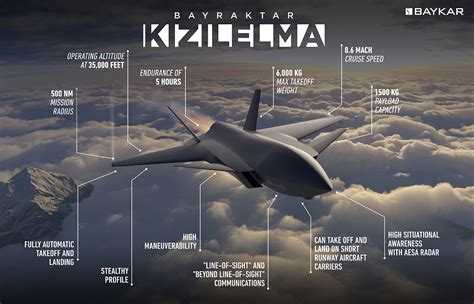
Designed to be comparable in size and capability to an F-16, the Kizilelma is a 10-meter wingspan, stealth-configured platform with a maximum takeoff weight of 8.5 tonnes. It is powered by the Ukrainian Ivchenko-Progress AI-322F turbofan engine, delivering up to 41 kN of thrust with afterburner, enabling near-supersonic speeds (Mach 0.9) and a combat radius of roughly 926 km.
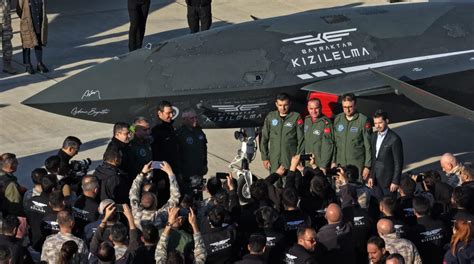
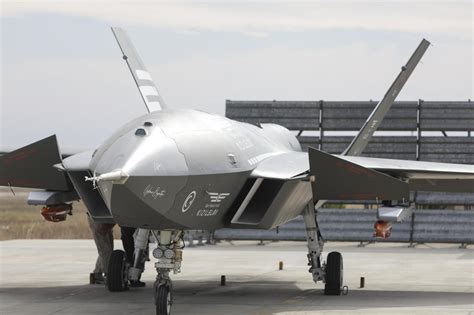
The aircraft supports eight munition stations—six underwing and two internal—allowing payload configurations of up to 1.5 tonnes. The internal weapon bays play a vital role in maintaining stealth characteristics, minimizing radar cross-section during missions in contested or denied airspace.
Baykar emphasizes Kizilelma’s artificial intelligence-driven flight autonomy, which reduces operator load during all flight phases. With triple-redundant onboard systems managing mission, navigation, and software integrity, the drone offers high assurance against signal degradation or failure.
Integrated System Architecture and Real-Time Connectivity
The Kizilelma is embedded within a three-part system architecture:
- The unmanned combat air vehicle (UCAV) itself
- A ground control station
- Ground data terminals, supporting both line-of-sight and satellite communication links
This enables real-time control and mission updates, even during extended-range operations. The autonomous control system allows a two-operator model for takeoff and landing, while in-mission operations can be managed by a single operator, maximizing manpower efficiency.
Training Pipeline for Operators and Technicians
Baykar has structured a comprehensive training curriculum for both pilots and maintenance personnel. Based on previous programs like the Akinci drone, the Kizilelma training begins in 2026, precisely aligned with the jet’s operational debut.
- Theoretical instruction on aircraft systems
- Simulator-based practical testing
- Live flight training for qualified candidates
Pilots must complete 30 sorties during the training phase to earn certification. Training spans five months for pilots and four months for technicians, with both domestic and international trainees expected to enroll as export demand for Kizilelma rises.
From R&D to Readiness: Çorlu as the Nerve Center
Since its inauguration in 2019, the Çorlu Flight Training and Test Center has served as the epicenter of Baykar’s unmanned combat aircraft development. With a dedicated team of over 200 personnel working around the clock, the facility consolidates R&D, flight validation, pilot training, and final delivery into one synchronized pipeline.
This integrated model allows serial production and testing to proceed simultaneously, ensuring continuity between developmental upgrades and frontline deployments.
Strategic Impact on Turkish Defense Capabilities
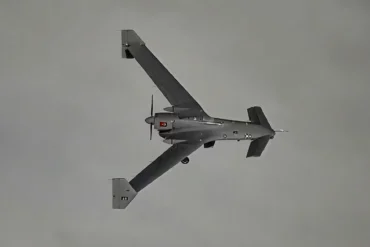
The Kizilelma marks a paradigm shift in Turkish aerial warfare strategy. Unlike its predecessors—the TB2 Bayraktar and Akinci—which excel in ISR and precision strike roles, the Kizilelma introduces air-to-air engagement and BVR combat functionality, traditionally reserved for manned fighter jets.
This evolution addresses key defense objectives:
- Enhanced deterrence through autonomous interception of fast-moving targets
- Operational independence in missions previously requiring Western aircraft
- Increased survivability and reduced pilot risk in high-threat environments
With modular payload capability, stealth, and AI-assisted decision-making, the Kizilelma is set to become the cornerstone of Türkiye’s future aerial doctrine, especially as geopolitical pressures grow in regions like the Eastern Mediterranean, Black Sea, and Middle East.
Global Context and Export Potential
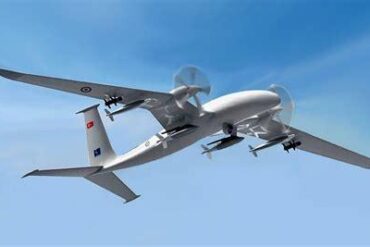
As of January 2026, Baykar has already delivered 110 Akinci drones to 13 countries, with 120 more scheduled within the year. This indicates a growing appetite for high-end Turkish unmanned systems. The Kizilelma—combining advanced sensor suites, autonomous operation, and lethal capability—could surpass this footprint.
Baykar has already begun dialogues with several potential export clients in Central Asia, Africa, and Eastern Europe. With successful delivery to the Turkish Air Force, the Kizilelma may soon become one of the most strategically exported defense products in Türkiye’s history, rivaling the success of the TB2.
Looking Ahead: From Prototype to Force Multiplier
The Bayraktar Kizilelma is more than just another drone—it represents a leap in defense autonomy and technological sophistication for Türkiye. By unifying stealth, speed, and sensor fusion in a single unmanned platform, Baykar has opened new avenues in military aviation that extend well beyond its borders.
As deliveries commence in early 2026, the world will be watching not only for the Kizilelma’s performance in Turkish service but also for how it reshapes the strategic balance in unmanned air combat worldwide.