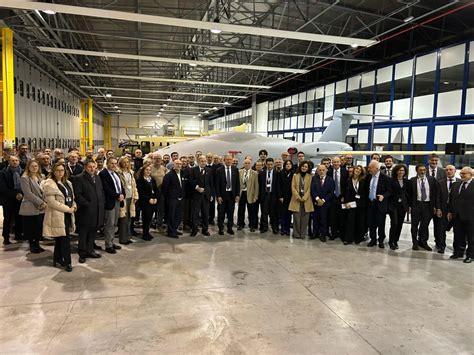
In a move set to redefine the European defense aerospace landscape, Baykar, the prominent Turkish drone manufacturer, has officially announced that it will produce its flagship Akinci and TB2 unmanned aerial vehicles (UAVs) at Piaggio Aerospace facilities in Italy. The strategic decision, confirmed at the Italian Ministry of Enterprise, signals a landmark moment for Turkish-European defense cooperation and positions Baykar as a direct industrial player on European soil.
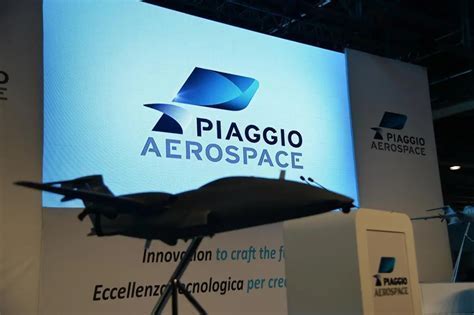
Baykar finalized its acquisition of Piaggio Aerospace on June 30, 2025, completing a process that began in December of the previous year. The transaction not only grants Baykar control of two vital industrial hubs—Villanova d’Albenga and Genoa—but also access to decades of Italian aeronautical engineering expertise and production capacity.
A Strategic Leap into the European Defense Market
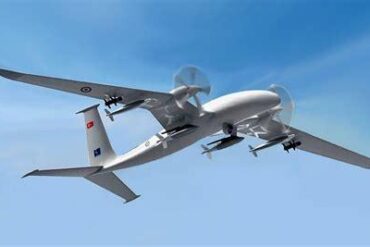
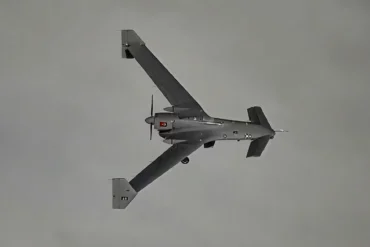
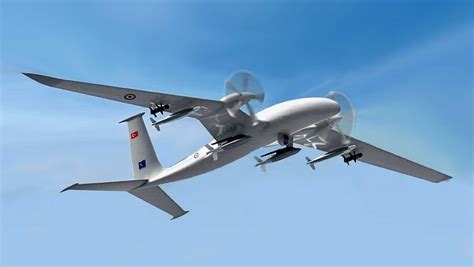
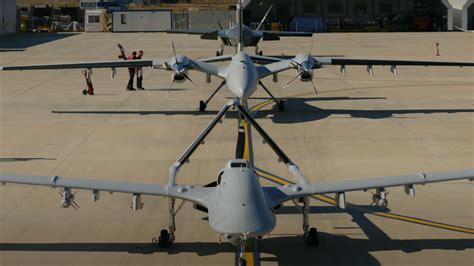
Baykar’s acquisition of Piaggio Aerospace is not merely a corporate takeover—it represents a geopolitical and industrial breakthrough. For the first time, a Turkish defense company will have a full-scale production line within the borders of a NATO and EU member state. According to Baykar’s official statement, the Italian facilities will be responsible for the production of the Akinci and TB2 UAVs, two of the most widely deployed and combat-proven platforms in modern military operations.
The Bayraktar TB2, widely credited for its role in conflicts ranging from Syria to Ukraine, has become synonymous with affordable, reliable, and lethal drone warfare. Meanwhile, the more advanced Akinci, capable of higher altitudes, longer endurance, and heavier payloads, pushes the boundaries of medium-altitude, long-endurance (MALE) drone capabilities.
By selecting Piaggio’s factories as the new European home of these UAVs, Baykar is not only scaling its manufacturing base but also embedding itself into the European defense ecosystem.
Revival of Piaggio’s Legacy Through Advanced Aerospace Engineering
For decades, Piaggio Aerospace stood as a proud emblem of Italian aeronautical innovation, with products such as the P.180 Avanti EVO turboprop aircraft, known for its sleek design and unconventional pusher configuration. However, the company’s trajectory faltered following its 2014 acquisition by Mubadala Development Company, the Abu Dhabi sovereign investor. The UAE’s plan to develop an unmanned version of the Avanti—the so-called Hammerhead—ultimately failed when Italy declined to be its launch customer, leading Mubadala to abandon the project.
Now under Baykar’s ownership, the Piaggio facilities are expected to undergo a renaissance in both manned and unmanned aviation. Baykar’s statement emphasized that it aims to relaunch the P.180 Avanti EVO, this time featuring upgrades developed in conjunction with Italy’s Ministry of Defense. This signals a dual-track strategy: continuing Piaggio’s legacy of business aviation while simultaneously transforming the facilities into drone manufacturing powerhouses.
Italian Government Endorsement and Job Security Commitments
Baykar’s presence in Italy has received political and institutional backing, most notably from Adolfo Urso, Italy’s Minister of Enterprise. In an official statement, Urso praised the deal as securing “a great future for a company that has had a glorious past, an icon of Made in Italy.”
Under the acquisition terms, Baykar committed to maintaining current employment levels at the Villanova and Genoa sites. Moreover, the company has pledged to expand the workforce in line with increasing production demands. This labor guarantee has been welcomed by local unions and regional economic authorities, who see the move as a safeguard for Italian industrial employment in a highly strategic sector.
Selçuk Bayraktar’s Vision: A Fusion of Innovation and Legacy
Baykar’s Chairman and CTO, Selçuk Bayraktar, framed the acquisition as a union of Turkish innovation and Italian craftsmanship. “The purchase will bring new life to Italian aviation design and manufacturing,” he said, underlining Baykar’s intention to invest in technological rejuvenation while respecting Piaggio’s historic role in European aerospace.
Bayraktar, who is also the lead architect behind the Akinci’s design, envisions Piaggio as the central node of Baykar’s European manufacturing strategy. His leadership has propelled Baykar from a national defense startup into one of the world’s most influential drone producers, with exports spanning over two dozen countries.
Leonardo Partnership: Strengthening Italy-Turkey Defense Ties
Complementing Baykar’s acquisition of Piaggio is its growing partnership with Italian defense conglomerate Leonardo. First revealed in March and later confirmed during the Paris Air Show in June, the collaboration involves equipping Baykar UAVs with Leonardo radars and electronic systems.
The Italian defense giant has committed to integrating its sensor technologies into Baykar drones across several of its domestic facilities, including Ronchi dei Legionari, Turin, Rome, and Grottaglie. This cooperation is not merely transactional—it cements Italy as a core stakeholder in the future operational capabilities of Baykar’s unmanned fleet.
Impact on European Defense Industry and NATO Interoperability
Baykar’s move into Italy carries strategic implications for NATO and the broader European defense ecosystem. With the continent pushing to reduce reliance on non-European defense imports and enhance intra-alliance interoperability, Baykar’s drones offer a cost-effective and combat-tested alternative to more expensive platforms like the American MQ-9 Reaper.
Furthermore, producing drones within Europe eliminates many of the export licensing and regulatory hurdles typically faced when purchasing from outside the EU. This makes Baykar drones instantly more attractive to European militaries, particularly those seeking fast deployment and integration without red tape.
Moreover, the production of Turkish drones on EU soil could ease geopolitical tensions regarding arms imports from non-European nations, since manufacturing, final assembly, and systems integration will be localized within the EU’s industrial and regulatory framework.
Competitive Advantage and Technological Synergy
Baykar’s decision to base its production in Italy provides multiple advantages:
- Access to high-precision engineering from Piaggio’s experienced workforce.
- Strategic positioning within the EU, enabling easier distribution and after-sales service.
- Proximity to NATO command structures, increasing the likelihood of military procurement partnerships.
- Enhanced capabilities via Leonardo’s advanced radar, sensor, and avionics technologies.
These synergies are expected to accelerate the development of next-generation UAV variants, optimized for European battlefield requirements. Potential configurations may include electronic warfare capabilities, maritime surveillance adaptations, and expanded payload options compatible with NATO munitions.
A New Era in Aerospace Manufacturing
Baykar’s transformation of Piaggio from a struggling Italian icon into a drone production powerhouse is emblematic of a new era in European defense manufacturing. It is a model that combines foreign investment with local employment, technological innovation with legacy infrastructure, and defense industrialization with geopolitical foresight.
As Europe grapples with security threats on multiple fronts—from Russia’s continued aggression in Ukraine to instability in the Mediterranean—having domestically produced, agile UAVs becomes not just a military requirement, but a strategic imperative.
Baykar’s initiative is poised to reshape not only how drones are made in Europe, but also how alliances are forged through industrial partnerships, strategic autonomy is secured, and 21st-century warfare is conducted.