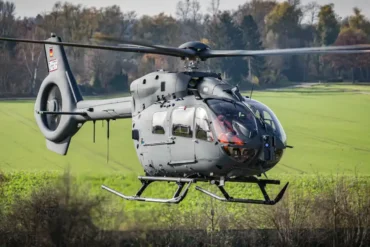
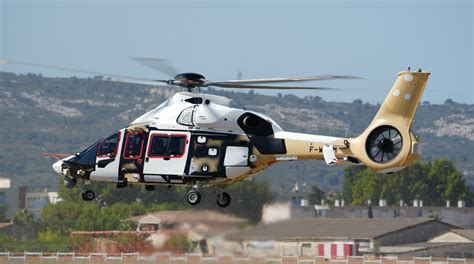
France’s defense modernization efforts took a significant leap forward with the successful maiden flight of the H160M Guépard, the country’s next-generation multi-role military helicopter. The flight, conducted at Airbus Helicopters’ Marignane facility, was confirmed by the Direction générale de l’armement (DGA) on July 24, 2025, signaling a critical milestone in the nation’s ambitious Light Joint Helicopter (HIL) program.
The H160M Guépard: A Unified Rotorcraft for a Multi-Domain Military
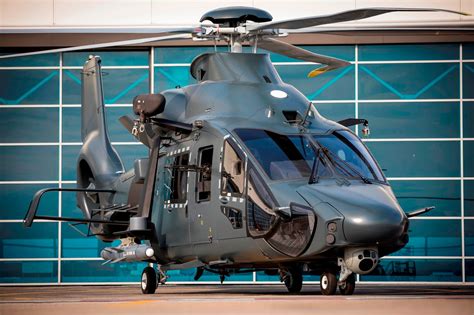
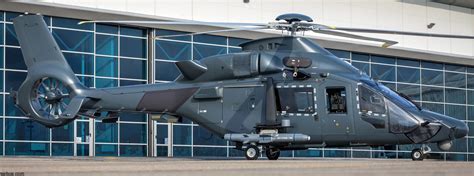
The H160M Guépard—named after the French word for “cheetah”—is built upon the airframe of the civilian H160, a proven rotorcraft renowned for its agility, reliability, and low acoustic signature. The military variant represents a highly modular and interoperable platform that will serve across all three branches of the French Armed Forces—the Army, Navy, and Air & Space Force.
What sets the Guépard apart is its multi-mission adaptability. From high-intensity combat support and special forces insertion to intelligence, surveillance, and reconnaissance (ISR) and civil defense missions, this aircraft is designed to do it all. Its modular configuration allows for mission-specific outfitting, a crucial asset in today’s rapidly shifting tactical environments.
Advanced Avionics and Communications: Battle-Ready in Contested Environments
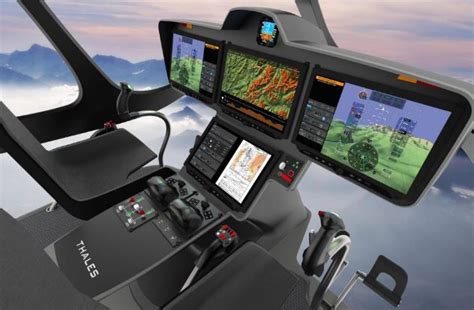
At the heart of the Guépard’s innovation is its advanced avionics suite, specifically designed for resilience in degraded environments. Key features include secure radio communications and resilient navigation systems, which ensure operational continuity even when GPS is denied or electronic warfare systems are engaged.
Additionally, the helicopter has been integrated with drone coordination capabilities, enabling tight cooperation with unmanned aerial systems (UAS). This makes the H160M an ideal node in network-centric operations, particularly in digitally contested battlespaces where information superiority is essential.
Joint-Service Optimization: A Singular Design for All Branches
The Guépard is more than just a new aircraft—it’s a strategic solution to a long-standing issue: fragmentation among service branches. By providing a single, unified platform for the Army (80 units), Navy (49 units), and Air & Space Force (40 units), France ensures economies of scale, interoperability, and streamlined logistics.
This joint-service approach means shared pilot training, maintenance procedures, and spare parts supply chains, drastically reducing lifecycle costs and enhancing rapid deployment capability. Whether it’s supporting maritime patrols, deploying troops in rugged terrain, or flying medevac missions under fire, the Guépard is tailored to do so under a single doctrine.
Technical Specifications and Performance Capabilities
Though derived from the civilian H160 platform, the Guépard introduces several enhancements specific to military operations:
- Engines: Two Safran Arrano 1A turboshaft engines, providing high performance and fuel efficiency.
- Cruising Speed: Approx. 150 knots (278 km/h).
- Range: 850 km with standard fuel tanks.
- Crew Capacity: Two pilots + up to 10 fully equipped troops.
- Payload Flexibility: Configurable for troop transport, ISR sensors, maritime equipment, stretcher loads, or armament modules.
The rotorcraft incorporates Blue Edge rotor blades to reduce acoustic signature and improve lift, making it ideal for stealthier insertions and urban operations. Its Helionix avionics suite, adapted for military use, supports advanced flight automation, reducing pilot workload and enhancing mission efficiency.
Operational Roles Across Land, Sea, and Air Commands
Each service branch will employ the Guépard in mission sets uniquely tailored to their domains:
- Armée de Terre (French Army): Primarily for troop transport, close air support, casualty evacuation, and reconnaissance.
- Marine Nationale (French Navy): Missions include maritime surveillance, anti-surface warfare support, search-and-rescue (SAR), and shipborne operations.
- Armée de l’Air et de l’Espace (Air & Space Force): Deployment in airbase defense, combat search and rescue (CSAR), and rapid reaction alerts.
This operational versatility further aligns with France’s push toward strategic autonomy, ensuring that all branches are equipped with modern, networked rotorcraft capable of supporting national and coalition missions worldwide.
Defense Programming Law and Fleet Integration Timeline
The Guépard program falls under the Loi de Programmation Militaire (LPM) 2024–2030, which sets aside a delivery target of 169 helicopters. The LPM reflects France’s broader defense goals: streamlining force structures, enabling faster deployments, and reinforcing technological sovereignty.
Fleet integration is expected in progressive stages. The current prototype’s first flight marks the beginning of the qualification phase, with further test flights, mission system integration, and weapons certification scheduled throughout 2025–2027. Initial Operational Capability (IOC) is projected around 2027, with Full Operational Capability (FOC) expected by 2030.
France’s Industrial Base and Strategic Autonomy Objectives
The Guépard is not just a military asset—it’s a pillar of France’s defense industrial ecosystem. Built by Airbus Helicopters, the program ensures that critical technologies remain under French and European control, protecting against dependency on foreign suppliers.
Key subcontractors such as Safran Helicopter Engines, Thales, and MBDA are contributing to propulsion, avionics, and weapons systems, respectively. This collaborative model supports thousands of skilled jobs across France and promotes export potential to NATO and allied nations.
Export Potential and Strategic Implications for NATO
While designed to meet French requirements, the Guépard is attracting international interest due to its compact footprint, multi-mission design, and NATO interoperability. The helicopter’s scalable architecture could allow export variants to meet foreign demands for cost-effective light utility helicopters.
Given increasing geopolitical instability—especially in Eastern Europe and Africa—many nations are seeking modular air platforms that can integrate with NATO systems and handle multi-domain operations. France’s early adoption and demonstration of Guépard in diverse roles may position it as a preferred European platform.
Conclusion: France Charts a Unified, Agile Future in Military Aviation
The first flight of the H160M Guépard marks a pivotal step in France’s military transformation. Combining cutting-edge technology, joint-service utility, and industrial self-reliance, the rotorcraft is more than just a helicopter—it’s a signal of France’s future force posture: modular, responsive, and sovereign.
As testing and deliveries progress, the Guépard is poised to become a cornerstone of French military mobility, aligning with broader NATO objectives while reinforcing national defense strategy. Its successful development and deployment will not only enhance France’s combat readiness but also strengthen its strategic influence on the global stage.