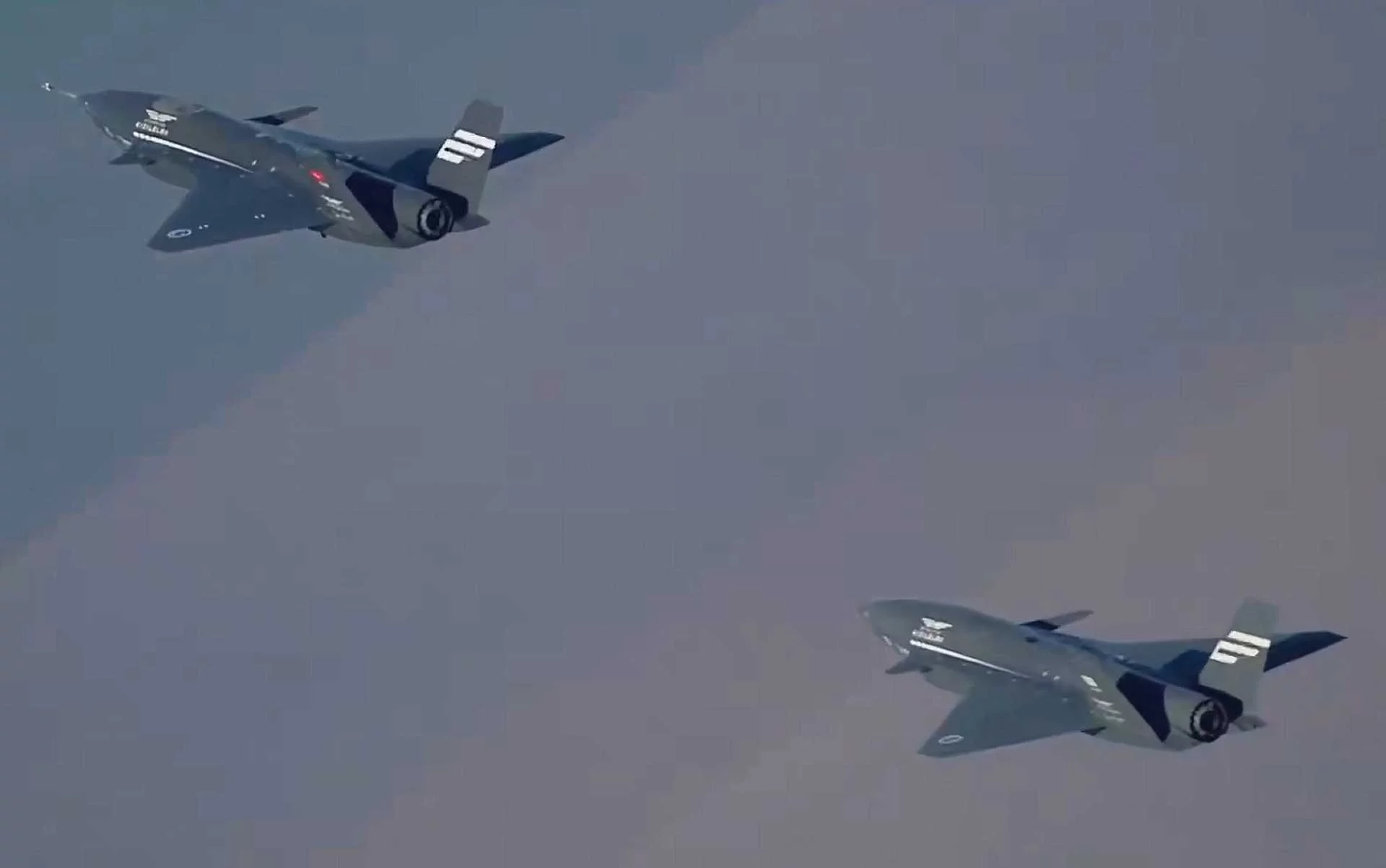
On December 28, 2025, Turkey’s leading defense firm Baykar achieved a monumental milestone in the evolution of unmanned aerial warfare. In a demonstration that could reshape the future of autonomous combat aviation, two Kizilelma unmanned fighter jets conducted the world’s first fully autonomous close formation flight between armed, jet-powered unmanned aircraft — entirely without human intervention.
A Global First in Autonomous Air Combat
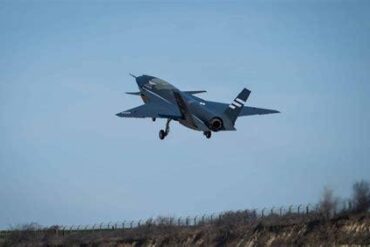
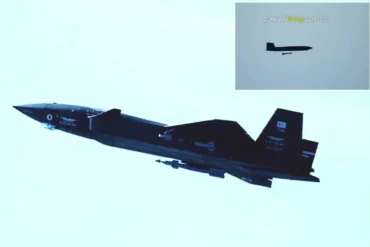
The flight test, conducted in Turkish airspace, marked a turning point in aviation history. For the first time, two combat-capable unmanned aircraft flew in synchronized, close-formation maneuvers using only their onboard AI systems, sensors, and real-time data sharing. No pilot or ground control input guided their coordination. This level of autonomous precision and cooperation had never been seen before in any nation’s defense sector, placing Turkey at the forefront of next-generation air combat development.
Inside the Kizilelma: A Game-Changer in Unmanned Combat
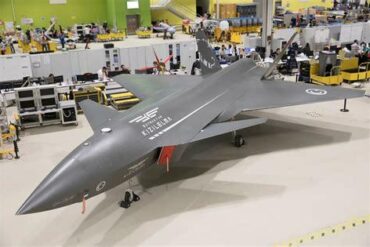
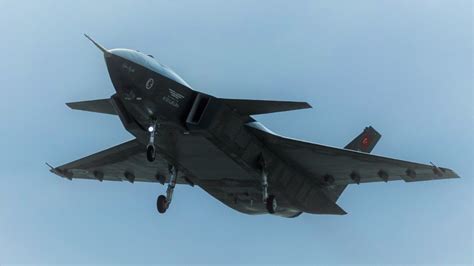
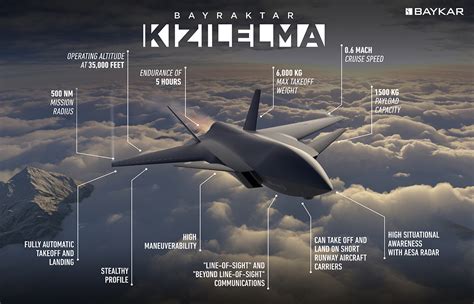
Unveiled in 2022, the Baykar Kizilelma UCAV (Unmanned Combat Aerial Vehicle) is not just a drone — it is a jet-powered, stealth-capable, AI-integrated air superiority platform designed for roles far beyond surveillance or light-strike missions. Equipped with:
- A single turbofan engine,
- A maximum takeoff weight of around 6,000 kg,
- Internal weapons bays for stealth,
- AI-powered flight control and beyond-line-of-sight communication,
- Carrier-operability from short-runway vessels like the TCG Anadolu,
the Kizilelma is optimized for high-speed, contested airspace operations — making it a potential unmanned counterpart to fifth-generation manned fighters.
The Challenge of Autonomous Formation Flight
Flying in close formation is among the most demanding maneuvers in military aviation, even for human pilots. When executed autonomously by combat-capable jets, the complexity multiplies. During the December 28 flight, the two Kizilelma aircraft flew at high subsonic speeds, maintaining precise spatial alignment, reacting dynamically to each other in real-time, and exhibiting a level of aerial choreography that would be considered cutting-edge even with manned aircraft.
The operation required an advanced suite of AI capabilities, including:
- Dynamic pathfinding and real-time decision-making,
- Cooperative maneuvering algorithms,
- Collision avoidance systems,
- Secure tactical data exchange, all under full autonomy.
Strategic and Military Implications
This achievement is not merely technical — it is strategically transformative. As global air defense systems grow increasingly lethal, the ability to deploy swarms or formations of AI-controlled UCAVs capable of independent mission execution becomes a key asset. Such systems offer:
- Reduced risk to human pilots,
- Greater operational flexibility in contested zones,
- The ability to saturate and overwhelm enemy defenses,
- Support for manned-unmanned teaming (MUM-T) architectures.
The Kizilelma’s autonomy and adaptability enable future roles in coordinated strike packages, defensive air patrols, and network-centric warfare scenarios. It also opens possibilities for loyal wingman operations, where autonomous fighters fly alongside manned aircraft, sharing targeting and threat data in real-time.
Turkey’s Rising Aerospace Power
The December 2025 demonstration adds another layer to Turkey’s growing defense industrial base, particularly in the unmanned sector. Supported by strong state-backed R&D ecosystems and strategic defense autonomy goals, Baykar has evolved from a drone manufacturer into a pioneer of aerospace AI and autonomy. Its success with the TB2 Bayraktar drone in recent conflicts set the stage for this leap into advanced UCAV capabilities.
While programs in the United States (e.g., Skyborg, CCA) and China (e.g., Loyal Wingman projects) are still in testing or classified phases, Baykar’s Kizilelma has publicly showcased an operational breakthrough. No Western or Eastern defense contractor has yet released footage of fully autonomous combat-capable jets flying in coordinated, close formation — putting Turkey ahead in the autonomy race.
Naval Integration: Carrier-Capable Stealth
A unique feature of the Kizilelma is its compatibility with naval aviation platforms. Engineered to operate from short take-off and landing (STOL) decks like the Turkish Navy’s TCG Anadolu, it bypasses the need for catapult launch systems, which are typically necessary for conventional aircraft carrier operations. This capability means that Turkey now possesses the world’s first jet-powered stealth UCAV designed for naval deployment, significantly expanding its force projection across the Mediterranean and regional waters.
Looking Ahead: The Road to Operational Deployment
As of late 2025, the Kizilelma is entering its advanced flight testing phase, with serial production scheduled for 2026. The Turkish Air Force and Navy are expected to operationalize the system within 12 to 18 months. Future test plans include:
- Beyond-Visual-Range (BVR) combat simulations,
- Joint manned-unmanned operational flights,
- Autonomous swarm coordination involving multiple UCAVs.
Baykar’s aggressive testing schedule and public demonstrations suggest that Turkey is not merely prototyping; it is positioning for deployment and export. Several defense analysts believe Kizilelma could become a key component in future arms deals with countries looking for affordable, high-performance air combat solutions.
A Defining Moment for Autonomous Warfare
The success of the Kizilelma formation flight represents more than technological progress — it is a paradigm shift in how nations approach airpower. Autonomous, AI-driven systems that can operate with precision, coordination, and independence are no longer hypothetical. They are now demonstrably real, capable, and strategically viable.
As air warfare evolves, so too must the tools, doctrines, and defense ecosystems that support it. Turkey’s Kizilelma program is a bold step into that future — one where AI, autonomy, and aerospace engineering converge to create aerial dominance without pilots in the cockpit.
The age of autonomous formation combat has begun, and Turkey is leading the charge.