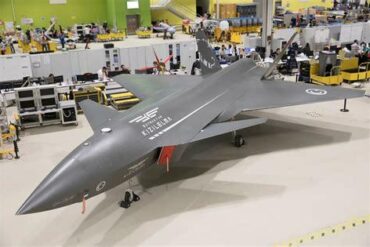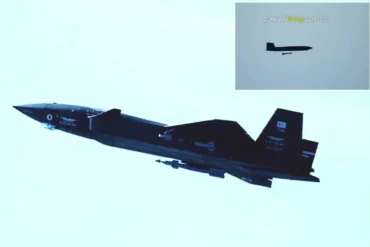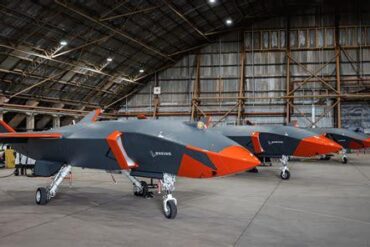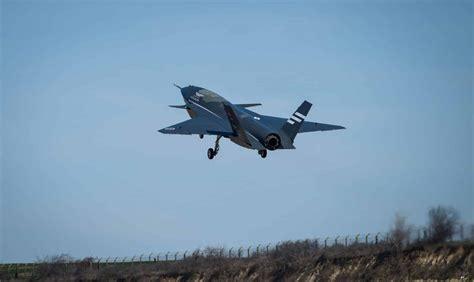
Türkiye’s defense landscape is undergoing a historic transformation as Bayraktar KIZILELMA, the nation’s first unmanned jet fighter, reaches another critical developmental threshold. On March 6, 2025, this cutting-edge aerial platform completed its Aerodynamic System Identification Tests at the Çorlu Flight Training and Test Center, moving one step closer to operational readiness. This milestone not only reflects Türkiye’s growing aerospace prowess but also underscores the nation’s ambition to redefine aerial warfare through indigenous innovation.
Bayraktar KIZILELMA: A Testament to Domestic Innovation
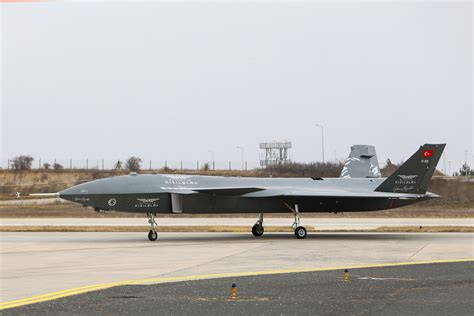
Entirely funded and developed by Baykar, one of Türkiye’s leading defense technology companies, Bayraktar KIZILELMA stands as a symbol of self-reliance. Initiated in 2021, this ambitious project rapidly advanced from blueprint to flight in an astonishingly short time. The production prototype, bearing tail number TC-OZB3 (PT3), integrates extensive lessons learned from earlier builds, incorporating structural reinforcements and a redefined avionics architecture to increase performance, reliability, and mission flexibility.
The program’s accelerated timeline is a rare feat in aviation. KIZILELMA rolled off the production line on November 14, 2022, and within just a month, conducted its maiden flight on December 14, 2022, from Çorlu. This test validated the aircraft’s airworthiness and initiated a series of progressive flight campaigns that continue today.
Cutting-Edge Technology for Supersonic Dominance
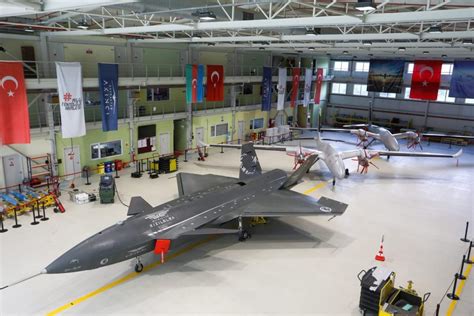
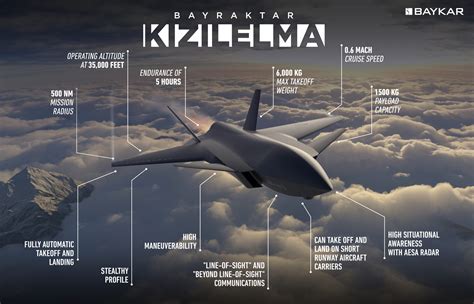
One of the standout developments is the integration of an afterburner-capable engine, a breakthrough that moves KIZILELMA toward supersonic capability. The new powerplant dramatically boosts thrust, enabling enhanced maneuverability and sustained high-speed performance. Complementing this are the latest aerodynamic refinements, engineered to ensure stability and control at elevated speeds and altitudes, positioning KIZILELMA in an elite league of high-performance unmanned fighters.
Onboard systems further reinforce its technological edge. Most notably, KIZILELMA is equipped with an Active Electronically Scanned Array (AESA) radar, which delivers exceptional situational awareness, target tracking, and engagement precision. Its stealthy design, featuring a low radar cross-section, enhances survivability in contested environments. Collectively, these features make it capable of executing complex missions in multi-domain combat operations.
Integration with TCG ANADOLU: Carrier-Based Air Power Reimagined
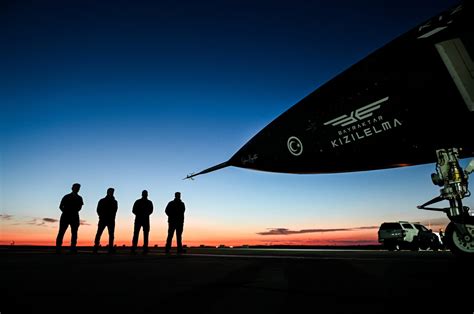
Bayraktar KIZILELMA is destined for a prominent role aboard the TCG ANADOLU, the Turkish Navy’s flagship and amphibious assault ship. As a carrier-compatible UCAV, KIZILELMA introduces a disruptive capability: unmanned naval aviation with advanced autonomy. Its ability to autonomously take off and land on short-deck aircraft carriers or LHDs fundamentally alters power projection for navies that lack catapult-equipped carriers.
This leap in capability transforms TCG ANADOLU into a drone carrier, allowing Türkiye to project significant airpower from sea without reliance on manned fighters. The drone’s AI-powered autonomous flight systems support a variety of roles, from combat air patrol and maritime strike to electronic warfare and intelligence gathering. With KIZILELMA, Türkiye is pioneering a novel operational model where swarms of unmanned fighters can operate in tandem, controlled remotely or autonomously, reshaping naval doctrines.
Formation Flights and Operational Demonstrations
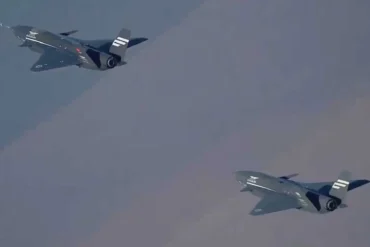
Beyond individual test milestones, KIZILELMA has already made historic public demonstrations. During TEKNOFEST 2023, it performed formation flights alongside the Bayraktar AKINCI UCAV, the SOLOTÜRK F-16, and the Turkish Stars’ F-5 jets over Istanbul. These joint missions were not only technical showpieces but also served to validate the platform’s fleet integration and air combat coordination capabilities.
Such events broadcast a clear message: Türkiye is not merely catching up to global military aviation standards—it is shaping the future of integrated, multi-platform warfare. The seamless collaboration between manned and unmanned systems hints at an ecosystem where KIZILELMA serves both independent and supportive roles, augmenting the capabilities of legacy and next-generation platforms.
Strategic Momentum and International Implications
The latest flight success comes amid broader geopolitical and industrial developments. Earlier this year, Baykar signed a strategic cooperation agreement with Leonardo, Italy’s defense giant. This partnership may serve as a gateway to European markets, especially as the Eurodrone project lags behind schedule and concerns over Russian aggression escalate.
In this context, Baykar’s rapid development cycles, operational maturity, and combat-tested platforms like AKINCI position it as a formidable player in the drone ecosystem. KIZILELMA, with its advanced features and versatility, could emerge as Europe’s preferred unmanned jet solution, especially if political uncertainty in the U.S. clouds F-35 export timelines or capabilities.
Autonomy and Artificial Intelligence: Combat Ready Intelligence
A critical facet of KIZILELMA is its robust artificial intelligence infrastructure. This allows for station-controlled missions, autonomous dogfighting, and high-level mission adaptability. AI-driven decision-making enables real-time target prioritization, threat assessment, and adaptive engagement—capabilities typically reserved for piloted aircraft.
With the rise of multi-domain warfare, this AI backbone becomes indispensable. In contested electromagnetic environments where GPS may be denied and communication jammed, the ability of an unmanned fighter to make tactical decisions independently is a game-changer. It reduces operator burden, increases mission success probabilities, and minimizes the risks associated with latency in command.
A Future Loyal Wingman for Sixth-Gen Fighters
Military analysts and defense planners increasingly see KIZILELMA as a potential loyal wingman platform for sixth-generation fighter jets. It is designed to offload high-risk tasks from manned aircraft, such as SEAD (Suppression of Enemy Air Defenses), ISR (Intelligence, Surveillance, Reconnaissance), and combat air patrols in contested airspace.
As air forces look to maintain an edge while reducing costs, the attritable nature of unmanned fighters becomes crucial. KIZILELMA fits seamlessly into this equation. It offers an affordable, modular, and quickly deployable combat option, compatible with current and future doctrines of distributed aerial warfare.
Conclusion: Türkiye’s Technological Leap in Defense Aviation
Bayraktar KIZILELMA represents more than just a milestone in unmanned aviation; it is a symbol of Türkiye’s rise as a defense innovation hub. By combining stealth, supersonic capability, carrier integration, and AI-driven autonomy, Baykar is rewriting what is possible with indigenous aerospace platforms.
From Çorlu’s test fields to the deck of TCG ANADOLU, every successful flight brings KIZILELMA closer to active service. As strategic alignments shift and global demand for next-gen drone technology increases, KIZILELMA may soon be at the forefront of unmanned aerial combat, not just for Türkiye, but for allied nations worldwide.
The journey of KIZILELMA is far from over—but each milestone proves that it is not merely keeping pace with global trends—it is defining them.