India-Israel Defence Pact Ushers a New Era of Air Superiority
The strategic skies over South Asia are about to shift dramatically. India’s evolving defense partnership with Israel is set to inject a cutting-edge stealth capability into the Indian Air Force (IAF), fundamentally altering the balance of air power in the region. At the heart of this transformation lies the Icebreaker, a fifth-generation, air-launched, stealth cruise missile developed by Israel’s Rafael Advanced Defense Systems. Engineered to neutralize high-value targets deep within enemy territory, the Icebreaker is poised to deliver India a quantum leap in both strategic deterrence and operational lethality.
Icebreaker: The Missile That Redefines Precision Strike Warfare
Unlike conventional cruise missiles, the Icebreaker is designed to thrive in modern, contested battlespaces, where electronic warfare, GPS denial, and integrated air defense systems (IADS) are deployed to neutralize aerial threats. With a range of up to 300 kilometers, the missile allows IAF jets to engage targets from stand-off distances, well beyond the reach of enemy interceptors and missile shields.
What sets the Icebreaker apart is its Very Low Observable (VLO) profile, combining a stealthy airframe with ground-hugging flight characteristics. It cruises at low altitudes over land or sea, making it extremely difficult to detect, track, or intercept.
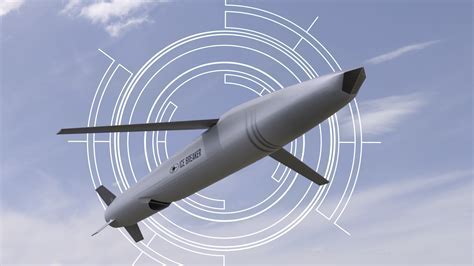
Its operational independence is bolstered by a GPS-independent targeting system. In increasingly common GPS-denied environments, the Icebreaker employs electro-optical and infrared seekers with automatic target recognition (ATR) and scene-matching capabilities. This enables the missile to “see” its target, autonomously verify it, and strike with surgical accuracy—even in jamming-saturated or anti-access/area denial (A2/AD) zones.
Enhancing India’s Deep Strike and First-Strike Capabilities
The procurement of the Icebreaker represents more than a tactical upgrade—it’s a doctrinal shift for the IAF. The missile empowers India to maintain strategic first-strike capability against hardened targets such as enemy airbases, bunkers, radar stations, and command centers, all while keeping its strike aircraft outside hostile airspace.
India’s military planners are acutely aware that the country’s northern and western borders are flanked by two nuclear-armed adversaries, China and Pakistan, both of whom have invested heavily in integrated air defense networks. The Icebreaker is engineered to overcome such defenses, thereby giving India a decisive edge in any future confrontation.
A Wake-Up Call for Pakistan’s Air Defenses
This development comes in the wake of India’s audacious airstrikes during Operation Sindhur, where the IAF penetrated Pakistani airspace and struck terrorist infrastructure with impunity. The Pakistani military—despite a network of Chinese-origin HQ-9 radars and early warning systems—was caught off-guard.
Now, with the Icebreaker in its arsenal, the IAF will gain the ability to repeat and even escalate such missions, without exposing its aircraft to enemy fire. This is particularly significant as Pakistan grapples with internal instability and mounting international pressure over its role in sheltering terrorist entities.
Multiplatform Versatility and Enhanced Payload Efficiency
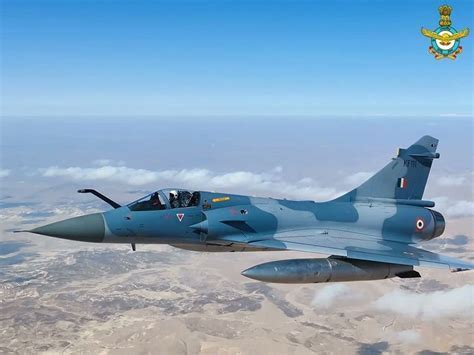
Another remarkable feature of the Icebreaker is its adaptability to multiple aircraft platforms. Weighing under 400 kg, the missile is light enough to be deployed from a variety of IAF jets, including:
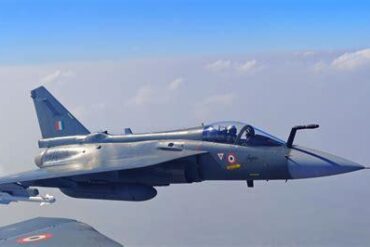
- Indigenous HAL Tejas (LCA)
- MiG-29 UPG
- Mirage 2000
- Potential integration with the upcoming Twin Engine Deck Based Fighter (TEDBF)
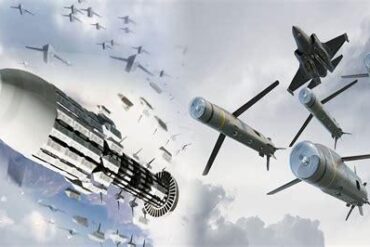
The light weight also allows multiple Icebreakers to be mounted per mission, drastically enhancing an aircraft’s offensive payload without sacrificing agility. The missile can be deployed in both single precision strike and salvo attack modes, offering tactical flexibility for surgical operations or area saturation missions.
Survivability in the Age of Electronic Warfare
As modern warfare leans heavily on cyber-electronic disruption, the Icebreaker’s built-in resilience is a strategic necessity. The missile’s autonomy and sensor fusion allow it to circumvent jamming and navigate dynamic threat environments. This is a game-changer in South Asia, where adversaries are rapidly investing in electronic countermeasures (ECMs) and counter-space capabilities.
By integrating such survivable systems, India ensures its ability to strike first and strike decisively, regardless of the electromagnetic battlefield conditions.
Indigenous Production: Strategic Depth Through Atmanirbhar Bharat
While the missile is Israeli in origin, the acquisition deal is set to bolster India’s defense manufacturing ecosystem. Under the Atmanirbhar Bharat (Self-Reliant India) initiative, Rafael is expected to partner with Bharat Dynamics Limited (BDL) for local production, maintenance, and possible future upgrades.
This will not only create skilled jobs and spur innovation but also reduce India’s dependence on foreign suppliers—a crucial factor in times of conflict or international embargoes. It transforms the Icebreaker from an imported asset into a strategic indigenous capability.

Strategic Messaging and Geopolitical Implications
The timing and nature of the Icebreaker deal send an unambiguous signal to Pakistan and China: India will not hesitate to act decisively if provoked. It also reflects a growing military synergy between New Delhi and Tel Aviv, rooted in mutual strategic interests—ranging from counter-terrorism to technology transfer and joint innovation.
In geopolitical terms, this pact reaffirms India’s multi-vector defense diplomacy, balancing its ties with the U.S., France, Russia, and Israel while ensuring maximum capability enhancement across domains.
Moreover, India’s demonstrated willingness to conduct offensive, pre-emptive strikes as part of its counter-terrorism doctrine signals a break from historical restraint. The Icebreaker is more than a weapon—it is a statement of strategic resolve.
A Doctrine of Deterrence Backed by Firepower
If Operation Sindhur was India’s declaration of air dominance, then the Icebreaker is the cornerstone of its sustained air superiority doctrine. With this missile, the IAF will not only hold enemy infrastructure at risk but also possess the ability to cripple an adversary’s second-strike capability, forcing hostile neighbors to think twice before escalating tensions.
Pakistan, in particular, will now need to radically overhaul its air defense systems or risk being outpaced technologically. The psychological impact of knowing that India can strike undetected, at will, and with pinpoint precision, is itself a powerful deterrent.
Conclusion: From Symbol to Strategy
The Icebreaker acquisition is not an isolated defense upgrade—it is a strategic pivot for India’s military posture. It enhances tactical reach, strengthens strike autonomy, reinforces indigenous capability, and deters aggression. As India readies itself to wield this formidable weapon, its message to adversaries is unequivocal:
Terror sanctuaries will no longer be safe. Launch pads will be neutralized before they can threaten. The Indian Air Force will strike—not if, but when needed.
In a region where strategic ambiguity and deniability have long been the tools of asymmetric warfare, the Icebreaker introduces a new grammar of clarity, capability, and consequence.