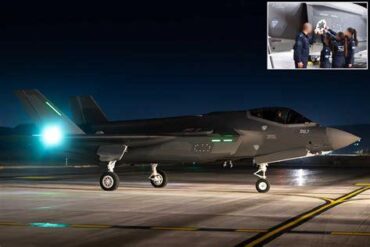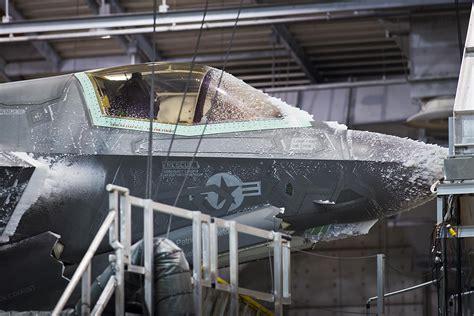
Lockheed Martin’s F-35 Lightning II, the world’s most advanced fifth-generation stealth fighter, is on the cusp of receiving its most transformative enhancement yet. The long-delayed Technology Refresh 3 (TR-3) upgrade—essential for the ambitious Block 4 improvements—is nearing completion, marking a pivotal moment not only for the aircraft itself but for the future of air combat as a whole. With major upgrades to sensors, artificial intelligence, and combat interoperability, the F-35 is being re-engineered to dominate future battlefields with unprecedented lethality and adaptability.
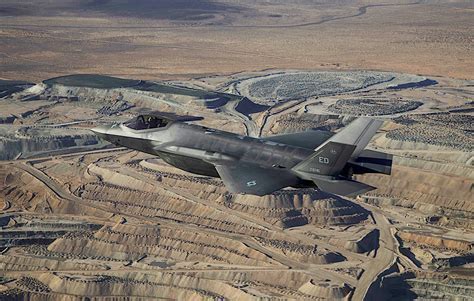
TR-3: The Core of the F-35 Block 4 Evolution
For years, TR-3 has been the bottleneck for fully realizing the capabilities of the F-35’s Block 4 configuration. Unlike a mere software patch, TR-3 is a sweeping integration of both software and hardware changes, representing a generational leap over the current Technology Refresh 2 (TR-2) platform. At its core, TR-3 features a next-generation Integrated Core Processor with 25 times more computing power than its predecessor. This lays the foundation for handling massive data streams, improved sensor fusion, and AI-driven decision-making capabilities essential for future warfighting scenarios.
Lockheed Martin executive JR McDonald confirmed at the Paris Air Show that TR-3 has reached final development stages, with the company preparing to unveil a package that could redefine modern aerial warfare. The overarching goal is clear: maintain air dominance by staying one step ahead of rapidly evolving threats.
Key Enhancements Enabled by TR-3
The TR-3 upgrade is not a cosmetic evolution; it is a reimagining of the F-35’s role in the battlespace. With TR-3, the fighter becomes a multi-domain command node, fully integrated with joint and allied networks.
- Enhanced Sensors: The full sensor suite receives a significant boost, offering improved tracking, targeting, and electronic warfare capabilities.
- Expanded Weapons Compatibility: TR-3 allows the F-35 to deploy a broader range of long-range precision-guided munitions, enhancing its strike versatility.
- Artificial Intelligence Integration: The upgrade introduces advanced AI algorithms, streamlining pilot decision-making and enabling autonomous combat functions.
- Interoperability and Data Fusion: With the ability to serve as a networked node, the F-35 can coordinate with other aircraft, ground units, and naval platforms in real-time combat scenarios.
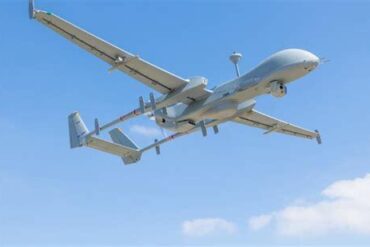
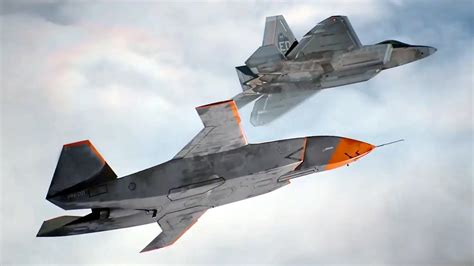
McDonald emphasized that this isn’t simply a fighter jet enhancement—it’s the next step toward collaborative combat aircraft (CCA). The new AI-driven systems will be able to link manned and unmanned systems, such as the FYQ-44A Fury from Anduril and the FYQ-42A Gambit from General Atomics, currently undergoing ground testing.
Strategic Implications of the TR-3 Upgrade
The near-completion of TR-3 arrives at a critical juncture for Lockheed Martin and the broader U.S. defense ecosystem. The Department of Defense’s recent budget constraints have reduced F-35 procurement numbers, reflecting fiscal caution and an expectation of upgraded capability over raw fleet size.
- The U.S. Air Force, operating the F-35A variant, has halved its annual order to just 24 jets.
- The U.S. Navy trimmed its request to 12 F-35Cs, while the U.S. Marine Corps cut two aircraft from its multi-variant order.
Yet, the TR-3’s completion could reverse this cautious trend. With more combat capability per airframe, the enhanced F-35s promise greater force multiplication even with fewer aircraft deployed.
From Training Jets to Fully Operational Warfighters
In 2024, the U.S. military resumed accepting deliveries of F-35s, albeit with incomplete TR-3 software, relegating these aircraft to training roles. Lockheed Martin delivered over 200 F-35s with partial TR-3 capability, while production targets between 170 and 190 units remain for 2025.
The full TR-3 integration marks the transition from simulated combat readiness to real-world operational deployment. For pilots and commanders, this means enhanced situational awareness, target discrimination, and engagement precision, delivered through a cockpit experience enriched by next-generation data visualization tools.
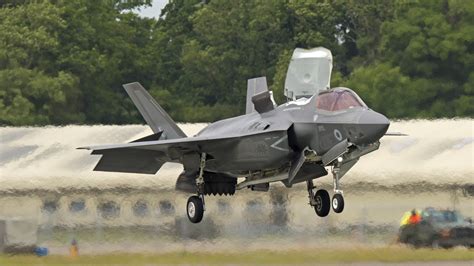
The Battle Beyond: Competing with Sixth-Gen Fighters
Lockheed Martin’s pursuit of innovation has become even more critical in the wake of the NGAD (Next Generation Air Dominance) program awarding its sixth-generation fighter contract to Boeing. Despite losing the bid, Lockheed Martin is not backing down.
CEO Jim Taiclet recently signaled that the company is developing an upgraded F-35 variant incorporating NGAD-era capabilities. Internally dubbed a “Ferrari-like version” of the fighter, this enhanced model could deliver 80% of sixth-generation performance at half the cost, potentially designated as the F-55.
This move reflects a shrewd business and strategic decision. By retrofitting the F-35 with emerging technologies—AI-enabled mission systems, adaptive propulsion, and more autonomous capabilities—Lockheed Martin positions the aircraft not as an aging platform, but as a continuously evolving, future-ready war machine.
AI and the Future of Manned-Unmanned Combat Teams
Perhaps the most revolutionary aspect of the TR-3 upgrade lies in its AI architecture. No longer confined to static functions, the F-35’s AI will now serve as a dynamic co-pilot, parsing sensor data in real-time, prioritizing threats, and even autonomously controlling loyal wingman drones in support of human pilots.
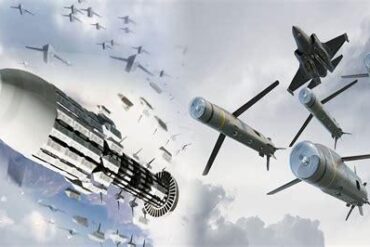
The upgrade paves the way for seamless integration with the Pentagon’s Collaborative Combat Aircraft (CCA) initiative. Here, the F-35 acts as a central command node, orchestrating unmanned aerial vehicles in roles ranging from decoy and jammer to autonomous strike. TR-3’s computational power and open architecture make it uniquely suited for this role, ensuring that the jet remains mission-relevant through 2040 and beyond.
Risks, Delays, and Lessons Learned
Despite its promise, the TR-3 journey has not been smooth. The upgrade experienced multi-year delays, triggering a temporary halt in deliveries and sharp scrutiny from the U.S. Department of Defense. While Lockheed Martin has since resumed production and delivery, the company faces pressure to avoid further delays, especially with global allies also relying on timely upgrades for their fleets.
The situation has underscored a critical reality: technological ambition must be matched by executional excellence. For Lockheed Martin, TR-3 has been both a technical gauntlet and a reputational crucible. Yet, the nearing completion of TR-3 suggests that those lessons have been absorbed—and are now bearing fruit.
Conclusion: F-35 Enters Its Most Potent Era Yet
As the TR-3 upgrade reaches the finish line, the F-35 Lightning II is poised to redefine what it means to be a fighter aircraft in the 21st century. Far more than a stealthy dogfighter, the upgraded F-35 becomes a networked hub, an AI-assisted battle coordinator, and a multirole weapons platform capable of projecting power across all domains.
With the integration of TR-3 and subsequent Block 4 features, the F-35 is not simply staying relevant—it is forging a new frontier in aerial warfare, blurring the lines between manned and unmanned combat, and setting the benchmark for sixth-generation performance well before its rivals.
In the era of digital dogfights and autonomous swarms, the upgraded F-35 Lightning II stands not just as a fighter—but as a force multiplier built to dominate the battlespace of tomorrow.