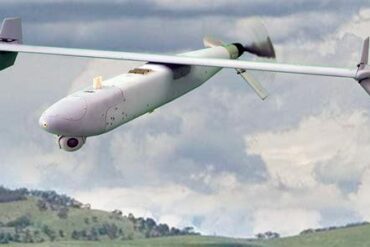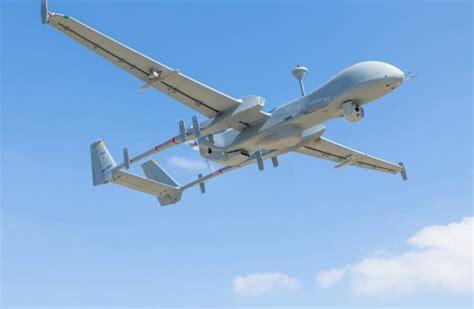
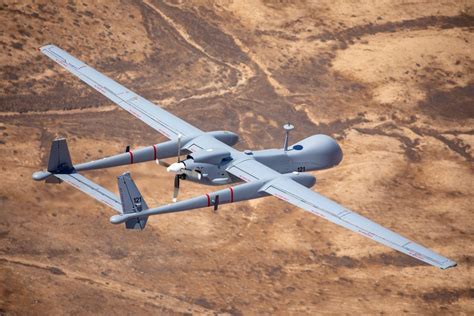
The IAI Heron, developed by the Malat division of Israel Aerospace Industries (IAI), stands as one of the most formidable medium-altitude long-endurance (MALE) unmanned aerial vehicles (UAVs) in modern warfare and surveillance operations. Its design combines endurance, versatility, and operational sophistication, securing its place in the armed forces of over 20 countries since its operational debut in 2005.
Engineering Marvel of the Skies: Design and Capabilities
Built with a wingspan of 16.6 meters and a length of 8.5 meters, the Heron has a maximum takeoff weight (MTOW) of 1,150 kg, making it a substantial yet agile surveillance platform. Powered by a Rotax 916 engine, it can reach speeds up to 207 km/h and soar to a ceiling of 10,000 meters (32,800 feet). Designed for long-endurance missions, the Heron maintains flight for up to 52 hours, providing unparalleled persistent surveillance capabilities.
Its modular payload bay supports a load of up to 250 kilograms, typically carrying advanced sensors such as infrared cameras, visible spectrum optics, COMINT/ELINT packages, and radar systems. The onboard systems are fully autonomous, allowing for GPS-based navigation, automated takeoff and landing (ATOL), and real-time communication via line-of-sight (LOS) or satellite data links (SATCOM).
From Concept to Combat: The Heron’s Operational History
The Heron’s baptism by fire came during Operation Cast Lead (2008–2009), where it delivered close support at the brigade level for Israeli ground forces in Gaza. Throughout the operation, Herons maintained a persistent aerial presence, providing real-time intelligence, surveillance, and reconnaissance (ISR) to decision-makers. The strategic advantage offered by this constant eye-in-the-sky marked a new era in integrating UAVs into conventional military campaigns.
Subsequent years saw the Heron involved in multinational operations. Canada and Australia leased Heron systems in 2009, with Australia operating them until 2014 and accumulating over 27,000 flight hours. From 2021, the Frontex border agency deployed Herons for European maritime patrols from Malta, although these missions became mired in controversy due to questions around surveillance data-sharing practices.
Despite its strategic value, the Heron has not been invulnerable. In 2023, a Super Heron variant was reportedly shot down by Palestinian Islamic Jihad (PIJ), a rare but symbolic loss that highlighted both its extensive use and the increasing risks in contested airspaces.
The Super Heron: Enhanced Performance and Tactical Reach
The Super Heron, unveiled in 2014, represents a significant leap in the Heron family. Outfitted with a 200 horsepower diesel engine, it achieves an endurance of 45 hours at 9,100 meters altitude, and extends its communication range with a 250 km LOS and 1,000 km SATCOM radius. Its cruising speed of 60–80 knots and a top speed exceeding 150 knots gives it more versatility and faster deployment capabilities.
The Super Heron is designed not only to endure but also to adapt. With upgraded avionics, high-definition payloads, and improved engine performance, it provides a future-ready platform suitable for the dynamic demands of battlefield surveillance, anti-terror operations, and maritime patrols.
India’s Heron Legacy: A Deepening Partnership
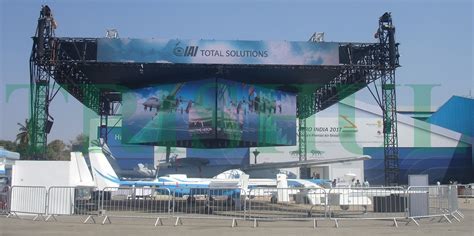
India has become one of the most significant international operators of the Heron UAV. Initial acquisitions in 2002 brought in 12 Heron Mk1 units. Technical and logistical delays slowed progress, but a $220 million contract in 2005 secured 50 additional units. Post-2020 defense restructuring further integrated Herons under the Army Aviation Brigade, doubling operational sorties and reinforcing border surveillance missions, particularly across the Line of Actual Control (LAC).
In response to ongoing geopolitical tensions, India sought upgrades through Project Cheetah (2021). The initiative aimed to retrofit around 90 Heron Mk1s with SATCOM capability and weaponization. Although the armament aspect was dropped in 2023, the push for enhanced surveillance remained a top priority.
India’s acquisition of 10 Heron Mk2s (Heron TP) brought further advancements, including improved ATOL systems and extended-range SATCOM capabilities. These drones were deployed to high-priority sectors like Leh and India’s northeast frontier, regions critical for rapid ISR updates due to their proximity to adversarial borders. The pace of deployment accelerated by late 2023, with emergency procurements reinforcing frontline units.
Crashes and Controversies: Technical Setbacks in India
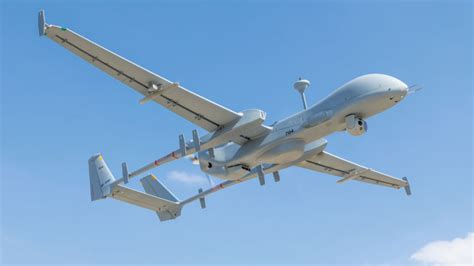
Despite its operational success, India’s Heron fleet has faced numerous accidents, largely due to technical failures and human error. Since 2002, 12 Heron Mk1s have crashed. Notable incidents include:
- 2003: Crash in Rajasthan during training.
- 2013: Parundu naval airbase loss.
- 2014: Engine failure in Gujarat.
- 2015: Flight control issue in Rajasthan.
- 2016: Emergency sea ditching off Kerala coast.
- 2017: LAC crash in Sikkim, wreckage recovered in Tibet.
- 2018: Two UAVs lost from Naval squadrons.
- 2024: System failure crash near Jaisalmer.
- 2025: Heron Mk2 incident at Satwari Airport, injuring ground crew.
These incidents underscore the need for ongoing maintenance reforms and operator training improvements. Despite the losses, the strategic value of Heron UAVs keeps them central to India’s ISR architecture.
Global Deployment and Strategic Importance
The Heron UAV has been exported to over 20 countries, cementing its status as a premier surveillance platform. Nations such as Azerbaijan, Brazil, and Turkey have integrated Herons into their defense ecosystems. The Turkish variant incorporates the ASELSAN ASELFLIR-300T electro-optical system and reinforced engines tailored for extended missions over rugged terrains.
Europe saw the Heron adapted into the EADS Harfang (later called Eagle) by France and Germany. While France phased out the Harfang in favor of the MQ-9 Reaper, the experience paved the way for European UAV doctrine evolution.
Specifications at a Glance
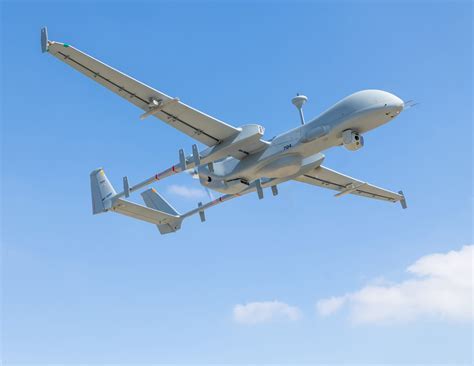
For technical context, below are the baseline specifications of the Heron UAV:
- Length: 8.5 meters
- Wingspan: 16.6 meters
- MTOW: 1,150 kg
- Payload Capacity: 250 kg
- Max Speed: 207 km/h
- Endurance: Up to 52 hours (Heron), 45 hours (Super Heron)
- Ceiling: 10,000 meters
- Engine: Rotax 916 (Heron), 200 hp diesel (Super Heron)
- Range: 250 km (LOS), up to 1,000 km (SATCOM)
These specs illustrate the Heron’s well-balanced design philosophy: long flight duration, high-altitude capability, and powerful sensor integration.
Conclusion: A Watchful Sentinel for the 21st Century
The IAI Heron has proven itself as more than just a UAV—it is a force multiplier. By delivering real-time intelligence, maintaining continuous surveillance, and enabling autonomous operations across a diverse set of terrains and missions, the Heron redefines how modern militaries observe, react, and adapt. As geopolitical conflicts evolve and demand greater ISR agility, the Heron and its descendants are likely to remain a vital part of any nation’s aerial strategy.
Its expanding role across continents, its technological upgrades through platforms like the Super Heron, and its persistent adaptability all point to one unambiguous conclusion: the Heron is not just a drone—it’s a doctrine.