The quiet revolution in modern warfare is not happening at the top end of the technological spectrum. It is unfolding in the noisy, low-altitude airspace where cheap, expendable attack drones force billion-dollar air-defense systems into uncomfortable, asymmetric fights. France’s newly revealed Fury 120 interceptor sits squarely inside this reality, designed not to impress with exotic stealth or artificial intelligence buzzwords, but to solve a brutally practical problem exposed by the war in Ukraine.
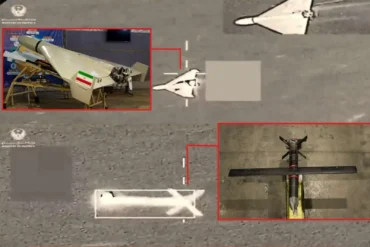
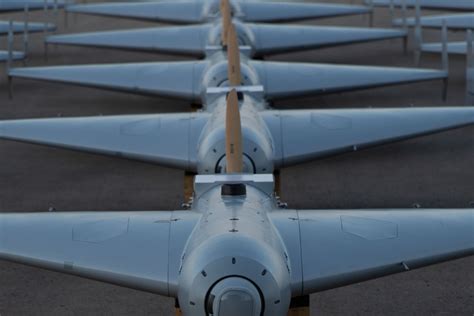
Since 2022, the extensive use of Iranian Shahed-series loitering munitions, and their Russian-produced Geran derivatives, has reshaped air-defense thinking across Europe. These drones are slow, loud, and technologically unsophisticated, yet they impose disproportionate costs by saturating defenses, draining missile stocks, and forcing defenders into economically losing exchanges. France’s Fury 120 is a direct response to this imbalance.
Developed outside traditional state-led procurement frameworks, Fury 120 reflects a broader shift in European defense innovation—one driven by urgency, decentralization, and the uncomfortable lessons of attritional warfare.
A French Interceptor Born Outside the Traditional Defense Ecosystem
Unlike most French military systems, Fury 120 did not originate from the Direction générale de l’armement (DGA) or a major prime contractor. Instead, it was developed by ALM Meca, a small and medium-sized enterprise based in Alsace, best known for precision machining rather than weapons integration. That detail matters. It underscores how the pressure of real-world conflict is reshaping who gets to innovate—and how fast.
ALM Meca reportedly financed and developed Fury 120 independently, assembling mature technologies into a focused interceptor concept aimed squarely at one-way attack drones. The project demonstrates that modern air defense innovation no longer requires decade-long programs or vast bureaucratic machinery. It requires clarity of purpose and the willingness to accept operational trade-offs.
Why Shahed-Type Drones Changed the Air Defense Equation
The Shahed threat is not about technical sophistication. It is about volume, persistence, and economics. These drones fly low, follow indirect routes, and arrive in waves, often at night. Their signatures can strain radar coverage, and their cost forces defenders to make painful choices. Shooting down a drone costing tens of thousands of dollars with a missile costing several million is a strategic tax on sustainability.
Ukraine’s experience showed that air defense is no longer only about capability, but about capacity and endurance. Nations must intercept enough incoming threats, fast enough, and cheaply enough, to maintain defensive credibility over months or years. Fury 120 is designed to operate inside this logic, acting as a fast, expendable interceptor rather than a precious asset.
Fury 120 Technical Profile: Speed as the Central Advantage
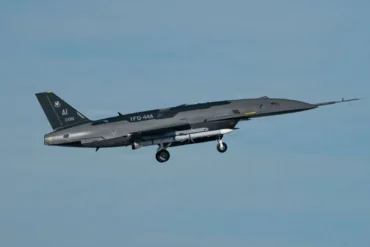
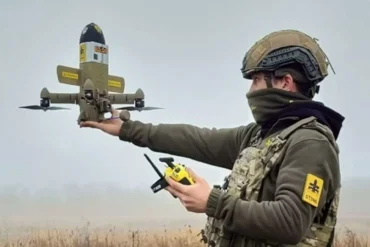
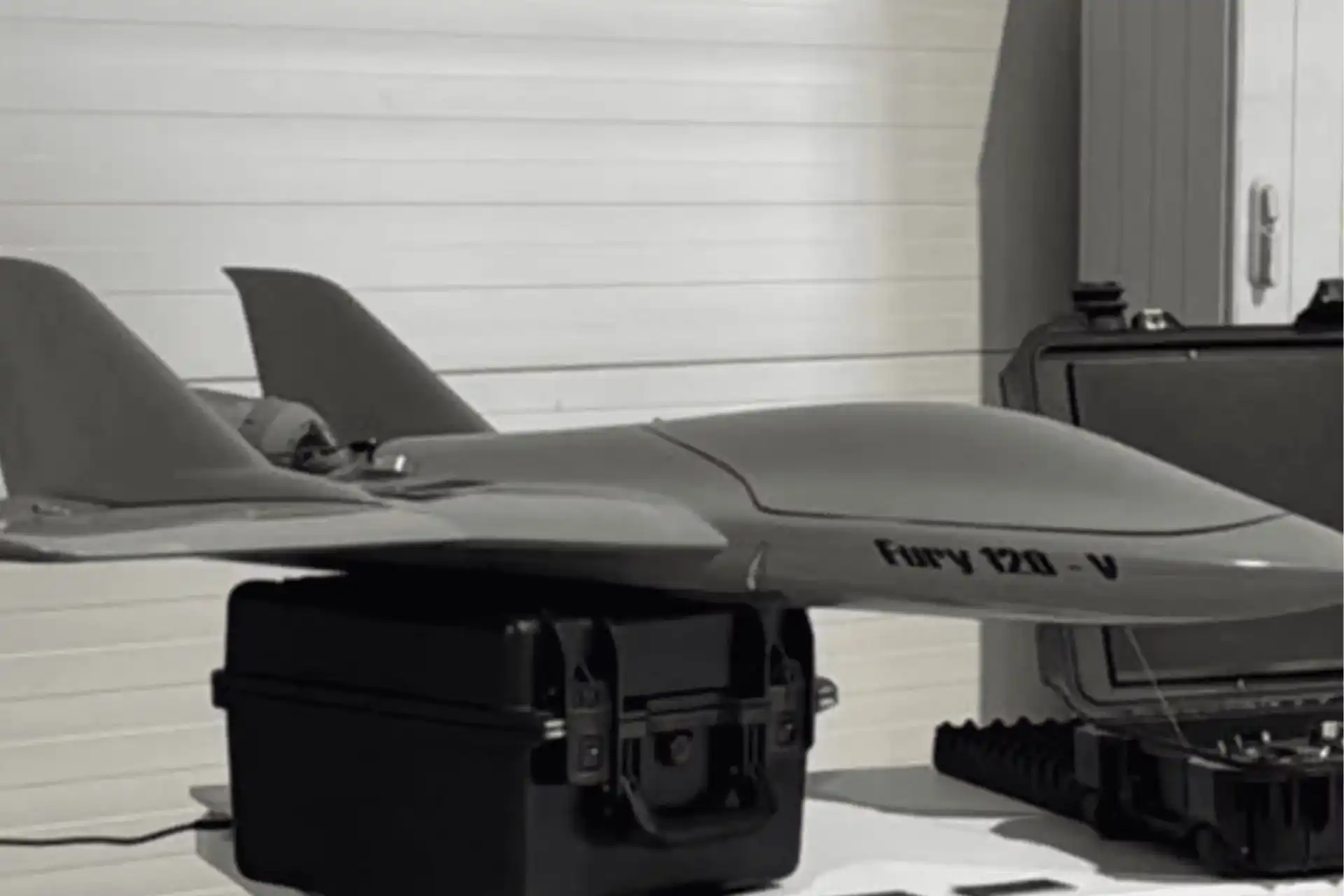
Fury 120 resembles a miniature fighter aircraft more than a traditional drone. At approximately 1.1 meters in length with a wingspan slightly over one meter, it is compact but purpose-built for interception rather than endurance. Its defining feature is propulsion. Instead of electric motors or propellers, Fury 120 uses a kerosene-fueled microjet engine.
This choice enables a reported maximum speed of 700 km/h, roughly three times faster than Shahed-type drones. That speed margin is operationally decisive. It shortens pursuit time, increases intercept probability, and allows engagements even when detection occurs late. In real combat conditions—where sensor coverage is imperfect and decision chains are stressed—speed buys options.
High-G Maneuverability in a Low-Altitude Fight
Fury 120 is also reported to sustain maneuvers up to 20G, an unusually high figure for a light interceptor drone. Against non-maneuvering targets like Shahed drones, this capability is not about dogfighting theatrics. It is about error tolerance. High maneuverability allows the interceptor to compensate for guidance inaccuracies, sensor lag, or last-second trajectory corrections in cluttered, low-altitude environments.
Urban terrain, electronic interference, and degraded data links complicate real-world interception. A platform with excess maneuvering authority can recover from imperfect cues and still maintain a viable intercept geometry. In this sense, Fury 120’s agility is a hedge against the messiness of modern air defense.
Cost-Effectiveness and the Economics of Attrition
The true promise of Fury 120 lies in restoring a favorable cost-exchange ratio. High-end surface-to-air missile systems are optimized for aircraft and cruise missiles, not mass-produced loitering munitions. Using them against Shahed-type drones depletes stocks needed for higher-end threats.
A microjet-powered interceptor drone offers a middle ground. It is faster and more capable than gun-based systems or electronic countermeasures, yet potentially far cheaper than guided missiles. Deployed in sufficient numbers, such interceptors could absorb a significant portion of incoming drone waves, preserving premium interceptors for more complex targets.
Integration, Not Isolation, Will Decide Success
Performance alone will not determine Fury 120’s relevance. Its operational value depends on integration into existing air-defense architectures. Interceptor drones must be cued by radars, electro-optical sensors, or networked command systems to be effective. Data-link resilience, launch responsiveness, and deconfliction with friendly systems are as critical as raw speed.
Constraints remain. Microjet engines limit endurance. Kerosene logistics introduce complexity. Maintenance requirements differ from electric systems. Fury 120 is not a silver bullet; it is a specialized tool designed for a specific slice of the threat spectrum. Used correctly, it can relieve pressure on layered defenses. Used poorly, it risks becoming another orphan capability.
A European Capability Gap Comes Into Focus
According to defense analysts, Fury 120 currently occupies a niche with few European equivalents. One frequently cited comparison is the US-developed Roadrunner interceptor by Anduril, which has attracted growing interest from European actors. The reported industrial cooperation between Anduril and Rheinmetall highlights how seriously Europe is taking the counter-drone interceptor problem.
Fury 120’s emergence suggests Europe is no longer content to rely exclusively on foreign solutions. The ability to field a domestically developed interceptor, even at small scale, strengthens strategic autonomy and accelerates experimentation cycles.
Strategic Context: From Ukraine to NATO’s Eastern Flank
The threat environment that motivated Fury 120 extends well beyond Ukraine. NATO’s eastern flank has experienced repeated airspace violations linked to Russian drone activity, prompting consultations and heightened alert levels. These incidents underscore how low-cost drones can generate strategic friction, even without causing direct damage.
A dedicated interceptor capability enhances resilience. It reduces reliance on politically sensitive missile launches, protects critical infrastructure, and lowers escalation risks associated with repeated incursions. In this context, Fury 120 is not merely a weapon, but a stability mechanism.
Fury 120 and the Future of European Air Defense Doctrine
Fury 120 illustrates a broader doctrinal shift. Modern air defense is no longer optimized solely for rare, high-end threats. It must also manage mass, persistence, and cost. Interceptor drones represent a recognition that attritional warfare is back, and that sustainability matters as much as sophistication.
Whether Fury 120 transitions from prototype to operational system remains an open question. Yet its existence alone signals a change in mindset. European defense innovation is becoming faster, more decentralized, and more brutally honest about the realities of modern conflict.
In the long arc of military history, the most consequential technologies are often those that rebalance economics, not those that chase perfection. Fury 120 belongs to that lineage—a compact, fast, unsentimental response to a threat defined by numbers rather than novelty.