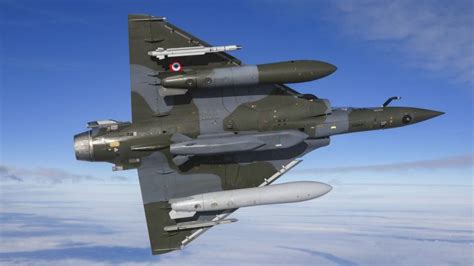
France is exploring a new counter-drone mission profile for its Mirage 2000D RMV fleet, aiming to extend the aircraft’s operational relevance and relieve frontline Rafale units from lower-end duties. Following a series of successful drone intercepts in the Red Sea region, the French Air and Space Force (AAE) sees potential in transforming the upgraded Mirage 2000D into a cost-effective, adaptable drone hunter capable of covering vast maritime and land approaches.
According to General Jérôme Bellanger, interviewed in the October 2025 issue of Air Fan, the concept under evaluation envisions the RMV taking on a dedicated counter-UAS role, supported by enhancements that give the strike jet a surprising air-to-air capability. The idea follows extensive real-world experience, as French fighters — both Rafales and Mirages — have spent the past year engaging and neutralizing drones launched from Yemen and other regions threatening maritime traffic in the Red Sea and Bab el-Mandeb corridors.
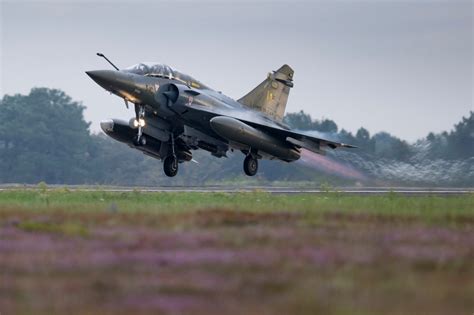
Mirage 2000D RMV: A Strike Jet Turned Drone Hunter
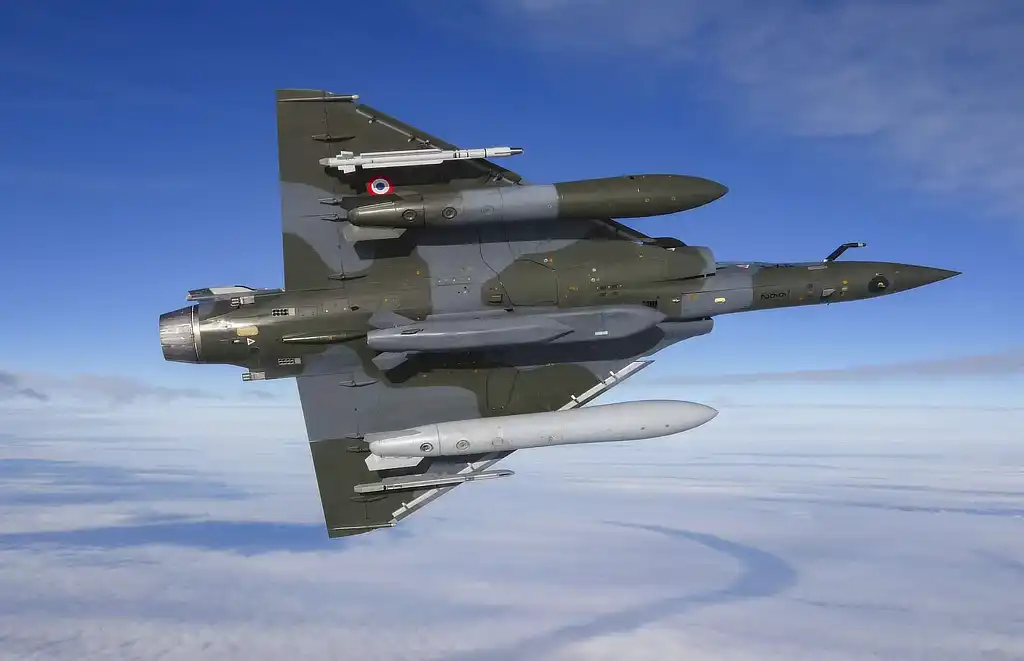
The Mirage 2000D RMV (Rénovation Mi-Vie, or mid-life upgrade) project, declared operational earlier this year, equips the classic strike aircraft with MICA IR missiles, a 30 mm CC422 cannon pod, the TALIOS targeting pod, and modernized avionics and data links. These upgrades collectively enable the Mirage to detect, track, and destroy small, low radar cross-section aerial threats — including slow-moving drones — that have become a persistent hazard in recent conflicts.
Where the baseline 2000D was originally built for low-level precision strikes, the RMV upgrade transforms it into a true multirole aircraft, equally comfortable conducting strike, air defense, and reconnaissance tasks. The addition of the MBDA MICA IR missile, replacing the obsolete Magic II, brings infrared imaging homing capable of passive engagements, an essential tool when intercepting drones that emit little radar energy.
The Thales TALIOS pod further enhances situational awareness, offering long-range electro-optical identification and laser designation. Working in tandem, TALIOS and MICA IR form a silent interception chain: the pod spots and classifies a target passively, the pilot cues the missile seeker without activating radar, and the missile engages autonomously — a lethal setup for propeller-driven drones or even high-altitude balloons tested earlier this year during DGA and MBDA trials.
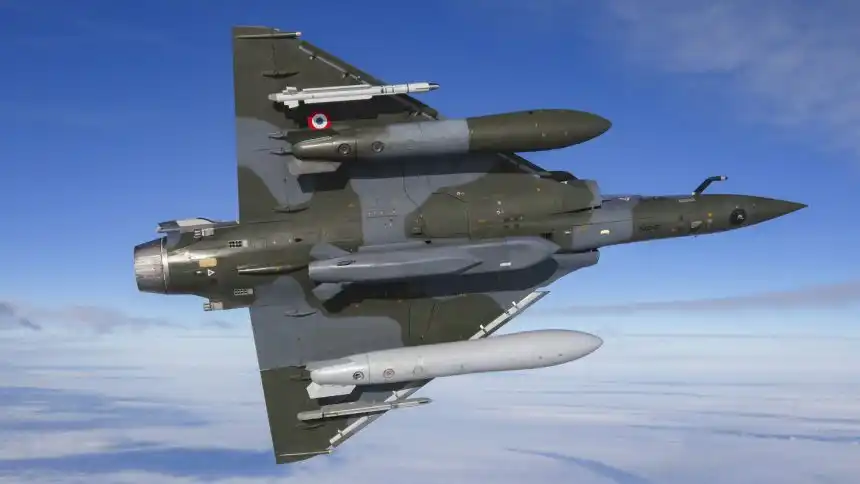
Operational Lessons from the Red Sea and Horn of Africa
In 2024–2025, French air detachments operating from Djibouti and aboard deployed Rafale squadrons played a crucial role in securing international shipping lanes from drone and missile threats emerging from Yemen. These operations highlighted the need for a dedicated counter-drone patrol aircraft — one that could remain airborne for extended periods, employ low-collateral engagement options, and operate without consuming the flight hours of the more advanced Rafale.
Mirage 2000D RMVs already flew alongside Rafales in mixed packages, downing multiple drones using MICA IR missiles and cannon fire under E-3F AWACS coordination. The RMV’s endurance and simpler logistics footprint made it well-suited for persistent orbits above the Bab el-Mandeb and the Red Sea. When rules of engagement required visual confirmation, the CC422 gun pod provided a controlled, accurate means to eliminate drones without causing collateral damage — a capability increasingly critical in congested airspaces filled with civilian and coalition traffic.
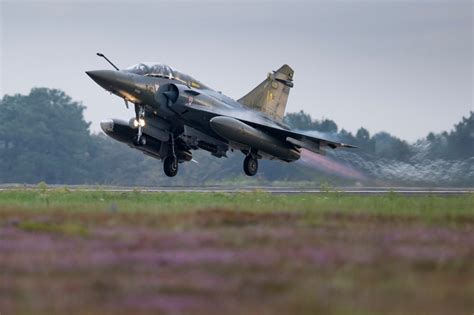
Avionics Synergy: Passive Tracking and Silent Kills
Unlike air superiority fighters, the Mirage 2000D RMV retains the Antilope V terrain-following radar, primarily designed for navigation and ground mapping. In its counter-drone role, it depends heavily on offboard cueing — from AWACS, naval radar, or ground-based surveillance — and on electro-optical tracking via the TALIOS pod. This approach aligns perfectly with the AAE’s shift toward networked warfare, where each platform contributes data without revealing its position.
In this distributed sensing model, the Mirage 2000D RMV becomes a low-emission interceptor, one that can patrol silently, detect visually, and engage with minimal electromagnetic signature. The MICA IR’s imaging seeker, when slaved to helmet-mounted or pod cues, allows pilots to execute stealthy intercepts against drones that would evade radar-based systems.
Strategic Implications for the French Air and Space Force
Assigning a counter-UAS specialization to the Mirage 2000D RMV fleet carries major strategic implications. It extends the aircraft’s service life well into the 2030s, bridging the gap before newer Rafales and the Future Combat Air System (FCAS) enter full service. It also frees Rafale units for deterrence and high-intensity missions, optimizing resource allocation across the AAE’s tactical aviation assets.
This redefined mission offers a cost-effective model for allied nations still operating legacy Mirage variants — from Greece and India to the UAE — providing a blueprint for adapting older fourth-generation fighters to modern asymmetric threats. By combining smart upgrades with tailored mission profiles, Paris demonstrates how legacy aircraft can remain strategically relevant in the drone age.
The Broader Counter-Drone Doctrine
The Mirage 2000D RMV’s evolving role reflects France’s wider integrated counter-UAS doctrine, which merges ground-based defenses, naval systems, and airborne interceptors into a cohesive defense grid. As low-cost drones increasingly threaten critical infrastructure and shipping routes, France’s multi-layered defense concept prioritizes flexibility, responsiveness, and cost efficiency.
The RMV’s anticipated drone-hunting task dovetails with these priorities: it can intercept threats beyond ground-based coverage, neutralize slow or low-signature drones, and respond rapidly across maritime choke points. Its deployment from forward bases like Djibouti or Al Dhafra ensures that French and allied assets in the Red Sea and Horn of Africa remain protected amid escalating drone warfare.
A Model for NATO and Beyond
As NATO air forces confront the growing reality of mass drone saturation, France’s experimentation with the Mirage 2000D RMV will be closely monitored. Many allied fleets still rely on upgraded legacy fighters with comparable avionics suites and sensor pods, making the RMV’s transformation a test case for affordable counter-drone modernization.
In an era where small unmanned systems can influence strategic outcomes, the Mirage 2000D RMV stands as proof that old airframes, when intelligently modernized, can still shape the modern battlespace. Whether over the Red Sea or European skies, the Mirage’s second life as a drone interceptor underscores a broader truth of airpower evolution: adaptation, not obsolescence, defines relevance.