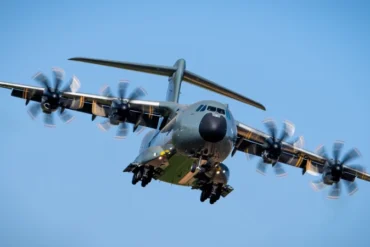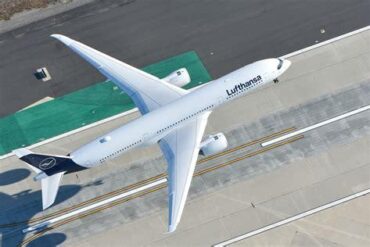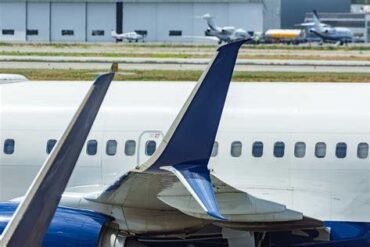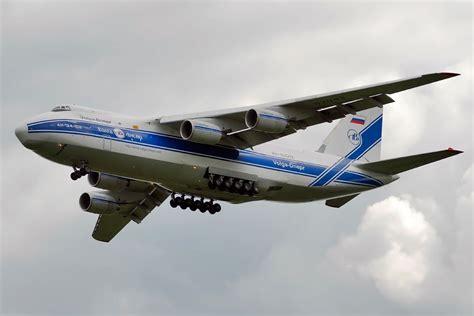
Modern aviation has turned winglets into near-universal symbols of efficiency. Those sleek, upward-curving tips seen on airliners slicing through crowded skies are not decorative—they are aerodynamic tools engineered to reduce drag, conserve fuel, and extend range. Yet in a surprising twist, the world’s largest military transport aircraft—machines built to carry entire armies’ worth of cargo—largely reject this innovation.
That absence isn’t an oversight. It’s a deliberate, deeply calculated engineering choice rooted in physics, mission demands, and decades of design philosophy.
The Aerodynamic Truth About Winglets
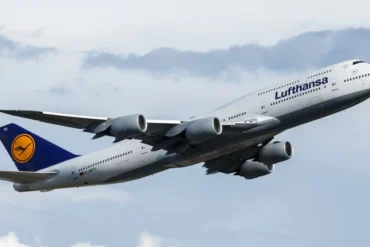
Winglets exist to combat one invisible but powerful force: wingtip vortices. As air flows over a wing, pressure differences create spiraling currents at the tips, generating induced drag. Winglets disrupt these vortices, improving lift-to-drag ratios and making aircraft more efficient—especially within constrained wingspans.
For commercial airliners, this is essential. Airports impose strict limits on wingspan, typically within an 80-meter operational box, forcing engineers to squeeze maximum efficiency from limited dimensions. Winglets become a clever workaround, delivering better performance without increasing wingspan.
But military giants operate in a different world entirely.
When Bigger Wings Beat Smarter Tips
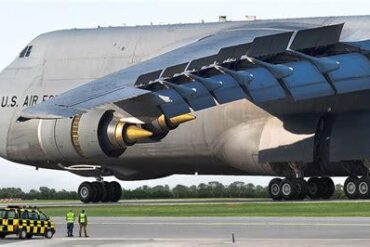
The largest military transports, including the Lockheed C-5 Galaxy and Antonov An-124 Ruslan, rely on a fundamentally different aerodynamic philosophy: maximize wingspan instead of optimizing it artificially.
These aircraft already possess enormous wings—so large that the need for winglets diminishes dramatically. Instead of adding vertical structures at the tips, designers extend the wings horizontally, achieving a high aspect ratio that naturally reduces induced drag.
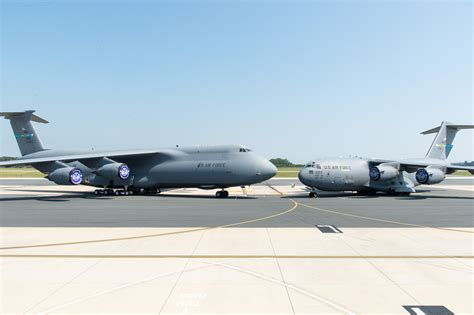
This approach offers a critical advantage: structural simplicity. Winglets introduce additional stress at the tips, creating a bending moment that requires heavy reinforcement. On an aircraft designed to carry over 100 tons of cargo, every extra kilogram matters.
Adding winglets would mean:
- Increased structural weight
- Reduced payload capacity
- Greater maintenance complexity
In a domain where payload is king, sacrificing cargo capacity for marginal efficiency gains simply doesn’t make sense.
The Legacy of Cold War Engineering
To understand why these aircraft lack winglets, it helps to revisit their origins. The C-5 Galaxy first flew in 1968, and the An-124 followed in the 1980s—eras when winglets were still experimental and not widely trusted for large-scale implementation.
Engineers at the time prioritized:
- Raw lifting power
- Structural durability
- Operational flexibility in austere environments
Winglets were not only unproven but also incompatible with the rugged demands of military logistics. These aircraft needed to operate from semi-prepared runways, carry oversized cargo, and withstand extreme stress cycles.
Even modern upgrades like the C-5M Super Galaxy retained the original wing design, proving that the fundamental architecture was already near optimal for its mission.
Raked Wingtips: The Quiet Alternative
Interestingly, the absence of winglets doesn’t mean a lack of innovation. Some of the most advanced aircraft today, including Boeing’s 777X, have abandoned traditional winglets in favor of raked wingtips—long, tapered extensions that seamlessly integrate into the wing.
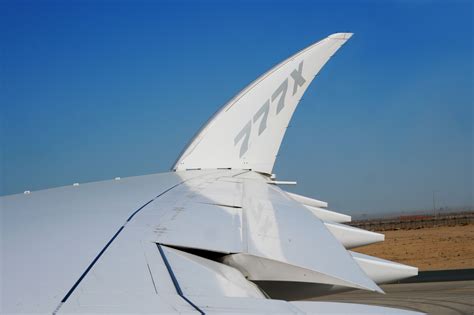
Raked tips achieve similar goals:
- Reduce wingtip vortices
- Improve aerodynamic efficiency
- Avoid the structural penalties of vertical winglets
This design philosophy mirrors that of large military transports. When wings are already long and efficient, integrated solutions outperform add-ons.
Engineering for Payload, Not Passengers
Commercial aircraft are optimized for fuel efficiency and passenger comfort. Military transports, on the other hand, are built for one purpose: moving massive loads across vast distances under demanding conditions.
The An-124 Ruslan, for example, can carry payloads exceeding 150 tons, including locomotives, turbines, and oversized industrial equipment. The C-5 Galaxy, while slightly less capable in raw mass, excels in rapid deployment of standardized military cargo.
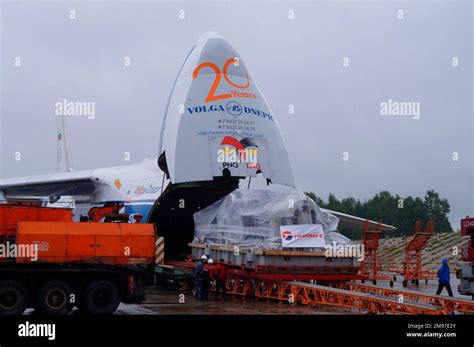
Both aircraft share defining features:
- High-mounted wings to avoid debris ingestion
- Nose and tail cargo doors for drive-through loading
- Kneeling landing gear for easier vehicle access
None of these priorities benefit significantly from winglets. Instead, they demand robust, expansive wings capable of generating immense lift without unnecessary complications.
Freedom From Airport Constraints
Unlike commercial jets bound by strict airport infrastructure, military transports operate with far fewer limitations. They are designed for ICAO Code F airfields and often use dedicated military bases with reinforced runways.
This freedom allows designers to push boundaries:
- Wider wingspans
- Heavier structures
- Greater flexibility in configuration
The destroyed but legendary Antonov An-225 Mriya, with its staggering 88-meter wingspan, exemplified this philosophy. It didn’t need winglets because its sheer size rendered them redundant.
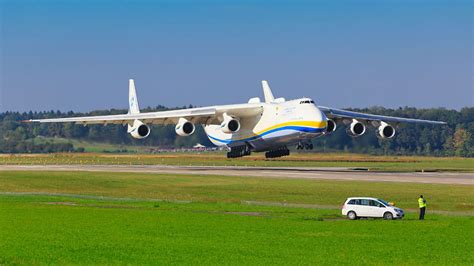
In fact, adding winglets to such an aircraft would likely have introduced more problems than benefits, particularly in terms of structural stress and ground handling.
The C-17 Globemaster III: A Strategic Exception
Not all military transports follow this pattern. The Boeing C-17 Globemaster III stands out as a rare example that does use winglets—and for good reason.
Unlike the C-5 and An-124, the C-17 is designed for tactical versatility. It must operate from shorter runways, including unpaved strips near combat zones. Efficiency at lower speeds and greater maneuverability are crucial.
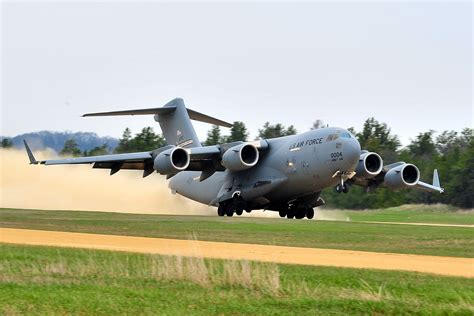
Its advanced design includes:
- A supercritical wing optimized for diverse flight regimes
- Blown flaps that enhance lift using engine airflow
- Winglets that improve efficiency within a more constrained wingspan
This combination allows the C-17 to perform remarkable feats, such as steep descents, rapid climbs, and even reversing under its own power on tight airfields.
In this context, winglets are not just beneficial—they are essential.
Structural Stress: The Hidden Trade-Off
One of the most overlooked reasons for avoiding winglets lies in structural physics. Winglets act like vertical levers at the tips of already massive wings, increasing stress concentrations during flight.
For aircraft as large as the C-5 or An-124, this creates significant challenges:
- Reinforcing the wing structure adds weight
- Increased stress reduces long-term durability
- Maintenance demands become more complex
In simpler terms, winglets would force engineers to trade payload for structural integrity, a compromise that military planners are unwilling to accept.
Mission Profiles Define Design Choices
Military transport aircraft are not built for efficiency alone—they are built for mission success under extreme conditions. Their design reflects scenarios like:
- Delivering tanks across oceans in hours
- Landing on rough, forward-operating bases
- Operating in environments with minimal infrastructure
These requirements favor rugged simplicity over aerodynamic refinement. Winglets, while elegant, introduce variables that can complicate operations in harsh conditions.
The Future: Beyond Winglets Entirely
Looking ahead, the next generation of military airlifters may render the winglet debate obsolete. The U.S. Air Force is exploring blended-wing-body (BWB) designs under its Next Generation Airlift (NGAL) program.
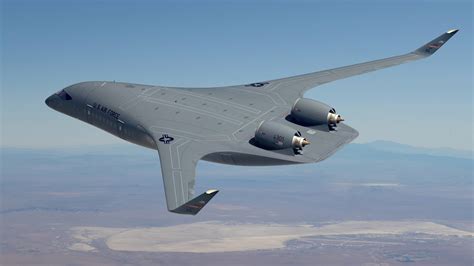
This revolutionary approach merges the wing and fuselage into a single aerodynamic structure, offering:
- Dramatically improved lift efficiency
- Reduced radar cross-section
- Enhanced fuel economy and range
In a BWB aircraft, the entire body contributes to lift, eliminating the need for traditional wings—and by extension, winglets.
Meanwhile, proposed successors to the An-124, such as Russia’s Slon project, may experiment with advanced wingtip devices. But even here, the emphasis remains on integrated efficiency rather than bolt-on solutions.
A Matter of Scale and Purpose
At first glance, the absence of winglets on the world’s largest military transports might seem like a technological gap. In reality, it’s a testament to precision engineering tailored to purpose.
Winglets shine in environments where:
- Wingspan is limited
- Efficiency must be maximized within constraints
But for aircraft that operate beyond those constraints—where size, strength, and payload dominate—bigger, cleaner wings outperform clever add-ons.
The Final Equation: Efficiency vs Capability
In aviation, every design choice is a balancing act. For commercial jets, the equation favors fuel savings and airport compatibility. For military giants, it prioritizes payload, durability, and operational freedom.
Winglets simply don’t tip the scales enough to justify their costs in this context.
And that’s the real takeaway: the absence of winglets on these colossal aircraft isn’t a missing feature—it’s a deliberate decision rooted in engineering logic, mission demands, and the uncompromising realities of global airlift.